Top Primary Schools in Singapore 2026: Parent Guide
Choosing among the top primary schools in Singapore is not simply about finding a school with the highest reputation. Parents may be looking at P1 demand, school programmes, affiliation, location, CCAs and the overall fit for their child. Singapore’s Ministry of Education (MOE) does not publish an official league table ranking primary schools from #1 onwards. Instead, parents can use current P1 registration information, SchoolFinder details and each school’s programmes to build a shortlist.
For 2026, P1 registration data also gives a useful picture of demand. Princess Elizabeth Primary School, Northland Primary School, Nan Hua Primary School, Chongfu School and Rosyth School were among the schools with the highest Phase 2C applicant-to-vacancy ratios. However, high demand shows competition for places, not a definitive measure of school quality.
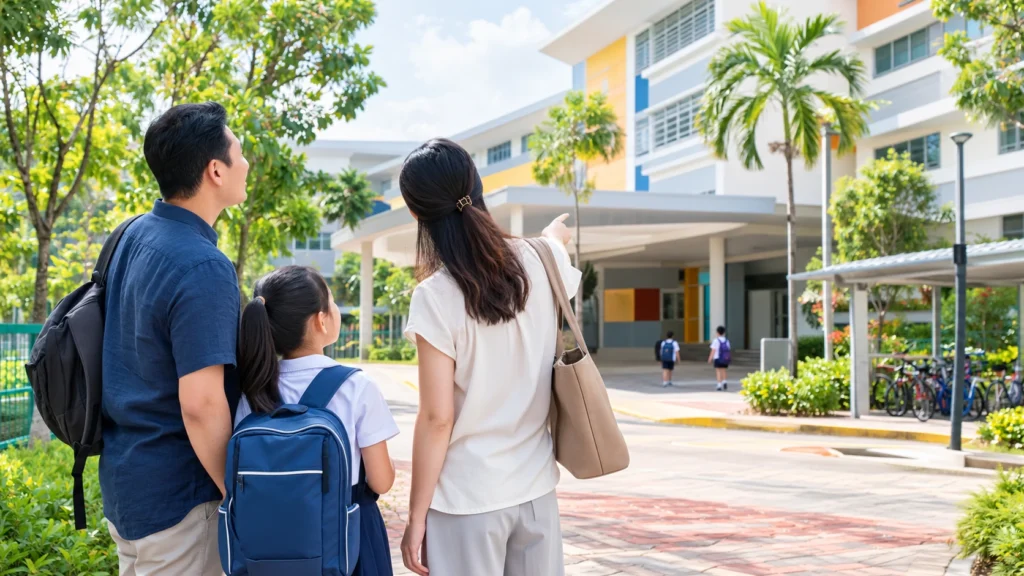
TL;DR: Top Primary Schools in Singapore
There is no official MOE ranking of the top primary schools in Singapore. Parents commonly compare schools using P1 demand, programmes, affiliation, location, CCAs and admission competition. In the 2026 Phase 2C exercise, Princess Elizabeth, Northland, Nan Hua, Chongfu and Rosyth were among the most oversubscribed schools. Check current MOE information before making a P1 choice.
10 Primary Schools Parents Often Shortlist in Singapore
Rather than presenting these as an official top-10 ranking, the list below brings together schools that are frequently relevant to parents comparing demand, programmes, established school profiles and admission considerations. The 2026 Phase 2C figures are included where useful as a current demand signal.
| Primary School | Why Parents May Consider It | 2026 Phase 2C Signal | Area |
| Princess Elizabeth Primary School | Very high P1 demand | 3.98× | Bukit Batok |
| Northland Primary School | High registration demand | 3.36× | Yishun |
| Nan Hua Primary School | Strong demand and established programmes | 3.00× | Clementi |
| Chongfu School | High P1 competition | 2.85× | Yishun |
| Rosyth School | Strong demand and established school profile | 2.61× | Serangoon |
| St. Hilda’s Primary School | High P1 demand | 2.57× | Tampines |
| Tao Nan School | Established SAP primary school | 1.36× | Marine Parade |
| Ai Tong School | Strong demand and established school profile | 1.90× | Bishan |
| Catholic High School (Primary) | SAP and affiliation considerations | 1.56× | Bishan |
| CHIJ St. Nicholas Girls’ School (Primary) | Girls’ school with strong demand | 1.54× | Ang Mo Kio |
The Phase 2C figures for the first six schools come from the final 2026 registration data. Princess Elizabeth had 159 applicants for 40 places, Northland had 141 for 42, Nan Hua had 123 for 41, Chongfu had 137 for 48, Rosyth had 120 for 46, and St. Hilda’s had 118 for 46.
For the other schools, 2026 Phase 2C demand was also above available places: Tao Nan had 57 applicants for 42 places, Ai Tong had 76 for 40, Catholic High had 64 for 41, and CHIJ St. Nicholas Girls’ School had 74 for 48 in the available published records.
Princess Elizabeth Primary School
Princess Elizabeth Primary School stands out in the 2026 P1 registration data for its exceptionally high Phase 2C demand. It had 159 applicants competing for 40 places, giving an applicant-to-vacancy ratio of 3.98×. The school is in Bukit Batok, and its high registration demand makes it relevant for parents comparing competitive primary school choices.

Northland Primary School
Northland Primary School in Yishun also recorded strong Phase 2C demand in 2026. There were 141 applicants for 42 places, or 3.36 applicants per place. For families considering schools in the north, this makes Northland an important school to examine alongside location, programmes and balloting information.
Nan Hua Primary School
Nan Hua Primary School in Clementi had 123 Phase 2C applicants for 41 places in 2026, producing a 3.00× ratio. Its established profile and strong demand make it a common consideration when parents compare primary schools in the west.
Chongfu School
Located in Yishun, Chongfu School had 137 applicants for 48 Phase 2C places in 2026, equivalent to 2.85× demand. Parents considering the school should look beyond the headline ratio and check current registration rules, programmes, location and balloting conditions.
Rosyth School
Rosyth School recorded 120 Phase 2C applicants for 46 places in 2026, or 2.61 applicants per place. Its demand makes it relevant to parents shortlisting schools in the Serangoon area. When comparing schools, remember that demand is an admission-competition signal rather than an official academic ranking.
St. Hilda’s Primary School
St. Hilda’s Primary School in Tampines had 118 Phase 2C applicants for 46 places in the 2026 exercise, giving it a 2.57× applicant-to-vacancy ratio. Families in the east may want to compare its location and programmes with other nearby options before registering.
Tao Nan School
Tao Nan School is an established government-aided primary school in Marine Parade and is associated with the Special Assistance Plan (SAP). In 2026, it had 57 Phase 2C applicants for 42 places and balloting was required for the relevant Singapore Citizen group within 1km.
Ai Tong School
Ai Tong School is another established school that attracts significant P1 demand. Its 2026 Phase 2C record showed 76 applicants for 40 places, a 1.90× ratio, with balloting for the relevant Singapore Citizen group within 1km. Parents can also compare its programmes and location with other schools in Bishan and nearby areas.
Catholic High School
Catholic High School’s primary section is another option parents may consider when looking at SAP schools and longer-term affiliation considerations. In 2026 Phase 2C, 64 applicants competed for 41 places. Balloting applied to Singapore Citizen children living within 1km under the published conditions.
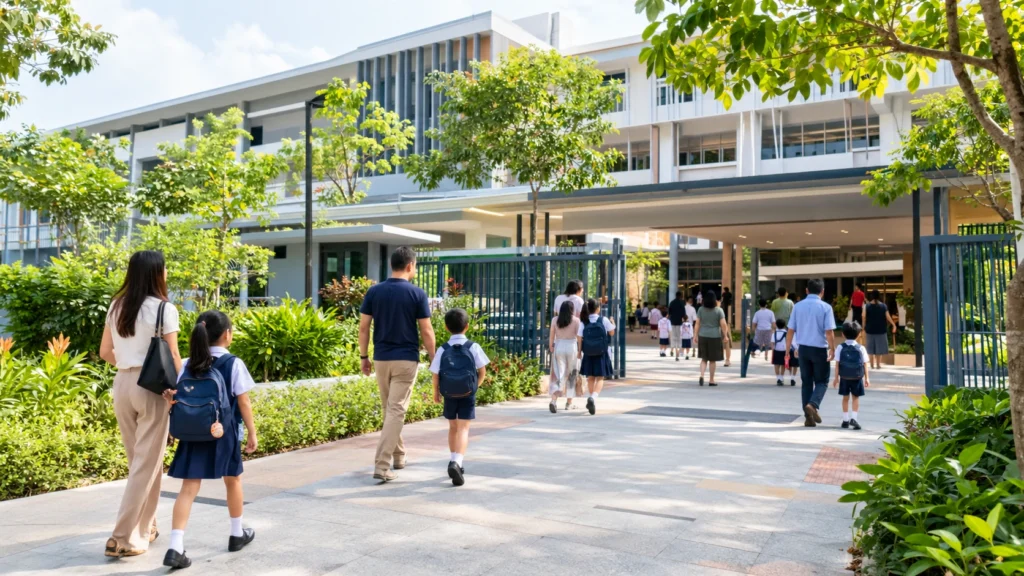
CHIJ St. Nicholas Girls’ School
CHIJ St. Nicholas Girls’ School (Primary) is a government-aided girls’ school in Ang Mo Kio. Its 2026 Phase 2C record showed 74 applicants for 48 places, or about 1.54 applicants per place. Parents should also check its current school profile, programmes and registration requirements rather than relying only on demand figures.
What Makes a Primary School One of the Top Choices in Singapore?
There is no single formula for deciding which Singapore primary school is “top”. Different families can place different weight on the same factors.
P1 Demand and Registration Competition
P1 demand is useful because it shows how many families are competing for available places. Applicants, vacancies, subscription ratios and balloting records can therefore help parents understand admission competition. But demand should not be treated as an academic quality score. A school can be highly subscribed because of its location, affiliation, programmes or popularity.
School Programmes and CCAs
Parents may also compare school-based programmes, CCAs, Mother Tongue offerings and other learning opportunities. MOE’s current approach to supporting students with academic strengths has shifted away from the former Gifted Education Programme structure towards broader school-based provisions. From 2027, more students will have access to school-based extensions and advanced modules through designated centres.
Affiliation and Location
Location can be particularly important during P1 admission. MOE explains that home-school distance can affect priority admission and provides guidance on how distance and balloting work. Parents should therefore check their actual home address against the latest MOE information rather than assuming that living nearby guarantees a place.
P1 Demand and Balloting: What the Numbers Actually Tell You
An applicant-to-vacancy ratio is a simple way to describe demand.
For example:
100 applicants ÷ 50 vacancies = 2.0× demand
This means there are two applicants for every available place in that registration group. It does not mean the school is academically twice as good as another school.
The 2026 Phase 2C exercise illustrates why this distinction matters. MOE’s final figures showed that 79 of 179 primary schools received more applicants than places, with balloting conducted at 73 schools. Princess Elizabeth had the highest Phase 2C oversubscription ratio at 3.98×.
Balloting can also depend on the child’s citizenship and home-school distance, so a headline ratio should not be treated as an individual admission probability.
P1 Registration Phases in Singapore
For Singapore Citizen and Permanent Resident children, P1 registration is conducted through five phases: Phase 1, Phase 2A, Phase 2B, Phase 2C and Phase 2C Supplementary. Each phase has its own eligibility requirements.
| Registration Phase | General Purpose |
| Phase 1 | Children with a sibling studying in the school |
| Phase 2A | Certain former-student, staff, committee and MOE Kindergarten links |
| Phase 2B | Parent volunteer, community and other qualifying links |
| Phase 2C | Children who are not yet registered in a primary school |
| Phase 2C Supplementary | Children who remain unregistered after Phase 2C |
MOE states that SC and PR parents register online and can register their child only in a phase for which the child is eligible. If an application is unsuccessful, the child can proceed to the next eligible phase.
For the 2026 registration exercise, MOE’s portal covered children born between 2 January 2020 and 1 January 2021. Registration for international students follows a different process.
How to Choose the Right Primary School for Your Child
A good shortlist should go beyond a primary school ranking.
1. Check the location.
Think about the daily journey, transport options and whether the school’s location works for your family.
2. Review P1 registration data.
Look at vacancies, applicants and recent balloting information. Current figures are more useful than an old ranking.
3. Compare programmes.
Check the school’s CCAs, Mother Tongue offerings and school-based programmes. If your child has a particular interest, see whether the school provides opportunities that match it.
4. Consider affiliation.
If affiliation is important to your family, check the school’s current arrangements and eligibility rules rather than relying on assumptions.
5. Think about your child.
A school that attracts many applicants may still not be the right fit for every child. Consider interests, learning needs, school environment and daily routine.
6. Use official information.
MOE SchoolFinder and the P1 registration portal provide current information that can help families compare schools and understand registration requirements. MOE itself advises parents to balance their child’s needs with their own preferences when choosing a school.

Frequently Asked Questions About Top Primary Schools in Singapore
What are the top primary schools in Singapore?
There is no official MOE ranking that places Singapore primary schools from #1 onwards. Parents commonly compare schools using P1 demand, programmes, location, affiliation, CCAs and other factors. Current registration data can help identify schools with particularly strong demand.
Is there an official primary school ranking in Singapore?
No. MOE provides school information, registration data, vacancies and balloting information rather than an official national league table of primary schools. Third-party websites may create rankings using different methodologies, so parents should check what each ranking actually measures.
Which primary schools have high P1 demand?
The 2026 Phase 2C data showed particularly high demand at Princess Elizabeth Primary School, Northland Primary School, Nan Hua Primary School, Chongfu School, Rosyth School and St. Hilda’s Primary School. Demand can change from year to year and between registration phases.
Does high P1 demand mean a school is better?
Not necessarily. High P1 demand means that more families are competing for available places. It can reflect location, programmes, affiliation or popularity, but it is not an official measure of school quality.
How should parents choose a primary school in Singapore?
Start with your child’s needs and your family’s preferences. Then compare location, programmes, CCAs, affiliation, P1 vacancies, recent balloting and registration eligibility. Checking current MOE information is essential because admission details can change between registration exercises.
Final Thoughts
The top primary schools in Singapore are not defined by one official ranking. P1 demand can show where competition is high, but parents should also consider programmes, location, affiliation, CCAs and their child’s individual needs. The 2026 registration figures provide a useful snapshot of demand, while MOE’s P1 portal remains the place to check current registration requirements, vacancies and admission information. A thoughtful shortlist should combine the numbers with what actually works for your child and family.

Global Arena is a Singapore-focused SEO and digital marketing brand with a network of 25+ publisher websites, helping businesses strengthen their online presence through guest posting, link building, content marketing, and digital PR.
For collaborations, publishing opportunities, or business inquiries:
Hamza@globalarena.org | WhatsApp: +971 52 399 4589