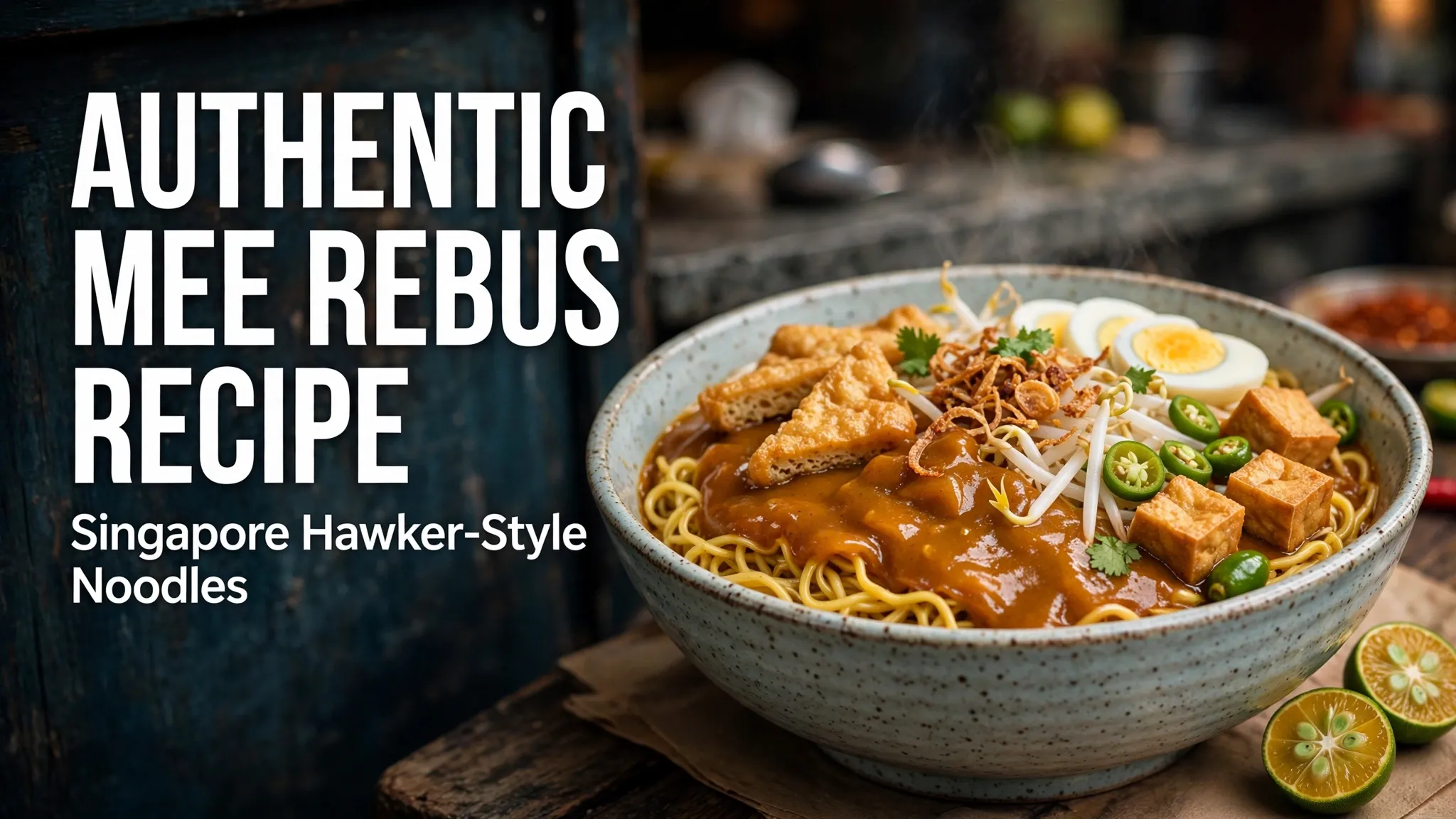
Mee Rebus Recipe: How to Make Authentic Singapore Hawker-Style Noodles
A good bowl of Mee Rebus Recipe brings together springy yellow noodles, rich sweet potato gravy and fragrant spices. It’s a familiar favourite at Singapore hawker centres, where the thick kuah is usually served with tofu, bean sprouts, boiled egg and fresh garnishes. Making it at home takes a little preparation, especially for the rempah, but the cooking process is quite manageable. This Mee Rebus Recipe shows you how to prepare a homemade hawker-style version with a sweet, savoury and mildly spicy gravy.
TL;DR – Mee Rebus Recipe
Mee Rebus Recipe is a popular Singapore and Malay-style noodle dish made with yellow egg noodles and thick, sweet-savoury gravy prepared from mashed sweet potatoes, stock and aromatic rempah. It is usually served with tau pok, tau kwa, bean sprouts, boiled eggs, fried shallots, green chillies and calamansi for a balanced hawker-style meal.
| Recipe information | Details |
|---|---|
| Prep time | 20 minutes |
| Cook time | 40 minutes |
| Total time | 60 minutes |
| Servings | 4 |
| Difficulty | Medium |
| Cuisine | Singapore / Malay-inspired |
What Is Mee Rebus?
Mee Rebus is a Malay noodle dish whose name means boiled noodles. It is popular in Singapore and Malaysia, although recipes and toppings can differ between stalls and households. The dish is recognised by its yellow noodles and thick kuah, commonly made with sweet potatoes, stock and a fragrant spice paste. Its flavour is sweet, savoury and gently spicy, with a little tang from tamarind or calamansi. Tau pok, tau kwa, bean sprouts and boiled eggs are familiar additions in Singapore hawker-style servings.
Mee Rebus Recipe Ingredients
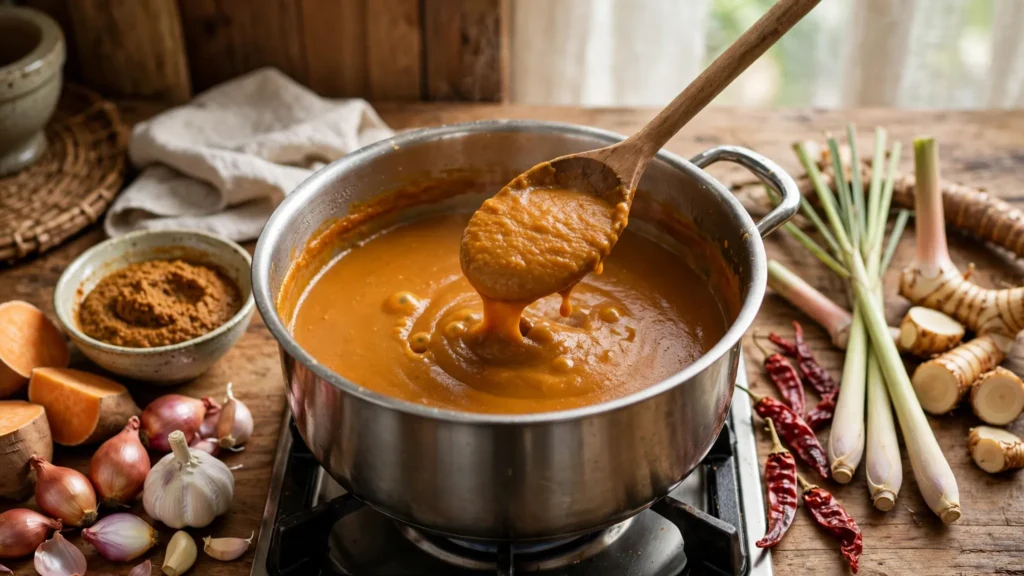
The gravy gives Mee Rebus Recipe its familiar taste and texture. Sweet potatoes help thicken it naturally, while taucheo, curry powder and rempah bring savoury depth and fragrance.
Ingredients for the Mee Rebus Gravy
| Ingredient | Quantity |
|---|---|
| Sweet potatoes (keledek) | 400g |
| Chicken or beef stock | 750ml |
| Taucheo | 2 tbsp |
| Curry powder | 2 tbsp |
| Tamarind water | As needed |
| Cooking oil | 2 tbsp |
Ingredients for the Rempah (Spice Paste)
These are suggested starting quantities for a four-serving batch. Adjust the dried chillies to suit your preferred heat level.
- 6 shallots (bawang merah)
- 4 garlic cloves
- 4 dried chillies, soaked if needed
- 2cm piece of ginger
- 2cm piece of galangal (lengkuas)
- 1 stalk of lemongrass (serai), using the tender part
- 2 tbsp dried shrimp (udang kering), rinsed and soaked
Blend the ingredients into a smooth paste, adding a little water only when needed.
Noodles and Traditional Toppings
| Ingredient | Quantity |
|---|---|
| Fresh yellow noodles (mee kuning) | 500g |
| Bean sprouts (taugeh) | 100g |
| Tau pok | 4 pieces |
| Tau kwa | 150g |
| Hard-boiled eggs | 2 |
| Fried shallots | For garnish |
| Green chillies | As needed |
| Calamansi lime | 2–4 |
The quantities above are a starting recipe specification. Test the seasoning and gravy consistency before publishing or serving the final version.
How to Make Mee Rebus Recipe at Home
Follow these steps to prepare the sweet potato gravy, cook the noodles and assemble your bowls.
Step 1 – Prepare and Boil the Sweet Potatoes
Peel the sweet potatoes and cut them into small, even pieces so they cook at a similar rate. Place them in a pot of water and boil until fork-tender. This usually takes around 12–15 minutes, depending on the size of the pieces. Drain them, then mash or blend until smooth. Set aside. A smooth mixture makes it easier to get thick gravy without lumps.
Step 2 – Prepare the Rempah Spice Paste
Soak the dried chillies in warm water until softened, then drain them. Rinse and soak the dried shrimp if needed. Add the shallots, garlic, dried chillies, ginger, galangal, lemongrass and dried shrimp to a blender. Blend into a smooth paste, adding a small splash of water if the mixture is too dry. You want a paste that can cook evenly in the oil, rather than a watery mixture.
Step 3 – Fry the Spice Paste
Heat the cooking oil in a large pot over medium heat. Add the rempah and fry for several minutes, stirring regularly so it does not stick to the bottom. Once it smells fragrant and the raw smell of the ingredients has faded, stir in the taucheo and curry powder. Cook for another minute or two. Don’t rush this stage — properly fried rempah gives the gravy a deeper flavour.
Step 4 – Make the Mee Rebus Gravy
Pour the stock into the pot and stir to combine it with the spice paste. Add the mashed sweet potatoes gradually, stirring as you go to prevent lumps from forming. Bring the mixture to a gentle simmer, then lower the heat and cook for around 10–15 minutes. Stir occasionally, especially near the bottom of the pot.
Add tamarind water a little at a time and taste the gravy. Adjust the seasoning as needed. The finished kuah should be thick enough to coat the noodles, but still easy to pour. If it becomes too thick, loosen it with a little warm stock or water.
Step 5 – Prepare the Yellow Noodles and Toppings
Bring a separate pot of water to a boil. Blanch the fresh yellow noodles briefly according to their packaging instructions, then drain well. Avoid cooking them for too long, as they can turn soft once the hot gravy is added.
Blanch the bean sprouts until just tender but still slightly crisp. Slice the tau pok and tau kwa into bite-sized pieces. Peel and quarter the hard-boiled eggs, and prepare the green chillies, fried shallots and calamansi.
Step 6 – Assemble and Serve
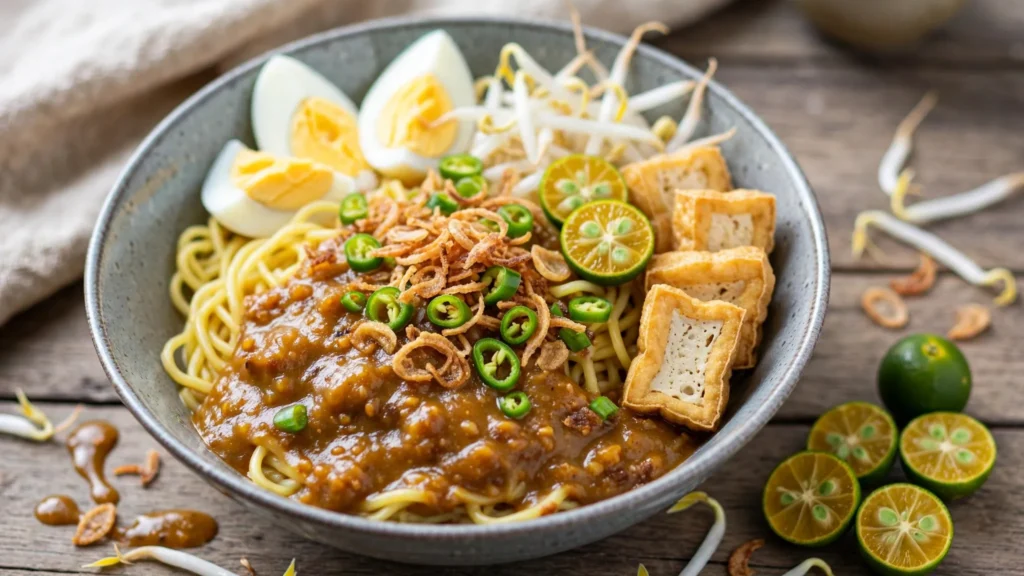
Divide the yellow noodles between four serving bowls. Ladle the hot Mee Rebus gravy over each portion, making sure the noodles are well coated. Add tau pok, tau kwa, bean sprouts and boiled egg.
Finish with fried shallots and sliced green chillies. Serve with calamansi on the side so everyone can add a little fresh citrus juice to taste. Enjoy the noodles while the gravy is hot.
Mee Rebus Recipe Serving and Ingredient Measurement Guide
The table below scales the main ingredients for different group sizes. It assumes the same gravy-to-noodle ratio as the four-serving recipe.
| Servings | Yellow noodles | Sweet potatoes | Stock |
|---|---|---|---|
| 2 | 250g | 200g | 375ml |
| 4 | 500g | 400g | 750ml |
| 6 | 750g | 600g | 1.1L |
| 8 | 1kg | 800g | 1.5L |
When preparing a larger pot, add the stock gradually. You may need to adjust the tamarind, taucheo and other seasonings, as simply doubling every ingredient can change the final balance.
Tips for Making the Best Mee Rebus Gravy
- Fry the rempah well: Give the spice paste enough time in the oil to lose its raw smell.
- Blend the sweet potatoes smoothly: This helps create a thick gravy without unwanted lumps.
- Simmer gently: A little extra cooking time helps the flavours come together.
- Balance the taste: Adjust the sweet, savoury and sour notes with seasoning and tamarind water.
- Check the texture: The gravy should be thick but pourable, not stiff like a paste.
- Prepare ahead: You can cook the gravy earlier and reheat it when you’re ready to serve.
Mee Rebus Recipe Ingredient Substitutions
Some ingredients can be changed if you are cooking with what you already have at home. These swaps may alter the traditional flavour, though the dish can still be enjoyable.
| Original ingredient | Alternative |
|---|---|
| Beef stock | Chicken or vegetable stock |
| Dried shrimp | Omit for a vegetarian version |
| Fresh yellow noodles | Fresh egg noodles |
| Fresh galangal | Frozen galangal |
| Tamarind | A little lime juice, added to taste |
For a vegetarian version, use vegetable stock and leave out the dried shrimp. Check that your curry powder and other seasonings do not contain animal-based ingredients if you need the dish to be fully vegetarian.
How to Store and Reheat Mee Rebus Gravy
Store leftover gravy separately from the noodles and toppings. Allow it to cool briefly, then transfer it to an airtight container and refrigerate promptly. Use refrigerated gravy within 3–4 days. For longer storage, freeze it in meal-sized portions for around 2–3 months. Thaw frozen gravy in the refrigerator before reheating. Warm it in a pot until steaming hot, stirring regularly. Add a splash of stock or water if it has thickened during storage.
Common Mee Rebus Recipe Cooking Mistakes
A few small adjustments can fix most gravy problems. Check the texture and taste before serving, rather than waiting until the bowls are assembled.
| Common problem | How to fix it |
|---|---|
| Watery gravy | Simmer uncovered for longer, stirring regularly. |
| Gravy is too thick | Add warm stock a little at a time. |
| Gravy tastes too sweet | Add a little tamarind water and taste again. |
| Bland gravy | Adjust the seasoning, taucheo or curry powder gradually. |
| Lumpy gravy | Blend the sweet potato mixture until smooth before adding it. |
Frequently Asked Questions About Mee Rebus Recipe
1. What is Singapore Mee Rebus made of?
Singapore Mee Rebus is usually made with yellow egg noodles and thick sweet potato gravy. The gravy contains stock, rempah and seasonings such as taucheo and curry powder. Common toppings include tau pok, tau kwa, bean sprouts, boiled egg, fried shallots and green chillies.
2. Is Mee Rebus spicy?
Mee Rebus is usually mildly spicy, although the heat varies between recipes and hawker stalls. Dried chillies are used in the rempah. Reduce the amount for a gentler flavour or add more if you prefer a hotter gravy.
3. What noodles are used for Mee Rebus?
Fresh yellow egg noodles, known as mee kuning, are commonly used. They have a springy texture and hold up well under the thick sweet potato gravy.
4. Can I make Mee Rebus without beef?
Yes. Chicken stock, prawn stock or vegetable stock can be used instead of beef stock. The flavour will differ slightly, but the sweet potato gravy and rempah still provide plenty of taste.
5. Can Mee Rebus gravy be frozen?
Yes. Freeze the gravy separately in airtight, meal-sized containers. Thaw it in the refrigerator and reheat until steaming hot. Stir well and add a little stock or water if the texture has become too thick.
Conclusion – Homemade Singapore-Style Mee Rebus Recipe
Homemade Mee Rebus Recipe brings hawker-style comfort to your kitchen with springy noodles, aromatic rempah and rich sweet potato gravy. Add your favourite toppings, adjust the spice and sourness, and serve each bowl hot with calamansi.

Global Arena is a Singapore-focused SEO and digital marketing brand with a network of 25+ publisher websites, helping businesses strengthen their online presence through guest posting, link building, content marketing, and digital PR.
For collaborations, publishing opportunities, or business inquiries:
Hamza@globalarena.org | WhatsApp: +971 52 399 4589