Rendang Recipe: How to Make Authentic Indonesian Beef Rendang
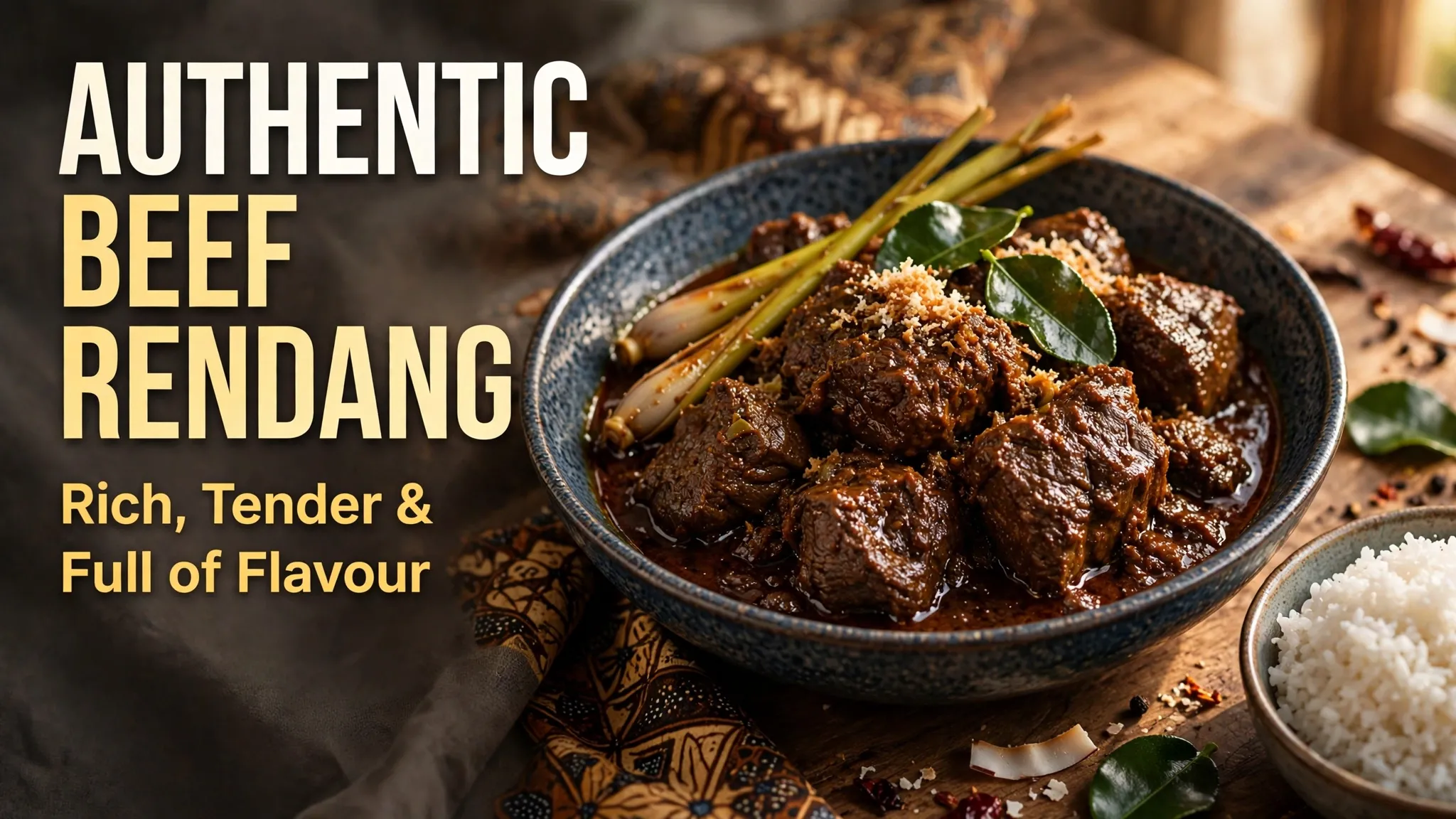
A good rendang takes time, but the result is worth it: tender beef cooked slowly in coconut milk, fresh spices and aromatic herbs until the sauce turns thick, dark and deeply flavourful. This rendang recipe follows an Indonesian-style approach, using beef chuck, homemade rempah, lemongrass, galangal and toasted coconut. The trick is to let the beef simmer gently and give the sauce enough time to reduce. Serve it with steamed rice or ketupat for a satisfying meal at home.
TL;DR – Rendang Recipe
Rendang is a slow-cooked Indonesian beef dish made with beef, coconut milk and a fragrant rempah spice paste. Simmer the beef gently with the aromatics until tender, then reduce the sauce until thick, dark and rich. Serve homemade beef rendang with steamed rice or ketupat.
Rendang Recipe – Quick Facts
| Recipe detail | Information |
|---|---|
| Preparation time | 20 minutes |
| Cooking time | 2.5–3 hours |
| Total time | 2 hours 50 minutes–3 hours 20 minutes |
| Servings | 4–6 |
| Cuisine | Indonesian |
| Course | Main course |
| Cooking method | Slow cooking |
| Difficulty | Medium |
These are estimated timings. Actual cooking time can vary depending on the beef cut, size of the pieces and heat level.
What Is Rendang?
Rendang is a traditional Indonesian dish associated with the Minangkabau people of West Sumatra. Known locally as rendang daging, it is usually made by cooking beef slowly with coconut milk and a fragrant paste of chillies, shallots, galangal and other spices. The long cooking process gives the meat a tender texture and a deep, rich flavour. Indonesian rendang is often cooked until fairly dry, while some Malaysian beef rendang versions have a softer, slightly saucier finish. In Singapore, rendang is a familiar favourite in Malay food stalls and nasi padang meals.
Ingredients for Authentic Beef Rendang recipe
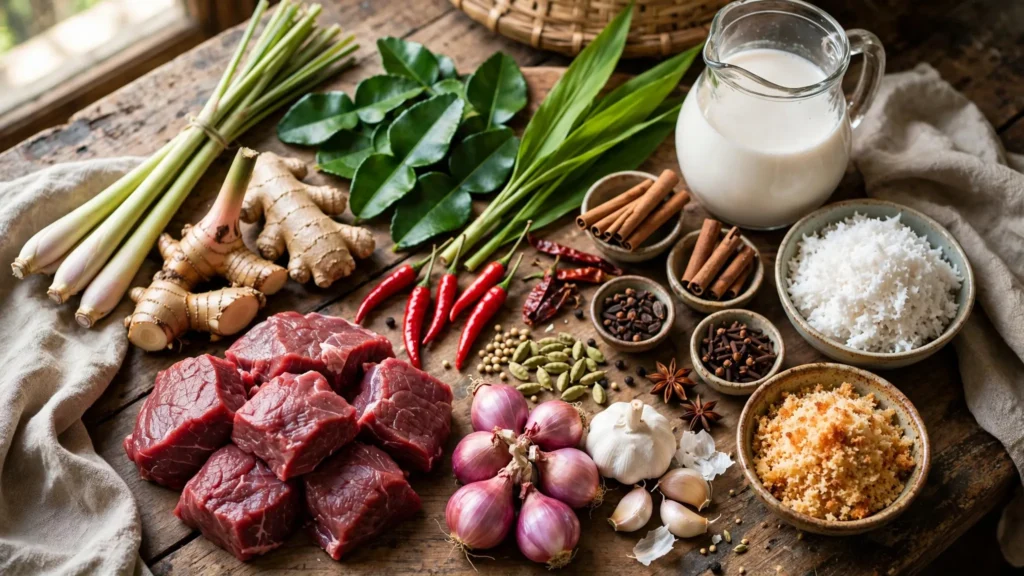
The flavour of traditional beef rendang comes from its spice paste, coconut milk and slow cooking. Fresh aromatics give the dish its fragrance, while kerisik adds a toasted coconut taste and helps create a thicker sauce.
Main Ingredients
| Ingredient | Quantity | Purpose |
|---|---|---|
| Beef chuck | 1 kg | Main protein |
| Coconut milk (santan) | 400 ml | Rich sauce |
| Shallots | 8 | Aromatic base |
| Garlic | 5 cloves | Flavour |
| Red chillies | 5–8 | Heat |
| Lemongrass (serai) | 2 stalks | Fresh aroma |
| Galangal (lengkuas) | 2-inch piece | Traditional flavour |
| Ginger | 1-inch piece | Warm flavour |
| Ground coriander | 1 tsp | Spice |
| Ground cumin | ½ tsp | Earthy flavour |
| Kaffir lime leaves | 4 | Citrus aroma |
| Kerisik | ½ cup | Toasted coconut flavour |
| Gula Melaka | 1 tbsp | Balanced sweetness |
| Cooking oil | 2–3 tbsp | Frying the rempah |
| Salt | To taste | Seasoning |
| Water | 300–400 ml | Helps cook the beef |
Essential Ingredients for Rempah Rendang recipe
Rempah is the spice paste that gives rendang its character. Blend the shallots, garlic, ginger, galangal, red chillies and lemongrass until you get a smooth, thick paste. For a more traditional flavour, you can also add dried red chillies (cili kering) after soaking them in hot water until soft.
Turmeric leaves (daun kunyit) are another lovely addition. Slice one or two leaves finely and add them during cooking for a fragrant herbal note. If fresh turmeric leaves are unavailable, leave them out rather than adding a large amount of ordinary turmeric powder.
Kerisik is toasted grated coconut, cooked until golden brown and fragrant. You can make it at home by dry-toasting unsweetened grated coconut in a pan over low heat, stirring regularly. Galangal can be replaced with a little extra ginger if needed, although the flavour will be different.
How to Make Rendang Step by Step
The cooking process is straightforward, but don’t rush it. Rendang needs gentle heat so the beef becomes tender while the coconut milk and spices slowly develop a rich flavour.
Step 1 – Prepare the Rendang Recipe Spice Paste
Peel the shallots, garlic, ginger and galangal. Cut the lemongrass into smaller pieces, using the tender lower section. Remove the stems from the chillies and blend everything together until smooth.
Add a splash of water if your blender needs help, but avoid making the paste too runny. A thick rempah is easier to fry properly and gives the finished dish a fuller flavour.
Step 2 – Prepare the Kerisik
Place the grated coconut in a dry frying pan over low heat. Stir continuously so it browns evenly and does not burn.
Once it turns golden brown and smells nutty, remove it from the heat. Let it cool slightly, then grind or pound it until the coconut becomes oily and paste-like. This is your kerisik.
Step 3 – Cook the Spice Paste
Heat the cooking oil in a heavy-bottomed pot over medium-low heat. Add the blended rempah and fry for around 10–15 minutes, stirring regularly.
The paste should become darker, fragrant and less raw-smelling. If it starts sticking to the bottom, lower the heat and add a small splash of water. Don’t rush this stage — undercooked spice paste can leave the rendang tasting harsh.
Step 4 – Add Beef and Coconut Milk
Cut the beef chuck into large, even pieces, roughly 4–5 cm each. Add the beef to the pot and stir until every piece is coated with the spice paste.
Pour in the coconut milk and around 300 ml of water. Add the kaffir lime leaves and bruised lemongrass stalks. Stir gently and bring everything to a gentle simmer.
Step 5 – Slow-Cook Until the Beef Is Tender
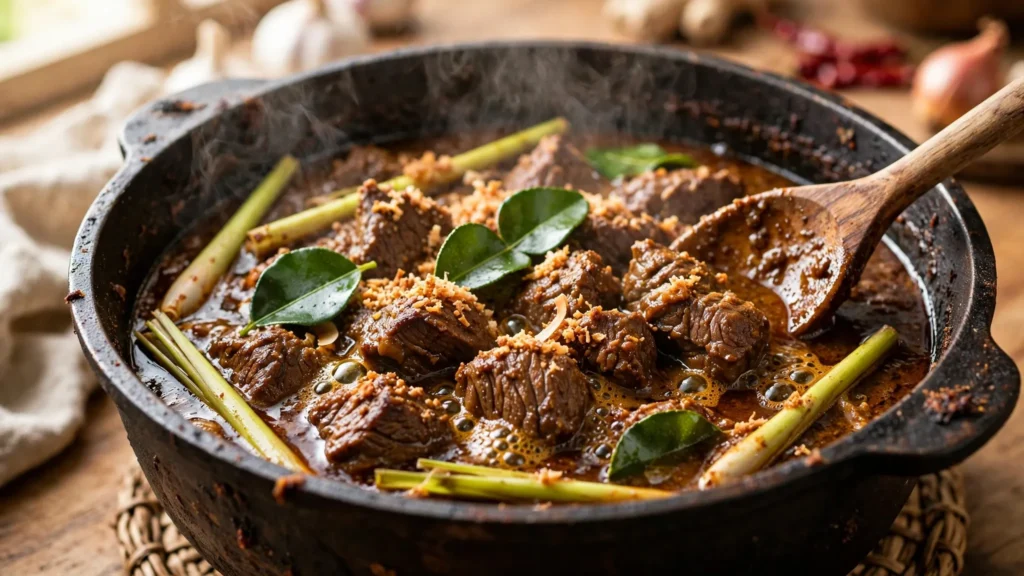
Reduce the heat to low and let the beef cook gently for around 2–2.5 hours. Keep the pot partially covered at first, allowing steam to escape.
Stir occasionally, especially around the bottom and sides of the pot. The coconut mixture should bubble gently, not boil aggressively. If the liquid reduces too quickly before the beef becomes tender, add a little hot water.
Check the beef with a fork. It should be soft and easy to pull apart, but the pieces should still hold their shape.
Step 6 – Reduce the Sauce and Finish
Add the kerisik and gula Melaka. Season with salt, then stir well so the coconut paste coats the beef.
Continue cooking uncovered over low heat for another 20–30 minutes, stirring more frequently as the sauce thickens. The colour should deepen and the oil may begin to separate from the mixture.
Stop when the beef is tender and coated in a thick, dark sauce. For a drier Indonesian-style finish, allow more liquid to evaporate, taking care not to let the spices burn.
Rendang Recipe Cooking Time and Texture Guide
| Cooking stage | Estimated time | Expected result |
|---|---|---|
| Prepare ingredients | 15–20 minutes | Ingredients ready |
| Cook rempah | 10–15 minutes | Fragrant spice paste |
| Simmer beef | 2–2.5 hours | Tender beef |
| Reduce sauce | 20–30 minutes | Thick, dark coating |
These timings are estimates rather than fixed rules. Large beef pieces or tougher cuts may need more time, while smaller pieces can cook faster. Check the texture of the meat instead of relying on the clock alone.
Tips for Making Perfect Beef Rendang
- Choose the right beef: Beef chuck and other slow-cooking cuts work well because they soften during long cooking.
- Use full-fat coconut milk: It gives the sauce a richer taste and better texture.
- Fry the rempah properly: Give the spice paste enough time to cook before adding the liquid.
- Keep the heat low: A gentle simmer helps soften the beef without scorching the coconut mixture.
- Stir more often near the end: As the sauce thickens, it can stick to the bottom of the pot.
- Use fresh aromatics: Fresh lemongrass, ginger and galangal give the dish a more fragrant flavour.
Common Rendang Recipe Cooking Mistakes
Beef is still tough: Continue cooking over low heat and add a little hot water if the pot becomes too dry.
Sauce is too watery: Remove the lid and let the liquid reduce slowly.
Coconut mixture burns: Lower the heat, use a heavy-bottomed pot and stir more frequently.
Spice paste tastes raw: Fry the rempah for longer before adding the beef and coconut milk.
Rendang recipe is too spicy: Use fewer chillies next time and remove their seeds before blending. Adding more coconut milk may soften the heat, but it will also change the sauce consistency.
What to Serve with Rendang in Singapore?
Beef Rendang recipe goes particularly well with steamed white rice, which soaks up the rich coconut sauce. For a Malay-style meal, serve it with nasi lemak, ketupat or lontong. A side of acar (pickled vegetables) adds a refreshing, slightly sour contrast to the rich meat. You can also enjoy rendang as part of a nasi padang-style spread with other vegetable and meat dishes.
How to Store and Reheat Beef Rendang
Allow leftover rendang to cool slightly, then transfer it into airtight containers and refrigerate within two hours of cooking. Eat refrigerated leftovers within 3–4 days, or freeze them for around 2–3 months for better quality. Thaw frozen rendang in the fridge before reheating. Warm it in a covered pan over low heat until steaming hot throughout. Add a small splash of water if the sauce has become too thick.
Frequently Asked Questions About Rendang Recipe
1. What Is the Secret to a Good Rendang?
The secret is properly fried rempah, full-fat coconut milk, suitable beef and slow cooking. Give the sauce enough time to reduce so the spices coat the tender meat.
2. How Long Does Beef Rendang Take to Cook?
Beef rendang usually takes around 2.5–3 hours to cook, depending on the beef cut, piece size and heat level. The meat should be tender before you finish reducing the sauce.
3. What Is the Best Cut of Beef for Rendang?
Beef chuck is a good choice because it becomes tender during slow cooking. Other suitable stewing cuts can work too, provided they have enough time to soften.
4. Is Rendang Indonesian or Malaysian?
Rendang is strongly associated with the Minangkabau people of West Sumatra, Indonesia. It is also widely enjoyed in Malaysia and Singapore, where different regional cooking styles are popular.
5. Can I Make Rendang Ahead of Time?
Yes. You can cook rendang a day ahead, cool it promptly and refrigerate it in an airtight container. Reheat it thoroughly before serving.
Conclusion – Try This Homemade Rendang Recipe
Homemade beef Rendang recipe takes patience, but the combination of tender beef, fragrant rempah and rich coconut sauce makes the effort worthwhile. Cook it slowly, let the sauce reduce properly and enjoy it with rice or ketupat.

Global Arena is a Singapore-focused SEO and digital marketing brand with a network of 25+ publisher websites, helping businesses strengthen their online presence through guest posting, link building, content marketing, and digital PR.
For collaborations, publishing opportunities, or business inquiries:
Hamza@globalarena.org | WhatsApp: +971 52 399 4589