Chicken Rice Calories: Nutrition Facts, Protein & Healthy Eating Tips (2026)
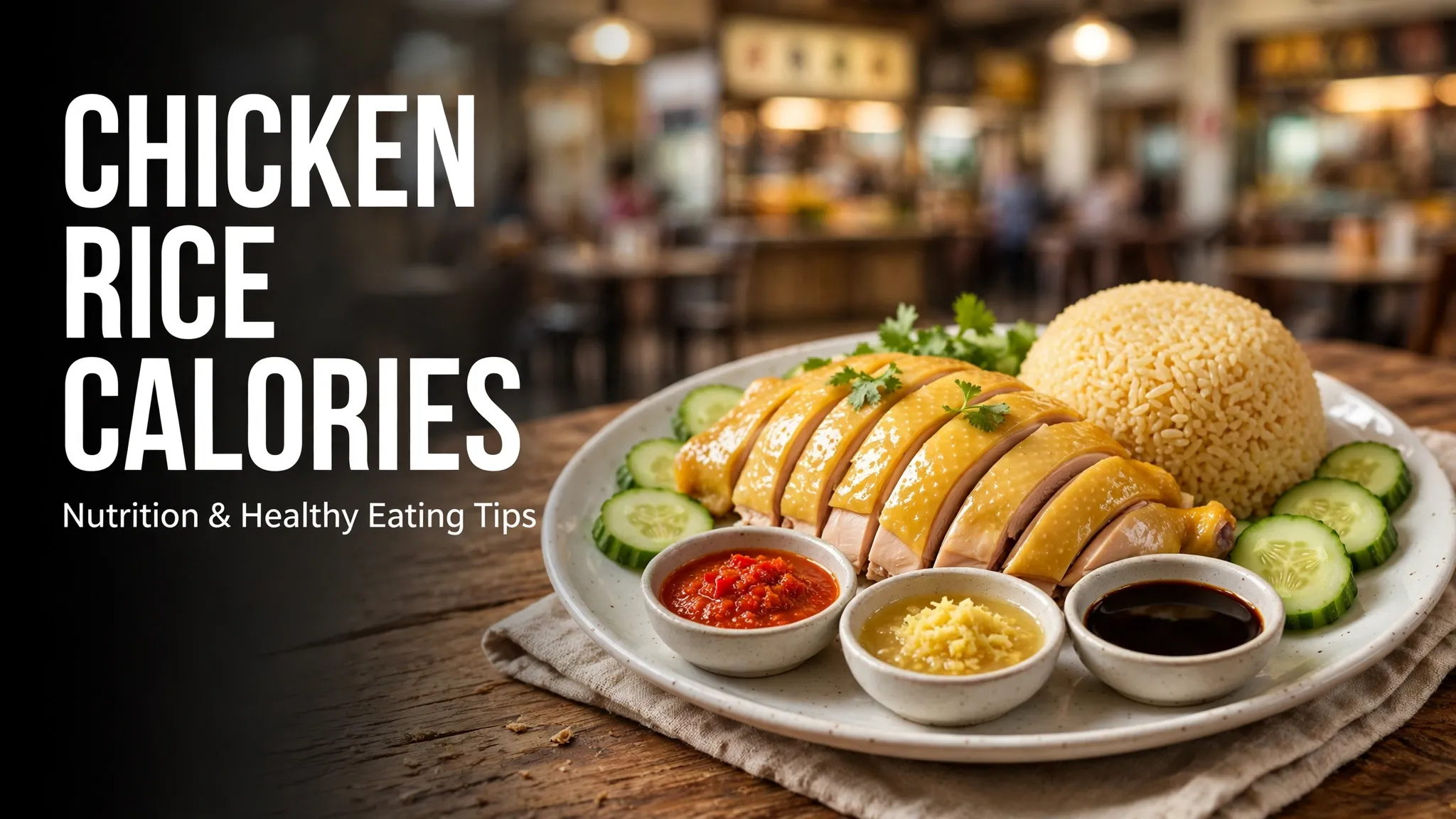
Chicken rice is a familiar meal in Singapore, found at neighbourhood hawker centres, food courts and shopping mall stalls. But how many calories are in one plate? Chicken rice calories typically range from 450–650 calories per serving, depending on the rice portion, chicken cut, skin and sauces. Steamed and roasted chicken rice can also differ in fat content and total energy. The serving size matters just as much as the cooking method.
TL;DR – How Many Calories Are in One Plate of Chicken Rice?
A standard Singapore hawker serving of steamed chicken rice is listed at 488 calories (346g), while a roasted chicken rice serving is listed at 643 calories (363g) in a 2026 HPB-data-based nutrition listing. Chicken provides protein, while rice supplies most carbohydrates. Ask for siu fan (less rice) and sauces on the side to adjust your meal.
| Quick facts | Information |
|---|---|
| Primary dish | Hainanese chicken rice |
| Steamed chicken rice | 488 kcal per 346g serving |
| Roasted chicken rice | 643 kcal per 363g serving |
| Protein source | Chicken meat |
| Main carbohydrate source | Rice |
| Fat sources | Chicken skin and cooking oil |
| Common condiments | Chilli, ginger and dark soy sauce |
| Lower-calorie adjustment | Less rice and skinless chicken |
Calorie figures are database examples, not fixed values for every hawker stall. The two portions also have different weights. NutriKaki+1
How Many Calories Are in One Plate of Chicken Rice?
Calories in a Regular Chicken Rice Serving
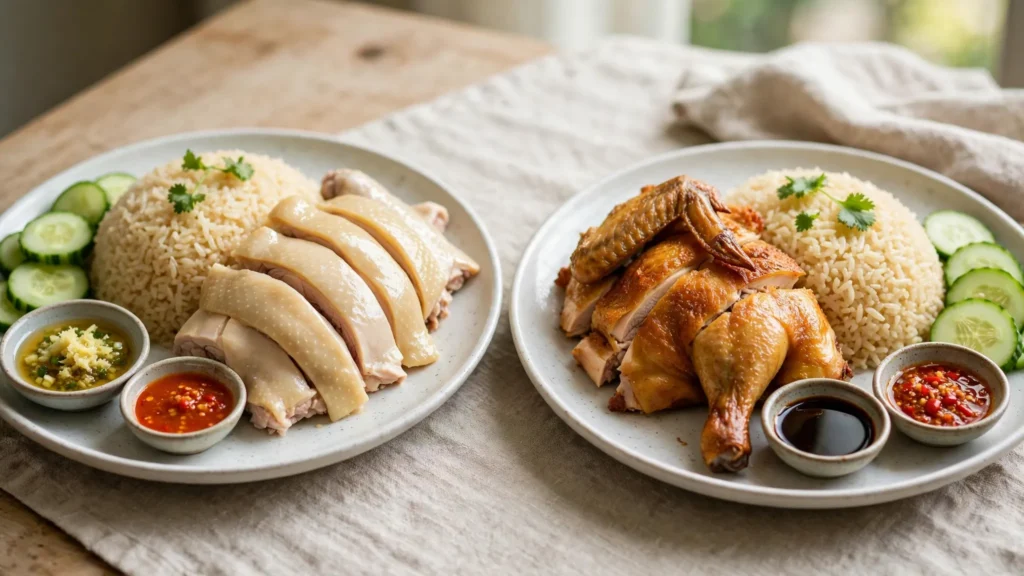
The calorie count depends on how much food is on the plate. Singapore’s food composition data lists steamed chicken rice at 488 kcal for a 346g serving. A roasted version is listed at 643 kcal for 363g. These figures give you a useful reference when tracking hawker meals, but your usual chicken rice stall may serve a smaller or larger portion.
A plate with extra rice, a larger chicken portion or more skin can have a different calorie count. Even two plates ordered from different stalls may not contain the same amount of rice or chicken.
Chicken Rice Calories Per 100g
A per-100g figure helps compare foods using the same weight. One HPB-data-based listing gives steamed chicken rice as approximately 151 kcal per 100g. A full plate contains several hundred grams, so its total calorie count is much higher.
Don’t simply multiply every per-100g figure by the plate’s listed weight. Some food records account for edible portions and use their own measurement methods. Check whether the figure refers to the whole dish, rice alone or chicken meat before logging it. NutriKaki+1
Table 1: Chicken Rice Calories by Serving Size
| Serving measurement | Calorie information |
|---|---|
| Per 100g | Approximately 151 kcal for the listed steamed chicken rice entry |
| Steamed chicken rice, 346g | 488 kcal |
| Roasted chicken rice, 363g | 643 kcal |
| Larger plate | Depends on the additional rice and chicken |
| Extra rice | Adds calories according to the amount served |
The per-100g and full-plate figures come from a specific nutrition listing. Larger portions and extra rice have no single standard calorie value. NutriKaki+1
Steamed vs Roasted Chicken Rice Calories
Steamed Chicken Rice Calories
Steamed or poached chicken is a familiar choice at Singapore chicken rice stalls. The chicken is cooked in water or stock, while the rice is usually prepared with chicken stock, ginger, garlic and oil. So, even though the chicken is steamed, the rice isn’t the same as plain steamed white rice.
The listed HPB-based serving contains 488 kcal for 346g, with 19.2g protein and 11.6g fat.
Roasted Chicken Rice Calories
Roasted chicken has a different texture and flavour, with browned skin and a roasted surface. The amount of skin, fat and oil used during preparation can affect its nutritional content.
A listed 363g serving of roasted chicken rice contains 643 kcal, 29.7g protein and 20.9g fat. The serving is also heavier than the steamed example, so the two plates aren’t an exact like-for-like comparison. NutriKaki+1
Which Chicken Rice Has Fewer Calories?
In these particular food records, steamed chicken rice has fewer calories. But cooking method alone doesn’t decide the result. Portion weight, rice quantity, chicken cut and skin all matter. For a fair comparison, look at plates with similar weights and similar amounts of rice and chicken.
Table 2: Steamed vs Roasted Chicken Rice
| Comparison | Steamed | Roasted |
|---|---|---|
| Cooking method | Poached or steamed | Roasted |
| Chicken skin | May be included | May be included |
| Fat content | Depends on cut and skin | Depends on cut, skin and preparation |
| Listed serving | 346g | 363g |
| Listed calories | 488 kcal | 643 kcal |
Figures are from the listed HPB-based servings. They do not represent every hawker stall’s recipe. NutriKaki
Chicken Rice Nutrition Facts – Protein, Carbs & Fat
Chicken rice contains protein, carbohydrates and fat in one meal. The exact amounts change with the serving size and recipe. The following figures are from the same HPB-based whole-dish entries, so they can be read together rather than mixing numbers from unrelated recipes.
Protein in Chicken Rice
Chicken meat supplies most of the protein. The listed steamed serving has 19.2g, while the roasted serving has 29.7g. Chicken breast and thigh differ in their fat and protein content, and the amount of meat served also matters.
Carbohydrates in Chicken Rice
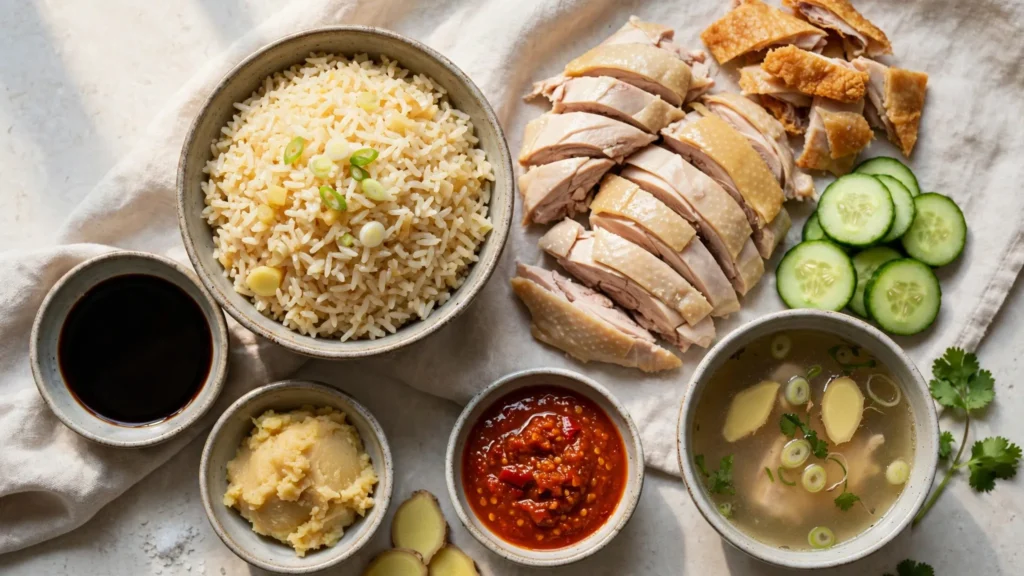
Rice is the main carbohydrate source. Chicken rice is often cooked with stock, ginger, garlic and oil, giving it its familiar aroma. Asking for siu fan can reduce the rice portion and the amount of carbohydrate in your meal.
Fat and Sodium in Chicken Rice
Chicken skin and cooking oil contribute to the fat content. Sauces, stock and seasonings can add sodium, too. The listed steamed serving contains 1,227mg sodium, while the roasted serving contains 1,061mg. NutriKaki
Table 3: Chicken Rice Nutrition Breakdown
| Nutrient | Steamed serving (346g) | Roasted serving (363g) |
|---|---|---|
| Calories | 488 kcal | 643 kcal |
| Protein | 19.2g | 29.7g |
| Carbohydrates | 75.7g | 84.1g |
| Total fat | 11.6g | 20.9g |
| Sodium | 1,227mg | 1,061mg |
Source: HPB food composition figures reproduced in the cited nutrition listing. These are whole-dish values for the stated portions. Saturated fat is not included here because a matching value was not available in that listing. NutriKaki
Calories in Chicken Rice Ingredients
A plate of Hainanese chicken rice is made up of several parts. The rice, chicken, skin and sauces each contribute something to the meal’s nutritional profile.
Chicken Rice and Chicken Meat
The fragrant rice is usually cooked with chicken stock, ginger, garlic and some fat. Chicken meat supplies protein, with the amount depending on the cut and serving size.
Chicken Skin and Cooking Oil
Chicken skin adds fat and energy. Oil used in the rice or during cooking also contributes to the total calorie count. Removing the skin can reduce some fat, although it won’t remove the calories from the rice.
Calories in Chicken Rice Sauces
Chilli sauce, ginger sauce and dark soy sauce bring flavour to the plate. Their ingredients and quantities differ between stalls. Some sauces contain added oil, sugar or salt, so a generous serving can change the meal’s nutritional content.
Other Accompaniments
Cucumber slices add freshness and a little crunch. Chicken soup is often served alongside the rice, but its sodium content depends on the broth and seasoning.
Table 4: Chicken Rice Ingredients and Their Nutritional Contribution
| Ingredient | Nutritional contribution |
|---|---|
| Chicken rice | Carbohydrates and energy |
| Chicken meat | Protein |
| Chicken skin | Fat and energy |
| Chilli sauce | May contribute calories and sodium |
| Dark soy sauce | Sodium |
| Ginger sauce | Varies by recipe and quantity |
| Cucumber | Water and small amounts of nutrients |
| Chicken soup | Fluid; sodium varies with seasoning |
Is Chicken Rice Healthy?
Chicken rice can be part of a balanced meal. It provides protein from chicken and energy from rice, but the fat and sodium content can add up depending on the portion and preparation.
The amount of chicken skin, cooking oil and sauce matters. A plate with a generous rice serving and plenty of salty condiments may be less suitable for someone who is watching their calorie or sodium intake.
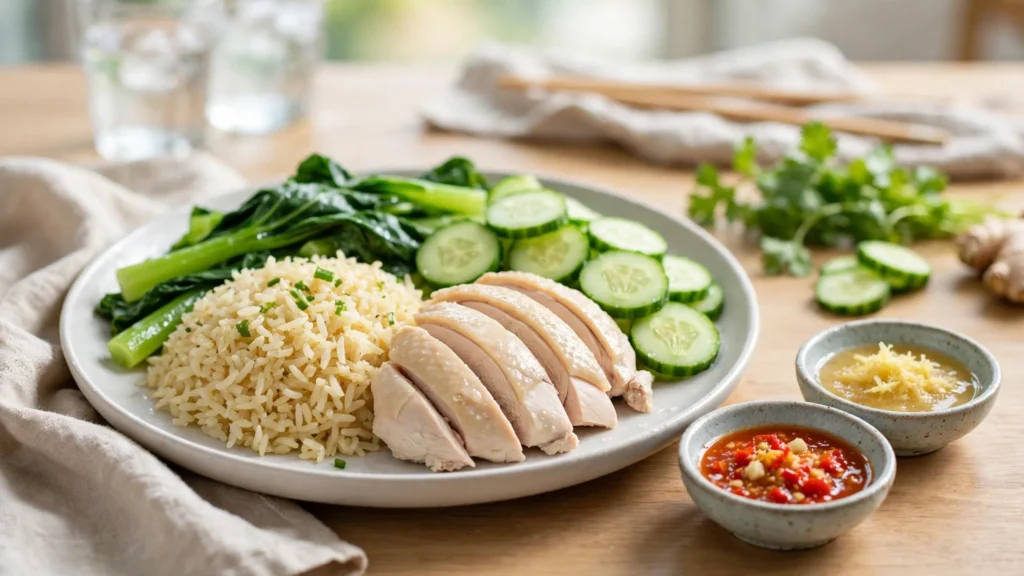
For a more balanced hawker meal, consider a sensible rice portion, chicken with less skin and some vegetables. Cucumber is a common side, though adding leafy greens can give you more variety. You don’t have to stop eating a favourite local dish to make more mindful food choices.
Can You Eat Chicken Rice While Losing Weight?
Yes, chicken rice can fit into a weight-loss eating plan. Weight change is influenced by your total calorie intake over time, not by a single meal. You can still enjoy a plate at your regular hawker centre while paying attention to portion size.
Try ordering less rice if the usual serving is too much for you. Chicken provides protein, which can contribute to a satisfying meal, while the rice supplies carbohydrates for energy. You may also choose to remove the chicken skin and have sauces served separately.
And don’t forget the rest of your day. A balanced eating pattern with suitable portions, vegetables and different protein sources is more useful than relying on one food choice.
How to Reduce Calories in Chicken Rice
You don’t need to change the whole dish to adjust your order. A few small requests at the chicken rice stall can make a difference to the amount of food on your plate.
- Ask for siu fan: This means less rice. It’s a simple way to reduce the rice portion.
- Choose skinless chicken: Removing the skin can reduce some of the fat.
- Request sauce on the side: Add the amount you prefer instead of having a large serving poured over the chicken.
- Skip extra rice: A regular portion may be enough for your meal.
- Add vegetables: Have cucumber or other available greens with your chicken.
- Be mindful of soup: Broth and seasoning can contribute sodium, so consider how much you drink.
Table 5: Regular vs Healthier Chicken Rice Ordering Choices
| Regular choice | Alternative to consider |
|---|---|
| Full rice portion | Siu fan (less rice) |
| Chicken with skin | Skinless chicken |
| Extra sauce | Sauce on the side |
| Few vegetables | More cucumber or greens |
| Extra rice | Stick to a suitable rice portion |
These changes won’t give you an exact calorie reduction unless the portions are weighed and measured. But they can make it easier to manage what goes onto your plate.
Frequently Asked Questions About Chicken Rice Calories
How many calories are in one plate of chicken rice?
A listed Singapore serving of steamed chicken rice contains 488 kcal at 346g. A roasted serving contains 643 kcal at 363g. Actual hawker portions can differ in weight and ingredients. NutriKaki
Is steamed chicken rice healthier than roasted chicken rice?
The listed steamed serving has fewer calories and less fat than the roasted example. The portions have different weights, though, and the result can change with the chicken cut, skin and rice quantity.
How many calories are in chicken rice without skin?
There isn’t one fixed figure for skinless chicken rice. Removing the skin reduces some fat, but the rice, chicken portion and sauces still contribute calories. A precise estimate requires the amount of each ingredient.
How much protein is in a plate of chicken rice?
The listed steamed serving contains 19.2g protein, while the roasted serving contains 29.7g. The amount depends on how much chicken is served and which cut is used. NutriKaki
Is chicken rice good for weight loss?
It can fit into a calorie-controlled diet. Consider a smaller rice portion, less skin and moderate sauce, while keeping track of your meals across the day.
Can I eat chicken rice every day?
You can include it regularly, but eating the same meal every day may limit dietary variety. Rotate your meals, include vegetables and watch your intake of salty sauces and seasonings.
Conclusion – Enjoying Chicken Rice While Managing Calories
Chicken rice calories vary with portion size, chicken cut, skin and sauces. The listed steamed serving has fewer calories than the roasted example, but both can fit into a balanced eating pattern. At your usual Singapore hawker stall, consider siu fan, sauce on the side and extra vegetables.

Global Arena is a Singapore-focused SEO and digital marketing brand with a network of 25+ publisher websites, helping businesses strengthen their online presence through guest posting, link building, content marketing, and digital PR.
For collaborations, publishing opportunities, or business inquiries:
Hamza@globalarena.org | WhatsApp: +971 52 399 4589