Good Secondary Schools in Singapore: 2026 Guide for Parents
Choosing a secondary school after PSLE can feel like a big decision. With so many schools, programmes and pathways to compare, it is easy to focus only on PSLE score or COP and overlook what actually suits your child.
There are many good secondary schools in Singapore, from schools offering the Integrated Programme (IP) or Special Assistance Plan (SAP) to autonomous and neighbourhood schools with strong programmes, CCAs and student development opportunities. A lower COP can indicate that a school is highly competitive, but it does not automatically make it the best choice for every student.
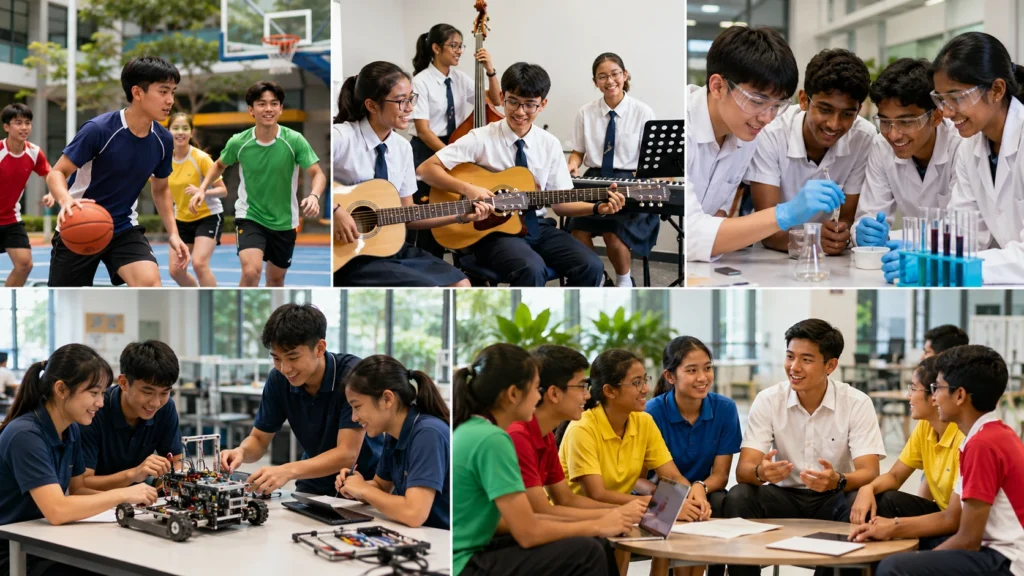
When comparing secondary school choices, look beyond entry scores. Consider your child’s interests, preferred school programmes, CCAs, school culture, learning environment and daily commute. The right secondary school pathway should support both academic growth and your child’s wider interests.
This guide looks at schools worth considering, how PSLE score and COP affect your options, and practical factors to help parents build a balanced Secondary 1 school shortlist.
TL;DR — Good Secondary Schools in Singapore
Some good secondary schools in Singapore include Raffles Institution, Hwa Chong Institution, Raffles Girls’ School, Nanyang Girls’ High School, Methodist Girls’ School, ACS (Independent), Dunman High School, Catholic High School, CHIJ St Nicholas Girls’ School and Singapore Chinese Girls’ School. However, there is no single school that is best for every child. Parents should use their child’s PSLE score and indicative COP as a starting point, then compare pathways such as IP and SAP, along with CCAs, school culture, academic programmes and location. A school that looks strong on paper may not suit every student, so the best choice is one that matches your child’s academic strengths, interests, learning needs and preferred secondary school pathway.
What Are the Good Secondary Schools in Singapore?
Good secondary schools in Singapore are not defined by COP alone. A strong school should offer a suitable academic environment, relevant programmes, meaningful CCAs and a supportive school culture. Academic reputation can be a useful starting point, but parents should also consider student development, leadership opportunities, school facilities and location. A school with a lower COP may be more competitive, but that does not automatically make it the best fit for every child. The right choice depends on your child’s PSLE score, interests, learning needs and preferred secondary school pathway.
What makes a good secondary school in Singapore?
A good secondary school combines academic opportunities with strong student development, suitable programmes, CCAs and a positive school culture. Parents should also consider location, commute and their child’s interests. The best fit is a school where the student can develop academically while also having opportunities to grow beyond the classroom.
10 Good Secondary Schools in Singapore
Singapore has a wide range of schools with strong academic programmes, CCAs, leadership opportunities and distinctive school cultures. The schools below are worth considering for different reasons rather than being presented as an official ranking. Recent COPs are included as a useful reference, but they can change between admission exercises and should not be treated as guaranteed entry scores. MOE also advises parents to consider factors such as programmes, subjects, CCAs, location and transport when choosing schools.
| School | Type | Pathway | Known For | Best For |
| Raffles Institution | Independent, boys | IP | Academics, leadership | High-achieving students |
| Hwa Chong Institution | Independent, boys | IP/SAP | Academics, bilingualism | Students seeking a rigorous IP |
| Nanyang Girls’ High School | Independent, girls | IP/SAP | Academics, leadership | Girls interested in IP |
| Raffles Girls’ School | Independent, girls | IP | Academics, leadership | Academically strong girls |
| Methodist Girls’ School | Independent, girls | IP | Academics, CCAs | Girls seeking broad opportunities |
| ACS (Independent) | Independent, boys at secondary level | IP/IB | IB, sports | Students interested in IB |
| Dunman High School | Autonomous, co-ed | IP/SAP | Bilingualism, academics | Students seeking an IP/SAP pathway |
| Catholic High School | Autonomous, boys | IP/SAP | Academics, bilingualism | Boys interested in SAP |
| CHIJ St Nicholas Girls’ School | Autonomous, girls | IP/SAP | Bilingual education | Girls interested in SAP |
| Singapore Chinese Girls’ School | Independent, girls | IP | Academics, leadership | Girls seeking a broad IP experience |
Raffles Institution
Raffles Institution (RI) is a strong option for students looking for a rigorous six-year IP environment, with opportunities across academics, leadership, sports and the arts. Its Year 1 DSA-Sec offerings also cover areas including leadership, performing arts, visual arts, sports, language and STEM. RI’s 2025 IP COP was 4–6.
Hwa Chong Institution
Hwa Chong Institution (HCI) combines a six-year IP with a strong focus on academic excellence, leadership, character development and bilingual or bicultural learning. Its secondary programme includes opportunities in the arts, sciences, humanities, computing and Chinese language. The 2025 IP COP was 4(D)–6(M).
Nanyang Girls’ High School
Nanyang Girls’ High School is an independent girls’ school offering an IP pathway with a strong academic and leadership focus. It is also a SAP school, making it relevant for families looking for a bilingual and culturally rooted education. Its 2025 non-affiliated IP COP was around 4(D)–6(M).
Raffles Girls’ School
Raffles Girls’ School (RGS) is an independent girls’ school known for its academically rigorous IP and broad opportunities for student development. It can suit students who enjoy academic challenge while also wanting opportunities in leadership, CCAs and enrichment. Its 2025 IP COP was 5.
Methodist Girls’ School
Methodist Girls’ School (Secondary) offers an IP alongside a broad range of academic and co-curricular opportunities. It may suit girls looking for a structured academic environment with opportunities beyond the classroom. Its recent IP COP was around 4–6, depending on the admission exercise and affiliation.
ACS (Independent)
ACS (Independent) is an all-boys secondary school with a six-year IP leading to the IB Diploma Programme, making it particularly relevant for students interested in an international-style academic pathway. The school also has a strong sports and co-curricular culture. Its 2025 IP COP was around 4–6.
Dunman High School
Dunman High School is a co-ed autonomous school offering a six-year IP and SAP pathway. Its bilingual orientation, academic programmes and broad student-development opportunities make it an option for students who want both academic depth and a Chinese cultural component. Its 2025 IP COP was around 4(D)–7(M).
Catholic High School
Catholic High School is an autonomous boys’ school and SAP institution with an IP pathway. It can be a strong choice for students interested in academic development alongside bilingual education and a broad CCA offering. Its recent IP COP was around 4(D)–7(M).
CHIJ St Nicholas Girls’ School
CHIJ St Nicholas Girls’ School is an autonomous SAP school offering an IP pathway. Its bilingual environment, academic programmes and emphasis on character development can appeal to girls looking for a school that combines academic and cultural learning. Its recent IP COP was around 4(D)–7(D).
Singapore Chinese Girls’ School
Singapore Chinese Girls’ School (SCGS) is an independent girls’ school offering an IP pathway, with opportunities across academics, leadership and holistic development. It may suit students looking for a broad secondary-school experience alongside a strong academic environment. Its recent IP COP was around 4–7.
COP figures are indicative and can vary by admission exercise, affiliation and, for SAP schools, Higher Chinese Language grades. Parents should check the latest MOE SchoolFinder and individual school information before making their six choices.
What Makes a Secondary School “Good”?
Choosing a good secondary school in Singapore involves more than comparing COPs or looking at a school’s reputation. Parents should consider how well the school matches their child’s academic strengths, interests, personality and preferred learning environment. A school that suits one student may not be the right fit for another.
| Factor | What Parents Should Check |
| PSLE/COP | Competitiveness and realistic school choices |
| Programmes | Academic fit and subject opportunities |
| CCAs | Sports, arts, clubs and leadership interests |
| Culture | Learning environment and student experience |
| Location | Daily commute and transport |
| Pathways | Future academic and subject options |
Academic Fit
Consider whether the school’s academic pace and subject choices match your child’s strengths and learning needs. Some students may enjoy a highly competitive environment, while others may thrive in a more balanced setting.
Programmes and Pathways
Look at the programmes available, including Integrated Programme (IP) and Special Assistance Plan (SAP) options where relevant. Subject choices, enrichment opportunities and future pathways can also influence whether a school is a good match.
CCAs and Student Life
CCAs are an important part of secondary school life. Check whether the school offers activities your child genuinely enjoys, such as sports, performing arts, clubs or leadership programmes.
School Culture
A positive learning environment and supportive school community can have a major effect on a student’s daily experience. School open houses can help parents and students get a better sense of the culture.
Location and Daily Commute
Finally, consider travel time and transport options. A long daily commute, especially when combined with after-school CCAs, can affect your child’s routine, energy and time for homework.
How PSLE Score and COP Affect Secondary School Choices
Your child’s PSLE score for secondary school is an important starting point when creating a shortlist, but it should not be the only factor. Each school has an indicative COP (Cut-Off Point) based on the PSLE scores of students admitted in a particular admission exercise. This can change from year to year depending on demand and the students posting to the school.
When comparing secondary school choices after PSLE, use recent COPs to separate schools into realistic, competitive and safer options. A COP is a useful guide to competitiveness, not a guaranteed admission score. Parents should also consider affiliated-school status where applicable, programmes, CCAs, school culture and location before making their six choices. The order of your school choices matters, so avoid filling the list entirely with schools that may be difficult to enter based on your child’s score.

Does a lower COP mean a better school?
Not necessarily. A lower COP generally means a school was more competitive in a particular admission exercise, but it does not automatically make it better for every student. The best choice depends on your child’s academic strengths, interests, preferred pathway, school culture and overall fit.
How to Build Your 6 Secondary School Choices
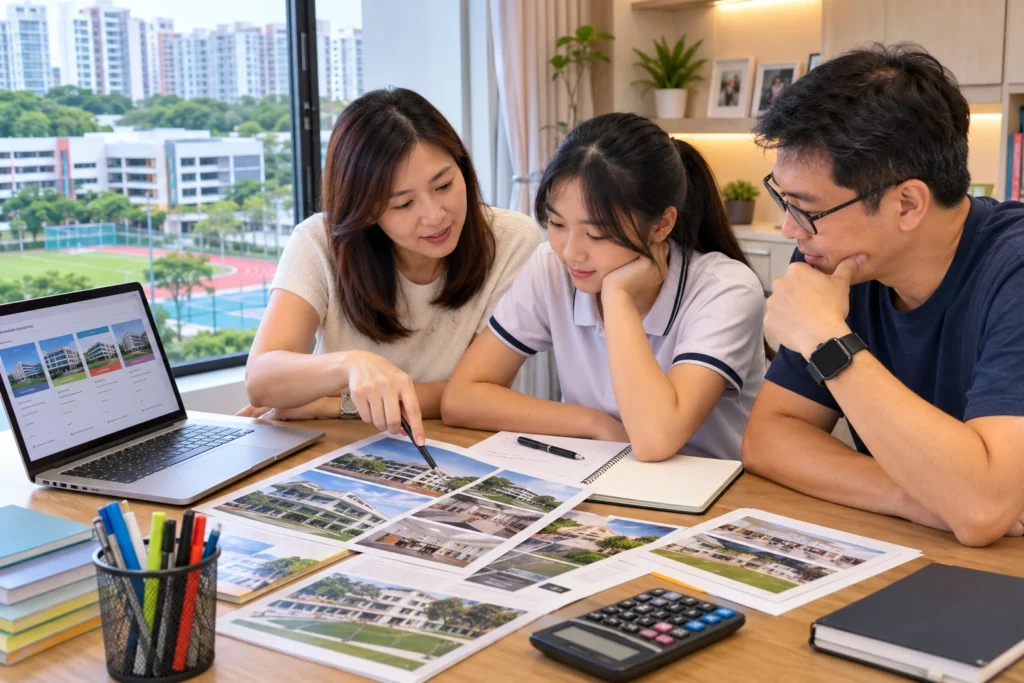
After receiving the PSLE score, parents should build a balanced shortlist rather than choosing six schools based only on reputation or COP. Singapore students can indicate six secondary school choices, so use the list strategically and consider how each option matches your child’s score, interests and preferred school environment.
| Choice | Strategy |
| 1 | Dream school |
| 2 | Strong target |
| 3 | Realistic |
| 4 | Realistic |
| 5 | Safer option |
| 6 | Safer option |
Start by comparing your child’s PSLE score with recent indicative COPs. Your first choices can include schools that are more competitive, but the later choices should provide more realistic alternatives. Do not assume that a school with a higher COP is automatically a poor option.
Next, look beyond entry scores. Check the school’s location and daily commute, academic programmes, IP or SAP pathway where relevant, CCAs and school culture. Think about what your child actually enjoys and where they are most likely to thrive.
For example, a school with excellent sports programmes may be a stronger choice for a child passionate about athletics, while another school may suit a student who prefers languages, STEM, performing arts or leadership.
The goal is not simply to find the most prestigious schools. It is to create six secondary school choices that balance ambition, realistic admission prospects and your child’s overall fit.
Good Secondary Schools by Gender Preference
Some parents may prefer a single-gender school, while others may want a co-ed environment. Gender can be one consideration when comparing good secondary schools in Singapore, but it should be weighed alongside academic programmes, CCAs, school culture, location and your child’s personality.
Good Boys’ Secondary Schools in Singapore
Notable boys’ schools include Raffles Institution, Hwa Chong Institution, ACS (Independent), Catholic High School and St Joseph’s Institution. These schools offer different academic pathways and strengths, so parents should compare programmes and student life rather than choosing based on reputation alone.
Good Girls’ Secondary Schools in Singapore
For girls, options include Raffles Girls’ School, Nanyang Girls’ High School, Methodist Girls’ School, CHIJ St Nicholas Girls’ School and Singapore Chinese Girls’ School. Parents can look at IP or SAP pathways, academic opportunities, CCAs and the school’s approach to leadership and student development.
Good Co-ed Secondary Schools in Singapore
Families looking for a mixed-gender environment can consider Dunman High School, River Valley High School, Nan Hua High School and Anglican High School. These schools offer different combinations of academic programmes, CCAs and student-development opportunities.
The right choice still comes down to school fit. A single-gender or co-ed environment may suit different students, so visiting schools, reviewing their programmes and considering your child’s interests can help narrow the options.
IP, SAP, Autonomous or Neighbourhood School?
There is no single secondary school type that works best for every student. When comparing neighbourhood secondary schools in Singapore with IP, SAP or autonomous schools, parents should consider the child’s academic strengths, interests, preferred learning environment and future plans.
Integrated Programme (IP)
The Integrated Programme is designed for students who want a longer academic pathway that typically allows them to move through secondary education and pre-university studies without taking the GCE O-Level examination at the usual point. IP schools can suit students who are comfortable with a more academically demanding environment and enjoy independent learning.
SAP Schools
Special Assistance Plan (SAP) schools provide a bilingual and bicultural environment, with a particular emphasis on Chinese language and culture. They may suit students who have an interest in Chinese language and heritage while wanting a strong academic programme.
Autonomous Schools
Autonomous schools generally offer a broader range of school programmes, enrichment opportunities and student-development activities alongside the national curriculum. Parents can compare their academic strengths, CCAs and distinctive programmes when creating a shortlist.
Neighbourhood Secondary Schools
A higher COP does not automatically mean a school offers a weaker education. Good neighbourhood schools can provide strong CCAs, supportive school culture, leadership opportunities and meaningful student development. For many families, location and a manageable commute can also make a neighbourhood school a practical and positive choice.
The best approach is to compare what each school actually offers rather than judging it solely by COP or reputation.
What Parents Should Know About Full Subject-Based Banding in 2026
Full Subject-Based Banding (Full SBB) is now part of Singapore’s current secondary-school structure. Instead of placing students into the former Express, Normal (Academic) or Normal (Technical) streams, students are posted to Posting Group 1, 2 or 3 based on their PSLE results. They can then take subjects at different levels—G1, G2 or G3—depending on their strengths, learning needs and progress. This gives students more flexibility to study subjects at an appropriate level while developing their individual interests and abilities.
What is Full Subject-Based Banding?
Full Subject-Based Banding allows secondary school students to take different subjects at G1, G2 or G3 levels based on their strengths, interests and learning needs. It replaces the previous stream-based system and provides greater flexibility in how students progress through secondary education.
Secondary School Fees and Other Costs
School fees are another practical factor to consider when comparing secondary schools in Singapore, but parents should look beyond the headline tuition amount. Government and government-aided schools follow MOE fee structures, while independent schools may have additional charges. International schools have separate fee structures and are generally not part of the same MOE secondary-school system.
| School Category | Fee Consideration |
| Government schools | MOE fee structure |
| Government-aided schools | MOE fees + applicable charges |
| Independent schools | May have different fees |
| International schools | Separate fee structures |
Parents should also budget for items such as uniforms, textbooks, transport, meals, enrichment activities, school trips and CCA-related expenses. These costs can vary between schools and students. Before making your secondary school choices, check the school’s latest fee information and consider the total cost of attending, including the daily commute. A school that is slightly farther away may also involve higher transport costs over four years.
FAQs About Good Secondary Schools in Singapore
What are the good secondary schools in Singapore?
Some well-known options include Raffles Institution, Hwa Chong Institution, Raffles Girls’ School, Nanyang Girls’ High School, Methodist Girls’ School, ACS (Independent), Dunman High School, Catholic High School, CHIJ St Nicholas Girls’ School and Singapore Chinese Girls’ School. The right choice depends on your child’s PSLE score, interests, preferred programmes and school environment.
Does a lower COP mean a better secondary school?
No. A lower COP generally indicates that a school was more competitive during a particular admission exercise, but it does not measure every aspect of school quality. Consider academic programmes, CCAs, school culture, location and student development as well.
How many secondary schools can I choose after PSLE?
Students can indicate six secondary school choices during the Secondary 1 posting process. Parents should use these choices strategically, combining ambitious options with realistic alternatives based on recent indicative COPs and their child’s PSLE score.
Are there good secondary schools specifically for boys or girls?
Yes. Singapore has established boys’, girls’ and co-ed schools with different academic pathways, programmes and CCAs. Examples are covered in the Good Secondary Schools by Gender Preference section above.
Are neighbourhood secondary schools good?
Yes. Good neighbourhood schools can provide strong academic programmes, CCAs, leadership opportunities and supportive school communities. Parents should assess each school on its actual programmes, culture, student development opportunities and location rather than judging quality by COP alone.
Final Takeaway
There is no single “best” secondary school for every student. The good secondary schools in Singapore are the ones that match your child’s academic strengths, interests and learning needs. PSLE score and COP are useful when assessing competitiveness, but they should be considered alongside school programmes, CCAs, school culture and location. Before submitting your choices, compare what each school offers and think about your child’s preferred pathway and daily routine. Most importantly, build six balanced choices that combine ambitious options with realistic alternatives.

Global Arena is a Singapore-focused SEO and digital marketing brand with a network of 25+ publisher websites, helping businesses strengthen their online presence through guest posting, link building, content marketing, and digital PR.
For collaborations, publishing opportunities, or business inquiries:
Hamza@globalarena.org | WhatsApp: +971 52 399 4589