Singapore Primary School Ranking 2026: Top Schools & P1 Data
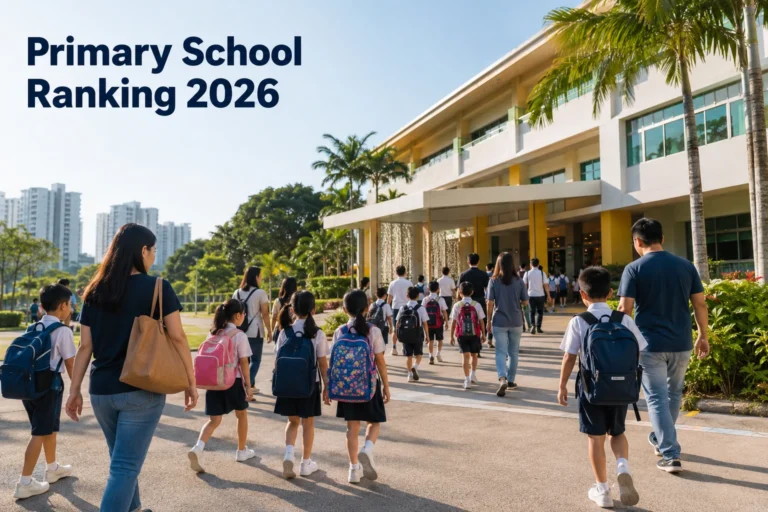
If you’re searching for a Singapore primary school ranking, there’s one thing to clear up first: MOE does not publish an official ranking that places primary schools from #1 onwards. The term primary school ranking Singapore usually refers to independent lists that compare schools using different data. Some look at P1 demand, subscription ratios and balloting, while others consider school programmes, affiliation, CCAs and other factors. For parents going through P1 registration Singapore, these lists can still be useful — but they shouldn’t be treated as an official MOE primary school ranking. This guide uses current P1 demand data as a ranking indicator, then looks at what else parents should check before shortlisting the best primary schools Singapore has to offer.
TL;DR: Singapore Primary School Ranking at a Glance
There is no official MOE league table ranking Singapore primary schools from #1 onwards. This singapore primary school ranking uses current P1 demand and competition as the main indicator. Among the highest-demand schools are Princess Elizabeth, Northland, Nan Hua, Chongfu and Rosyth. But high demand doesn’t automatically mean a school is better for every child. Parents should also compare school distance, programmes, CCA options, affiliation, school environment and fees before making a shortlist.
Singapore Primary School Ranking 2026
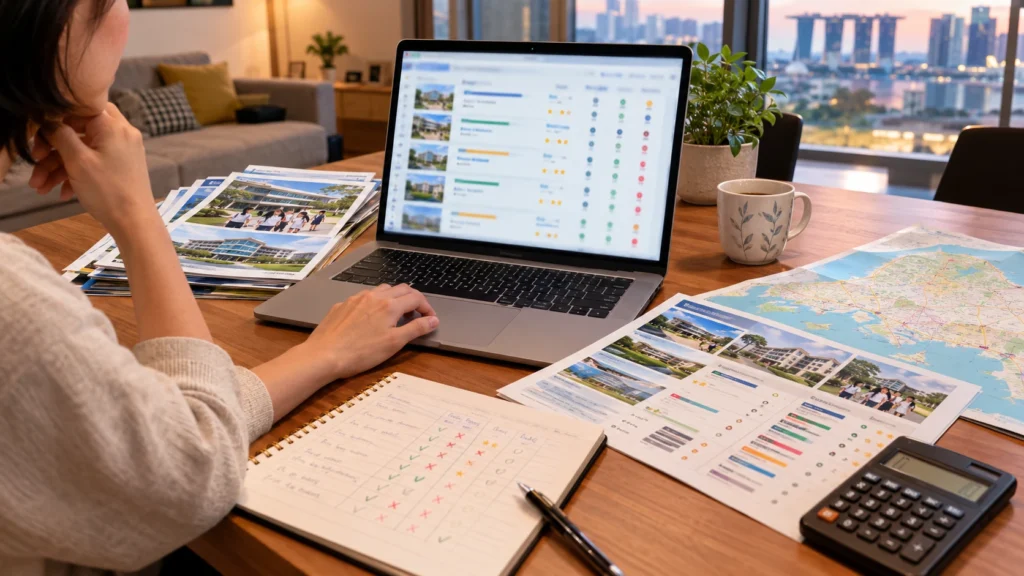
If you want to compare schools by current P1 demand, the following schools are among the most competitive based on their Phase 2C subscription ratios. This gives parents a useful picture of where open-market demand is strongest, without treating demand as a measure of school quality. The latest 2026 figures show that Princess Elizabeth Primary School had the highest Phase 2C subscription ratio at 3.98×, followed by Northland Primary School at 3.36× and Nan Hua Primary School at 3.00×.
10 Most Competitive Primary Schools by P1 Demand
| Rank | Primary School | P1 Demand / Subscription | Area | Key Point |
| 1 | Princess Elizabeth Primary School | 3.98× | Bukit Batok | Highest Phase 2C demand |
| 2 | Northland Primary School | 3.36× | Yishun | Very high open-phase demand |
| 3 | Nan Hua Primary School | 3.00× | Clementi | Strong demand across P1 phases |
| 4 | Chongfu School | 2.85× | Yishun | Heavy P1 competition |
| 5 | Rosyth School | 2.61× | Serangoon | High-demand school |
| 6 | Angsana Primary School | 2.57× | Tampines | Strong neighbourhood demand |
| 7 | St. Hilda’s Primary School | 2.57× | Tampines | High P1 competition |
| 8 | Nan Chiau Primary School | 2.42× | Sengkang | Strong demand from local families |
| 9 | South View Primary School | 2.39× | Central | High Phase 2C competition |
| 10 | Holy Innocents’ Primary School | 2.20× | Hougang | Strong open-phase demand |
These figures are based on the 2026 Phase 2C subscription ratio, calculated from applicants compared with available places. For example, Princess Elizabeth had 159 applicants for 40 Phase 2C places, giving it a 3.98× ratio. Northland had 141 applicants for 42 places, while Nan Hua had 123 applicants for 41 places.
So, if you’re searching for primary schools ranked Singapore by current P1 competition, these are the schools sitting at the top of this particular demand-based list. The list also gives a useful look at the most popular primary schools Singapore parents are competing for through the open Phase 2C route.
Important: This is a demand-based comparison, not an official MOE ranking of school quality. MOE does not publish a #1-to-#179 academic league table for primary schools. A high subscription ratio tells you that many families applied for the available places — it doesn’t tell you that the school is automatically the best choice for your child.
How Is the Singapore Primary School Ranking Calculated?
For this singapore primary school ranking, the main measure is current P1 demand. A simple way to calculate the subscription ratio is applicants ÷ available places. For example, if 200 children apply for 100 places, the subscription ratio is 2.0×. A higher ratio shows stronger school popularity and greater admission competition for those places. But it doesn’t prove that the school has better teaching, facilities or student outcomes. Parents should look beyond the demand figures when comparing primary school admission Singapore options.
P1 Demand and Subscription Ratio
P1 demand shows how many families are applying for the available school vacancies. Applicants per vacancy gives a quick sense of how competitive admission may be, while balloting shows where applications exceed the number of places.
Ranking Factors
| Factor | What It Tells Parents |
| P1 demand | How popular the school is |
| Applicants per vacancy | Admission competition |
| Balloting | Whether places were oversubscribed |
| Distance | Potential admission consideration |
| Programmes | Special learning opportunities |
| CCA | Sports, arts and activities |
| Affiliation | Secondary-school pathway |
| Fees | Overall school-related costs |
Does a Higher Primary School Ranking Mean a Better School?
No. A high ranking based on P1 demand means the school is highly sought-after; it does not automatically mean it is the best school for every child.
A school may attract many families because of its location, reputation, programmes or affiliation. But your child’s needs still matter more when making a school choice in Singapore. Look at academic interests, CCA options, school culture and the overall school environment. A nearby school can also be a better practical choice if the daily commute is shorter and your child is more comfortable there.
Admission chances matter too. A highly subscribed school may involve balloting, while another school with lower demand could offer a better fit. For a sensible primary school comparison, consider demand alongside programmes, distance, fees and your child’s learning needs. Good school choice Singapore decisions are about fit, not just rank.
P1 Registration and Primary School Admission in Singapore
For P1 registration Singapore, admission takes place through several phases, with priority rules changing at each stage. The earlier phases are mainly for children with specific links to a school, while Phase 2C is open to children who have not secured a place earlier. This can make competition much higher at some schools.
P1 Registration Phases
| Phase | General Priority |
| Phase 1 | Eligible siblings |
| Phase 2A | Specific school/alumni-related eligibility |
| Phase 2B | Eligible parent/community routes |
| Phase 2C | Open registration |
| Phase 2C Supplementary | Remaining vacancies |
A school can become oversubscribed when applications exceed the available primary school vacancies. If that happens, MOE uses admission priority rules and balloting to allocate places. Factors such as Singapore Citizenship status, the registration phase and distance from home can affect priority, depending on the phase. In Phase 2C, for example, demand can lead to P1 balloting when there aren’t enough places for applicants. Parents should check the latest MOE rules before Primary 1 registration, since phase requirements and dates can change.

Primary School Fees in Singapore
For most families, primary school fees Singapore are not the biggest part of the school budget. Government and government-aided primary schools do not charge school fees to Singapore Citizen pupils, while other costs can still add up. MOE’s current 2026 financial assistance information also covers support for miscellaneous fees, textbooks, school attire, meals and transport for eligible families.
| Cost | What Parents Should Consider |
| School fees | Depends on student status |
| Miscellaneous fees | School-related charges |
| Uniforms | Initial and replacement costs |
| Books | Textbooks and learning materials |
| Transport | School bus or public transport |
| Student care | Optional additional cost |
| Enrichment/activities | Depends on family choice |
For primary school fees 2026, check the latest MOE information and your child’s school before budgeting. Actual school expenses Singapore families face can vary based on transport, student care, enrichment and other activities.
How to Choose the Right Primary School in Singapore
A primary school comparison Singapore parents can actually use should go beyond a ranking number. Here are six practical checks before putting a school on your shortlist:
1. Check P1 Demand
Look at previous P1 registration figures, subscription ratios and balloting data. High demand can mean tougher admission competition.
2. Consider Distance
Check the school distance from home. A shorter daily commute can make school mornings and after-school routines much easier.
3. Look at Programmes and CCAs
Review the school programmes and CCA options. Think about what your child actually enjoys, not just what looks impressive on a school website.
4. Check Affiliation
If secondary-school affiliation matters, check the school’s current arrangements and eligibility rules carefully.
5. Think About Your Child
Consider your child’s interests, personality, learning needs and preferred school environment. Fit matters.
6. Use MOE SchoolFinder
Use MOE School Finder to verify school location, programmes, CCAs and other details before making your final shortlist.
Should Parents Only Look at the Top Primary Schools?
Not necessarily. High-demand primary schools can have tougher admission competition, especially when applications exceed available places. But a neighbourhood school Singapore families can reach easily may be a better practical option, particularly if it offers suitable programmes, CCAs and a comfortable school environment.
Popular primary schools often attract attention because of reputation or past demand, but school choice shouldn’t stop at the ranking table. Look at your child’s interests, daily commute, admission chances and what the school actually offers. The highest-demand school is not necessarily the best choice for your family. A good best fit can sometimes be much closer to home — and that matters for six years of primary school.
Singapore Primary School Ranking FAQs
What is the number 1 primary school in Singapore?
There is no official MOE #1 primary school. Different websites rank schools using different measures, so the answer depends on the data being used.
Is there an official MOE primary school ranking?
No. MOE does not publish an official league table ranking primary schools by quality. Instead, parents can use MOE SchoolFinder, school profiles, registration information and past balloting data to compare schools.
Which primary schools are hardest to get into?
Based on current Phase 2C demand, Princess Elizabeth, Northland, Nan Hua, Chongfu and Rosyth are among the most competitive schools in the 2026 data used for this ranking.
Does a high P1 subscription ratio mean a better school?
No. A high subscription ratio shows stronger demand and greater competition for available places. It doesn’t measure teaching quality or whether the school suits your child.
How should I compare primary schools in Singapore?
Look at admission chances, distance from home, programmes, CCA options and your child’s learning needs. School culture and daily commute matter too.
What is Phase 2C in P1 registration?
Phase 2C is the open registration phase for children who are not eligible for earlier registration phases. Schools can be oversubscribed, leading to balloting for available places.
Final Thoughts
Use the Singapore primary school ranking as a starting point, not the final decision. P1 demand can show where admission competition is high, but it doesn’t tell you which school will suit your child best. Check the location, programmes, CCA choices and fees alongside your admission chances. Most importantly, think about your child’s learning needs, interests and school environment before choosing a primary school.

Global Arena is a Singapore-focused SEO and digital marketing brand with a network of 25+ publisher websites, helping businesses strengthen their online presence through guest posting, link building, content marketing, and digital PR.
For collaborations, publishing opportunities, or business inquiries:
Hamza@globalarena.org | WhatsApp: +971 52 399 4589