
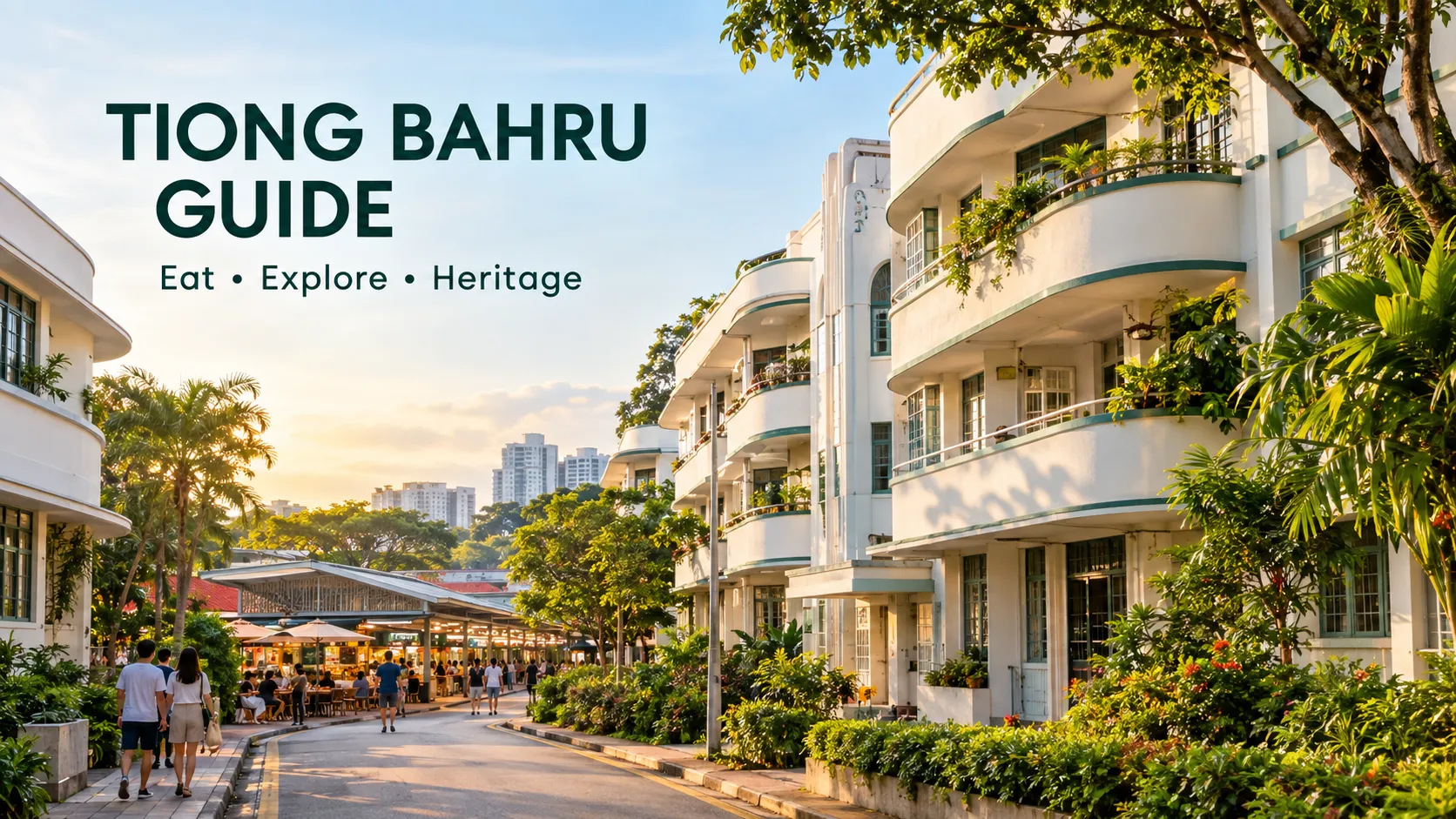
Tiong Bahru Singapore: What to See, Eat & Explore
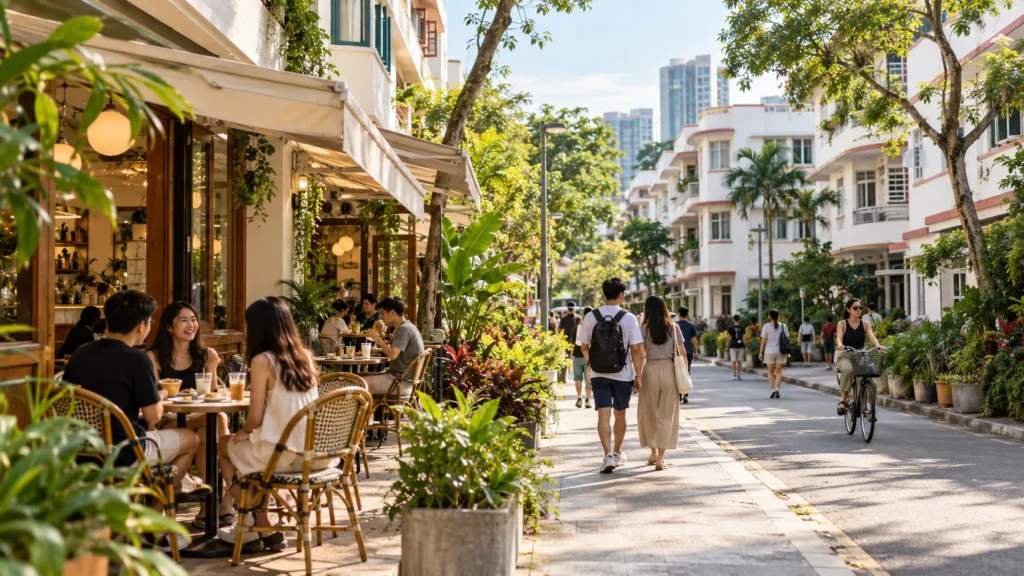
Tiong Bahru is one of Singapore’s most distinctive neighbourhoods, where conserved pre-war housing sits alongside a busy hawker centre, cafés, bakeries, murals and independent shops. The historic housing estate is especially known for its low-rise architecture, Tiong Market and an easygoing neighbourhood atmosphere that rewards exploring on foot. You can come for a local breakfast, wander through the heritage streets, stop for coffee and still have time to browse the small shops around the estate. For visitors, Tiong offers something different from Singapore’s big attractions: a chance to experience food, architecture and everyday neighbourhood life in one compact area.
TL;DR: Tiong Bahru at a Glance
Tiong Bahru is a historic Singapore housing estate known for its conserved architecture, Tiong Market, hawker food, cafés, murals and independent shops. Start at the market, explore the low-rise heritage blocks and surrounding streets, then stop for coffee or a bakery treat. Tiong MRT provides easy access, and around 2–3 hours is a useful starting point for seeing the main highlights without rushing.
Tiong Bahru Quick Facts
| Quick Fact | Details |
| Location | Central Singapore |
| Known for | Heritage architecture, hawker food, cafés and neighbourhood culture |
| Main food spot | Tiong Bahru Market & Food Centre |
| MRT | Tiong Bahru MRT on the East West Line |
| Best way to explore | On foot |
| Suggested time | Around 2–3 hours |
What Is Tiong Bahru Known For?
Tiong Bahru is best known for three things: its distinctive heritage housing, its food culture and the modern cafés and independent businesses that have grown around the old estate. The neighbourhood was developed in the 1930s by the Singapore Improvement Trust (SIT), the predecessor of today’s HDB, making its low-rise blocks an important part of Singapore’s public-housing history.
Heritage Housing and Architecture
The conserved blocks are what give Tiong its instantly recognisable character. Look for rounded corners, horizontal lines, curved balconies, spiral staircases and low-rise forms associated with Streamline Moderne and Art Deco influences. Rather than feeling like a museum district, these buildings remain part of a lived-in residential estate.
Food and Hawker Culture
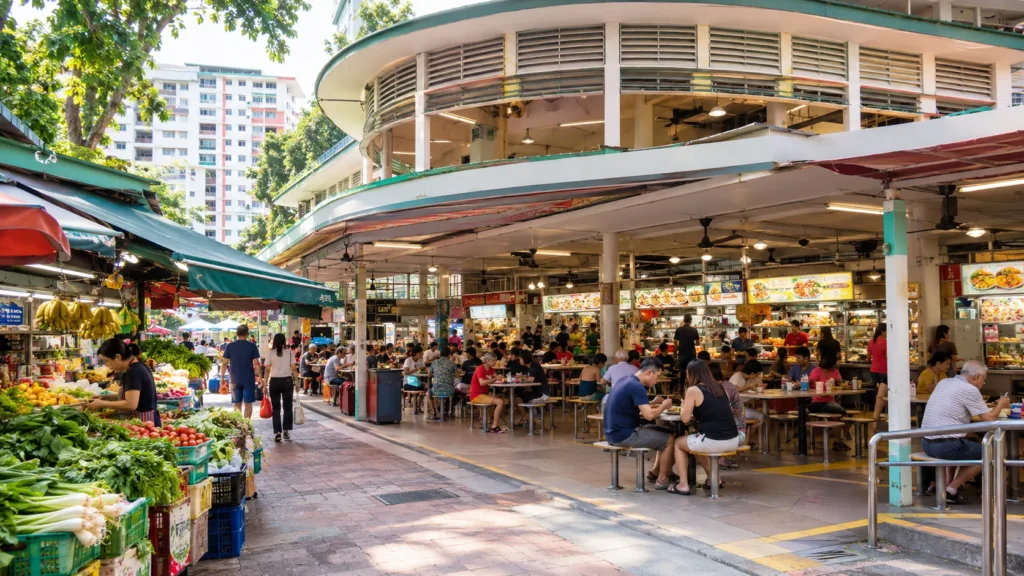
Food is another big part of Tiong identity. At the centre of the neighbourhood is Tiong Bahru Market & Food Centre, where a wet market occupies the lower level and the hawker centre sits upstairs. It remains closely connected to everyday life in the estate, from morning market trips to casual hawker meals.
Cafés, Shops and Neighbourhood Life
Tiong older character now sits alongside specialty cafés, bakeries, bookstores, boutiques and small independent businesses. That mix is one reason the area feels different from newer parts of Singapore: the heritage is still part of daily life rather than simply a backdrop for visitors.
Tiong Bahru Market: The Heart of the Neighbourhood
If you want to understand Tiong quickly, start at its market. Tiong Market & Food Centre brings together a traditional wet market and a busy hawker centre, making it one of the easiest places to see the neighbourhood’s food culture in action.
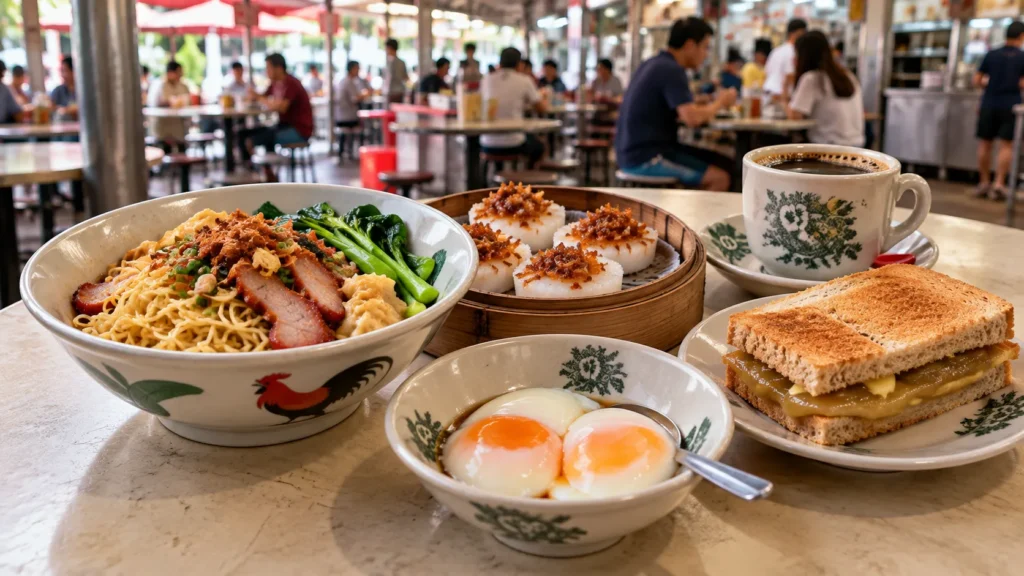
The market is particularly useful for visitors who want to try local Singapore food without travelling between several different parts of the city. Depending on the stall, you may find dishes such as chwee kueh, prawn noodles, roast meats and other familiar hawker favourites. Local guides also regularly highlight the market for its long-established food stalls and strong connection to the neighbourhood.
For a more local-feeling visit, go earlier in the day when the wet market and breakfast crowd bring more everyday activity to the area. If you are eating during a busy period, expect queues at popular stalls and remember that individual stall opening hours can vary.
What to Eat at Tiong Bahru Market
Rather than trying to tick off every famous stall, choose a few things that interest you. Chwee kueh, noodles, roast meats and other traditional hawker dishes are good starting points. A simple kopi or local breakfast also fits naturally into a morning around the market.
Explore Tiong Bahru’s Heritage Architecture
Tiong is best explored slowly. Once you have eaten, walk through the surrounding streets and look beyond the obvious attractions.
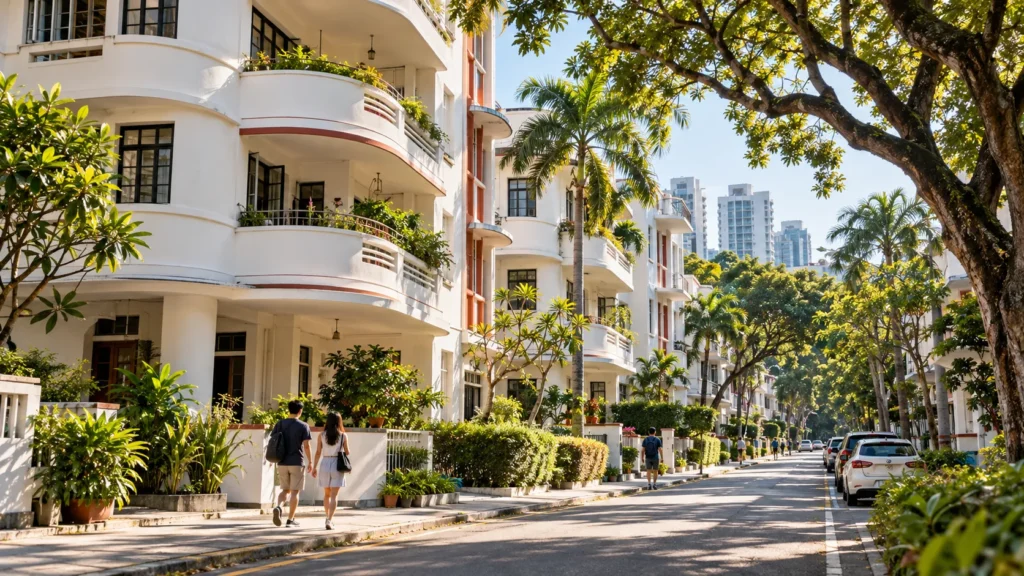
The estate’s architecture becomes more interesting when you notice the details: rounded building corners, curved balconies, spiral staircases and the low-rise layout that gives the streets a very different scale from Singapore’s newer high-rise estates.
The National Heritage Board’s Tiong Heritage Trail provides another way to understand the neighbourhood, linking its buildings and sites with the wider history of the area. The trail highlights how Tiong Bahru developed from its earlier landscape into one of Singapore’s first public-housing estates.
Tiong Bahru Heritage Trail
You do not have to treat the heritage trail like a race. Pick a few sites, walk between them and pay attention to how the conserved blocks sit alongside newer businesses and everyday residential spaces. That combination is part of what makes Tiong Bahru a living heritage neighbourhood rather than a preserved attraction.
Things to Do in Tiong Bahru
There is no need for a packed itinerary here. Some of the best things to do in Tiong Bahru are simple:
- Explore Tiong Bahru Market for local food and everyday market life.
- Walk around the conserved housing blocks and take in the Streamline Moderne details.
- Look for neighbourhood murals depicting scenes and memories from old Tiong .
- Follow part of the Tiong Heritage Trail to learn more about the estate’s history.
- Stop at a café or bakery for coffee, pastries or brunch.
- Browse independent shops and bookstores around the estate.
Take a Slow Walk Around the Estate
The neighbourhood is compact enough to explore on foot, so leave some space in your plans for wandering. Streets around Seng Poh Road, Eng Hoon Street and Guan Chuan Street offer opportunities to see the older blocks, murals and small businesses without having to jump from one attraction to another.
Cafés, Bakeries and Independent Shops in Tiong Bahru
Tiong Bahru’s modern side is just as noticeable as its heritage. The estate has become associated with specialty coffee, bakeries, brunch spots, bookstores, boutiques and independent lifestyle businesses. Local Singapore guides frequently describe this as the neighbourhood’s old-meets-new character.
You do not need to build your entire visit around café-hopping. One coffee stop after the market is enough to experience the contrast between traditional hawker culture and the newer café scene. If you enjoy browsing, allow extra time for the independent shops and book-related businesses dotted through the neighbourhood.
How Long Do You Need in Tiong Bahru?
For a first visit, 2–3 hours is a practical starting point. That gives you enough time for the market, a heritage-focused walk and a food or café stop without making the visit feel rushed.
| Time Available | Suggested Tiong Bahru Experience |
| 1 hour | Quick neighbourhood walk + market |
| 2–3 hours | Market + heritage streets + food or café |
| Half day | Heritage + meal + cafés + independent shops |
If food is your main reason for visiting, allow more time around the market. If architecture and photography are your priority, a slower walk through the conserved estate will be more rewarding.
How to Get to Tiong Bahru
The easiest public-transport option for most visitors is Tiong Bahru MRT Station on the East West Line. From the station, you can walk towards the older estate, market and surrounding streets. The station is not directly inside the historic housing blocks, so expect a short walk rather than stepping straight into the heritage area.
Several bus services also connect the neighbourhood with surrounding parts of Singapore. Once you are in the estate itself, walking is one of the simplest ways to get around because many of the main sights, food spots and shops are relatively close together.
Is Tiong Bahru Worth Visiting?
Yes, if you want to see a side of Singapore that is built around neighbourhood life rather than one major landmark.
Tiong Bahru brings together heritage architecture, hawker food, a traditional market, cafés, murals and independent shops in a compact area. You can have a local breakfast, explore the old housing blocks and finish with coffee without spending the whole day travelling between attractions.
The appeal is less about ticking off a long attraction list and more about seeing how an older Singapore estate continues to function as a real neighbourhood.
Tiong Bahru FAQs
What is Tiong Bahru famous for?
Tiong Bahru is famous for its conserved pre-war housing blocks, distinctive Streamline Moderne and Art Deco-influenced architecture, Tiong Bahru Market, hawker food, cafés, murals and independent shops. Its appeal comes from the way heritage buildings and contemporary neighbourhood businesses continue to exist side by side.
What is there to do in Tiong Bahru?
You can eat at Tiong Bahru Market, explore the conserved housing blocks, follow parts of the heritage trail, look for murals, visit cafés and bakeries, and browse independent shops. The area is compact, so several of these experiences can easily be combined into one walking visit.
How long should I spend in Tiong Bahru?
Around 2–3 hours is enough for a first visit covering the market, heritage streets and a food or café stop. If you want a slower meal, more shopping, photography or additional heritage stops, half a day gives you more breathing room.
How do I get to Tiong Bahru?
Tiong Bahru MRT Station on the East West Line is the main MRT option. From the station, visitors can walk towards Tiong Bahru Market and the historic housing estate. Buses also serve the surrounding area.
Is Tiong Bahru a good place to visit in Singapore?
Tiong Bahru suits visitors who enjoy local food, architecture, history and relaxed neighbourhood walks. It is not a single-attraction destination; its appeal comes from experiencing the market, heritage estate, cafés, murals and everyday streets as one neighbourhood.
A Neighbourhood Best Explored Slowly
Tiong Bahru brings together several sides of Singapore in one walkable estate: conserved architecture, everyday hawker culture, a much-loved market, murals, cafés and independent shops. Start with food at the market, take your time around the heritage blocks, then leave room for coffee or a little browsing. The neighbourhood does not need a packed schedule. Its character comes from the details you notice while walking, eating and simply spending time there.

Global Arena is a Singapore-focused SEO and digital marketing brand with a network of 25+ publisher websites, helping businesses strengthen their online presence through guest posting, link building, content marketing, and digital PR.
For collaborations, publishing opportunities, or business inquiries:
Hamza@globalarena.org | WhatsApp: +971 52 399 4589