Mooncake Festival: History, Meaning, Traditions & Celebrations in Singapore
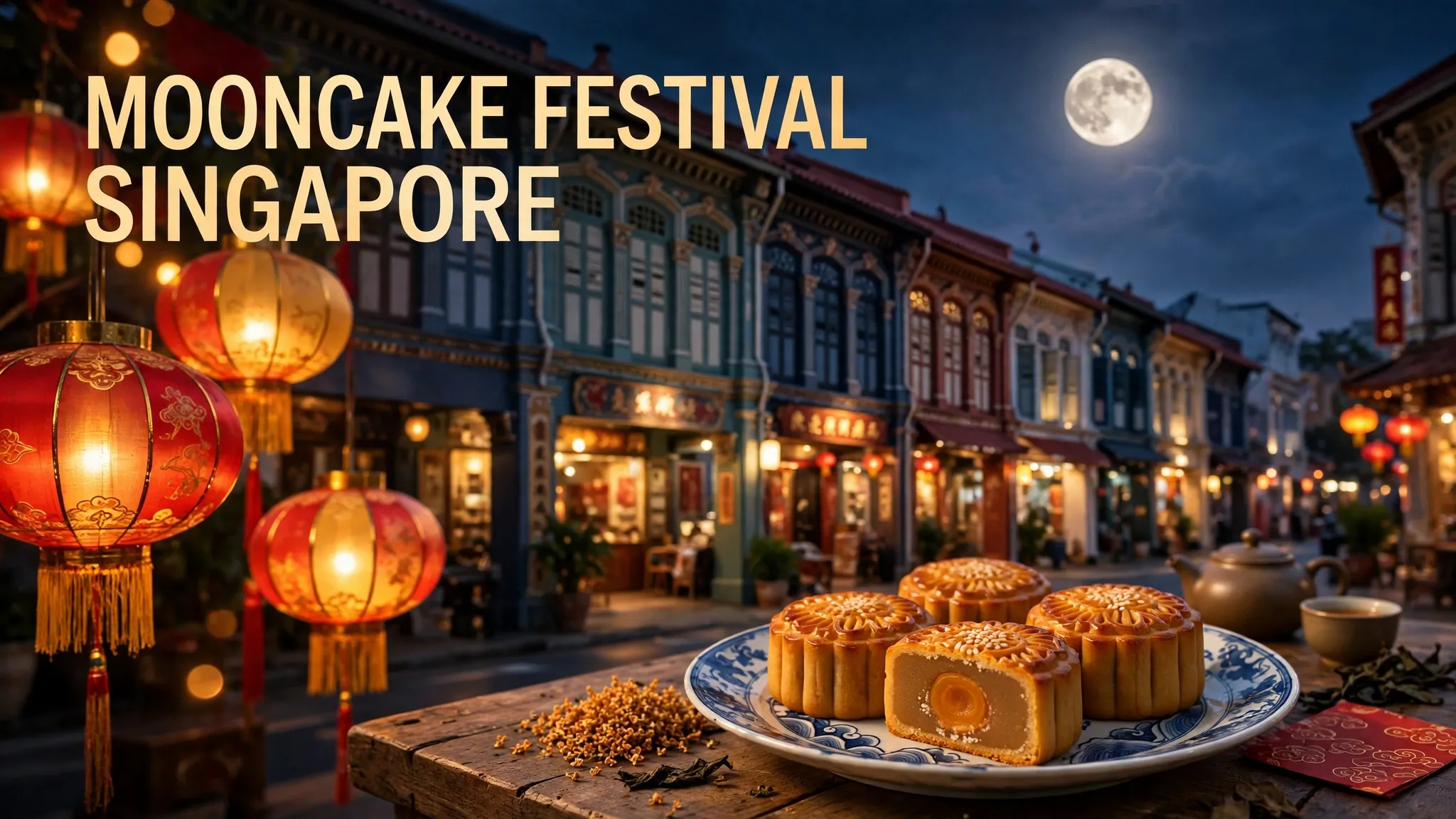
The Mooncake Festival, also known as the Mid-Autumn Festival, is a traditional Chinese celebration held on the 15th day of the eighth month of the Chinese lunar calendar. It is associated with the full moon, family reunion and the sharing of mooncakes. In Singapore, the festival brings Chinese Singaporean families and communities together through lantern displays, festive gatherings and seasonal treats. From traditional baked mooncakes to colourful lantern walks in Chinatown, the celebration blends old customs with modern ways of spending time with loved ones.
TL;DR – Mooncake Festival at a Glance
The Mooncake Festival is a Chinese cultural celebration linked to the full moon and family togetherness. Celebrated in September or October, it brings traditions such as eating mooncakes, carrying lanterns and gathering with family to Singapore. Chinatown and neighbourhood events add a local touch to the festivities.
Mooncake Festival Quick Facts
| Quick fact | Details |
|---|---|
| Festival name | Mooncake Festival |
| Also known as | Mid-Autumn Festival |
| Cultural origin | Chinese tradition |
| Lunar date | 15th day of the eighth lunar month |
| Usual months | September or October |
| Main food | Mooncakes |
| Popular activities | Lantern walks and moon-gazing |
| Main symbolism | Reunion and harmony |
| Singapore celebrations | Chinatown and community events |
What Is Mooncake Festival?
The Mooncake Festival is a traditional Chinese festival celebrated on the night of the full moon in the eighth lunar month. Known in Mandarin as Zhong Qiu Jie (中秋节), or Mid-Autumn Festival, it brings together ideas of harvest, gratitude, family reunion and appreciation of the moon. Mooncakes are its best-known food, but the celebration also includes lanterns, family meals and traditional customs. Chinese communities around the world observe the festival, including Singapore’s Chinese Singaporean community, where it remains a familiar part of the cultural calendar.
Meaning of Mid-Autumn Festival
The name Mid-Autumn Festival comes from the Chinese lunar calendar. The eighth lunar month falls around the middle of autumn in the traditional Chinese seasonal calendar. The festival’s full moon is associated with reunion and togetherness, making it a time for families and friends to gather, share food and enjoy the evening.
Why Is the Full Moon Important?
The moon’s round shape is linked with completeness, harmony and family unity in Chinese culture. On festival night, families may admire the moon together while enjoying tea and mooncakes. Some people call this custom shangyue, meaning moon appreciation. It is a simple tradition, but it carries a warm message: even when relatives live far apart, the same full moon connects them.
When Is Mooncake Festival Celebrated?
The Mooncake Festival falls on the 15th day of the eighth month in the Chinese lunar calendar. Since the lunar calendar does not match the Gregorian calendar, the date changes every year. In Singapore, it usually takes place in September or October. The festival is celebrated on the same lunar date by Chinese communities in many parts of the world, although local events and activities may take place over several days.
| Year | Mooncake Festival date |
|---|---|
| 2026 | 25 September |
| 2027 | 15 September |
| 2028 | 3 October |
The date is not fixed, so check the lunar calendar when planning family gatherings or buying mooncakes for a particular year.
History and Origin of Mooncake Festival
The Mooncake Festival has roots in ancient Chinese customs connected with moon appreciation and harvest celebrations. People offered thanks for the harvest and admired the full moon, which was associated with abundance and family unity. Over time, these customs developed into the festival celebrated today.
Ancient Chinese Moon Worship and Harvest Traditions
In traditional Chinese culture, the moon had a place in seasonal rituals and folk beliefs. Families and communities made offerings, enjoyed seasonal food and marked the harvest period. The full moon became a symbol of abundance and togetherness. These early customs varied across regions and periods, so today’s festival is the result of many traditions that developed over centuries.
How Mooncakes Became Part of the Festival
Mooncakes gradually became closely associated with Mid-Autumn celebrations. Their round shape reflects the full moon and the idea of reunion. A popular story links mooncakes to the Yuan Dynasty, when secret messages were said to have been hidden inside them to help organise a rebellion against Mongol rule. It is a well-known folk legend, not a confirmed historical account. Today, mooncakes are shared at home and exchanged as gifts between relatives, friends and colleagues.
The Legend of Chang’e and Hou Yi
One of the best-known stories linked to the Mooncake Festival is the legend of Chang’e and Hou Yi. In the tale, Hou Yi was a skilled archer who saved the earth by shooting down nine of the ten suns that were scorching it. He later received an elixir of immortality. Different versions tell the next part in different ways, but the story commonly describes Chang’e swallowing the elixir and rising to the moon. There, she became known as the Moon Goddess. The legend is part of Chinese mythology rather than recorded history. It adds a romantic and mysterious layer to the festival, and is often shared with children during Mid-Autumn celebrations.
Why Do People Eat Mooncakes During Mooncake Festival?
Mooncakes are the festival’s signature food. Their circular shape resembles the full moon and represents reunion, completeness and harmony. Sharing a mooncake is a way of enjoying the celebration together, rather than simply having a sweet treat.
Mooncakes as a Symbol of Reunion
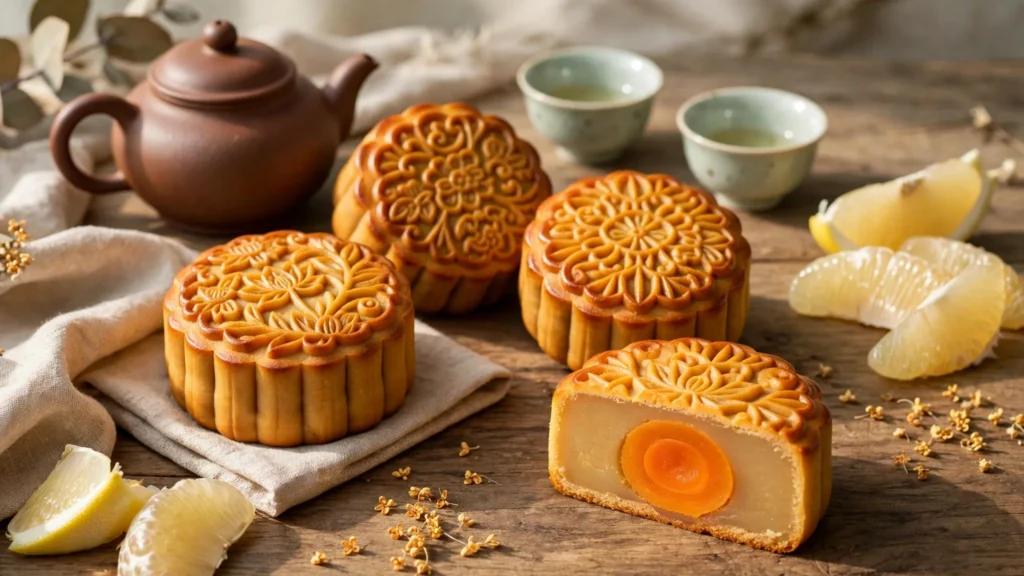
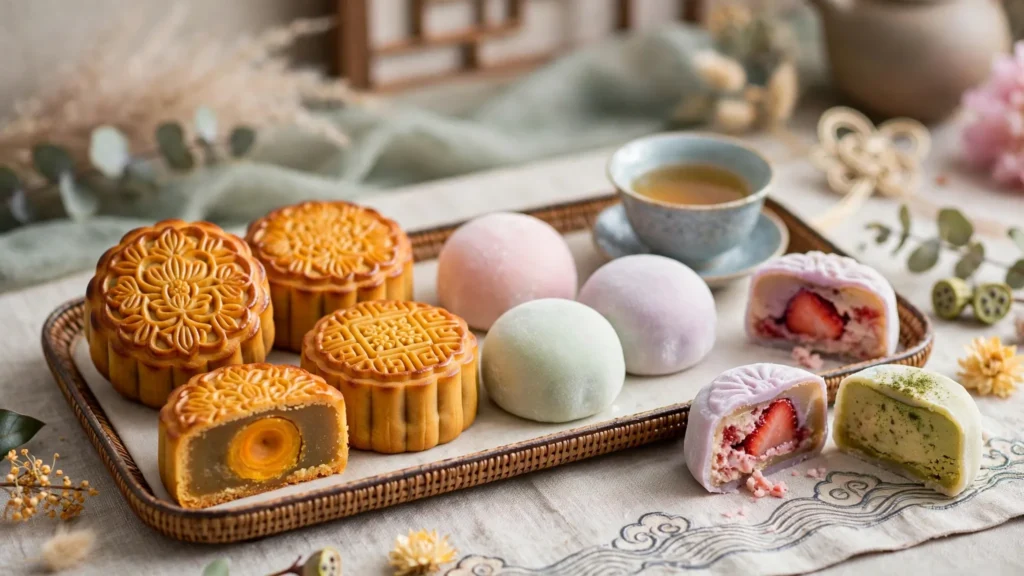
Traditional mooncakes are often cut into smaller wedges so everyone at the table can have a piece. Lotus seed paste, red bean paste and salted egg yolk are familiar fillings. The salted egg yolk is sometimes said to resemble the moon inside the cake. Families may serve mooncakes with Chinese tea while chatting or watching the moon.
Mooncake Gifting in Singapore
In Singapore, mooncake gift boxes are popular during the weeks leading up to the festival. People give them to relatives, friends, business contacts and colleagues. Hotels, bakeries and restaurants often release seasonal collections with classic flavours and modern packaging. Some boxes are designed for family sharing, while others are presented as corporate gifts. The presentation can be almost as memorable as the mooncakes themselves.
Traditional Mooncake Festival Celebrations
Mooncake Festival traditions often centre on spending time outdoors, sharing food and enjoying the full moon. Customs differ between families and communities, but lanterns, moon appreciation and festive food remain familiar parts of the celebration.
Lantern Carrying and Lantern Displays
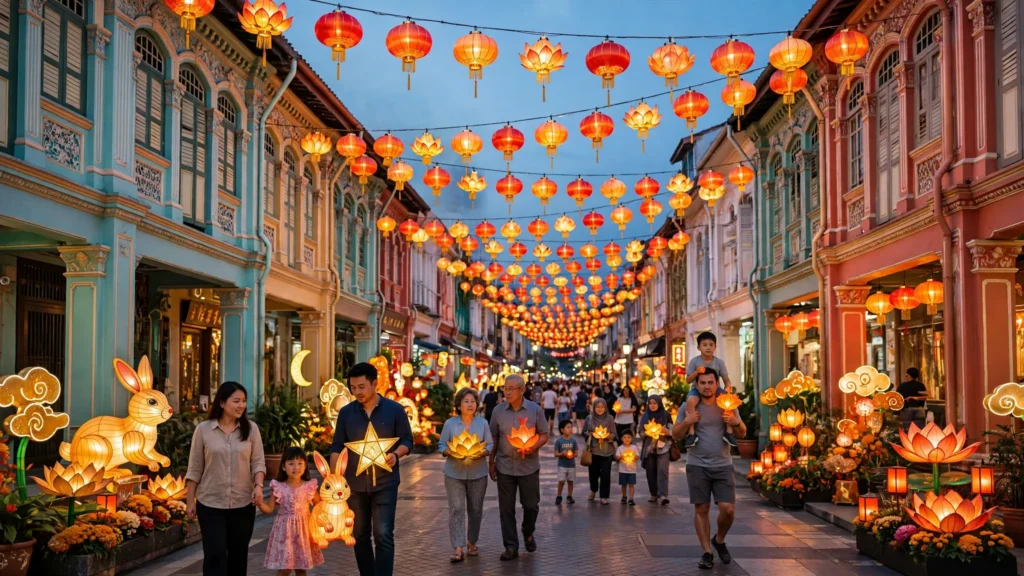
Children traditionally carry colourful paper lanterns during the festival. Older lanterns used candles, while many modern versions use battery-powered lights and come in different shapes and designs. Lantern displays and walks are now common features of public celebrations, giving families a chance to enjoy the festive atmosphere together.
Moon Gazing and Family Gatherings
Families may gather for dinner before heading outdoors to admire the moon. Mooncakes and Chinese tea are often shared during the evening. Some households keep the gathering simple, while others invite extended family members and friends. The focus is on spending time together.
Traditional Moon Offerings
Traditional customs may include offering mooncakes, tea and seasonal fruits to the moon. Pomelo is often associated with Mid-Autumn celebrations and may appear on family tables or as part of festive displays. These practices are not followed by every household today, but they remain part of the festival’s cultural history.
How Singapore Celebrates Mooncake Festival
Mooncake Festival Singapore celebrations combine Chinese customs with local community activities. The exact programme changes each year, but lantern displays, festive markets and cultural performances are familiar features. Families can enjoy the season through public events or smaller gatherings at home.
Mid-Autumn Festival Celebrations in Chinatown
Chinatown is one of Singapore’s best-known places for Mid-Autumn festivities. Streets and public spaces may feature colourful lantern installations, decorations and festive stalls selling seasonal treats. Depending on the year’s programme, visitors may also find cultural performances and family activities. The area is particularly lively in the evening, when lanterns and decorations are lit.
Neighbourhood and Community Celebrations
Mid-Autumn events are not limited to Chinatown. Community clubs and local organisations may arrange lantern walks, stage performances, craft activities and family gatherings. The People’s Association and its grassroots organisations also support community programmes in different neighbourhoods. These events give residents a chance to celebrate close to home and introduce children to Chinese cultural traditions.
Modern Mooncake Festival Traditions in Singapore
Celebrations have changed with the times. Alongside traditional mooncakes and paper lanterns, people now enjoy snow-skin flavours, themed displays and creative lantern designs. Mooncake gifting is also common in workplaces, where colleagues exchange festive boxes. Younger Singaporeans may take part through community events, food fairs or family outings. The customs continue, even as the way people celebrate becomes more varied.
Popular Types of Mooncakes and Their Prices in Singapore
Singapore shops and bakeries sell several mooncake styles during the festive season. Traditional baked versions remain popular, while snow-skin and other modern creations attract people who enjoy different textures and flavours. Prices depend on the bakery, ingredients, size and gift-box packaging.
Traditional Baked Mooncakes
These have a golden pastry crust and a dense filling. Common choices include lotus seed paste and red bean paste. Some contain one or two salted egg yolks, adding a rich, savoury contrast to the sweet filling.
Snow-Skin Mooncakes
Snow-skin mooncakes have a soft, chilled outer layer instead of baked pastry. They are usually served cold and need refrigeration. Fillings can include lotus paste, fruit, chocolate, durian and other modern flavours.
Other Traditional Varieties
Teochew mooncakes are known for their flaky, layered pastry. Yam fillings are also popular, particularly among people who enjoy a less conventional alternative to lotus paste. Regional styles and recipes bring further differences in texture and taste.
Mooncake Price Guide in Singapore
| Mooncake type | Description | Indicative Singapore price |
|---|---|---|
| Traditional baked | Lotus seed or red bean paste | Around S$10–S$15 per regular piece |
| Salted egg yolk | Lotus paste with egg yolk | Around S$12–S$15 per regular piece |
| Snow-skin | Soft, chilled pastry with assorted fillings | Often around S$12–S$20 per piece |
| Premium mooncake sets | Special flavours, hotel collections or gift packaging | Around S$80–S$160 or more per box |
These are broad reference estimates, not fixed prices or guaranteed 2027 rates. For example, published Singapore collections in 2026 included hotel boxes priced around S$138–S$158 for six pieces, while bakery prices varied by size and filling. Check the current collection and the number of pieces before comparing prices. A gift box can cost much more than buying individual mooncakes.
Traditional Foods and Customs During Mooncake Festival
Mooncakes are usually the centrepiece of the festive table, often served with Chinese tea to balance their rich sweetness. Pomelo and other seasonal fruits may also be shared or used in traditional offerings. Some families prepare a larger meal before enjoying mooncakes outdoors. These foods are tied to customs of gratitude, moon appreciation and family gatherings, although each household may celebrate in its own way.
Frequently Asked Questions About Mooncake Festival
1. What Is the Meaning of Mooncake Festival?
The Mooncake Festival celebrates the full moon and represents reunion, harmony and togetherness. Families and friends share mooncakes and enjoy the festive evening.
2. When Is Mooncake Festival Celebrated?
It falls on the 15th day of the eighth month of the Chinese lunar calendar, usually in September or October.
3. Why Do Chinese People Eat Mooncakes During the Festival?
Mooncakes are round like the full moon, which symbolises completeness and family reunion. Sharing them is a traditional part of the celebration.
4. Is Mooncake Festival a Public Holiday in Singapore?
No. The Mooncake Festival is not a gazetted public holiday in Singapore. Shops and public venues may still hold seasonal promotions and celebrations.
5. How Is Mooncake Festival Celebrated in Singapore?
People celebrate with mooncake sharing, family gatherings, lantern displays and community activities. Chinatown is a popular place to enjoy the festive decorations and events.
Conclusion
The Mooncake Festival keeps Chinese traditions alive through mooncakes, lanterns, family gatherings and moon appreciation. In Singapore, celebrations in Chinatown and neighbourhoods bring people together while giving younger generations a chance to enjoy familiar customs in new ways.

Global Arena is a Singapore-focused SEO and digital marketing brand with a network of 25+ publisher websites, helping businesses strengthen their online presence through guest posting, link building, content marketing, and digital PR.
For collaborations, publishing opportunities, or business inquiries:
Hamza@globalarena.org | WhatsApp: +971 52 399 4589