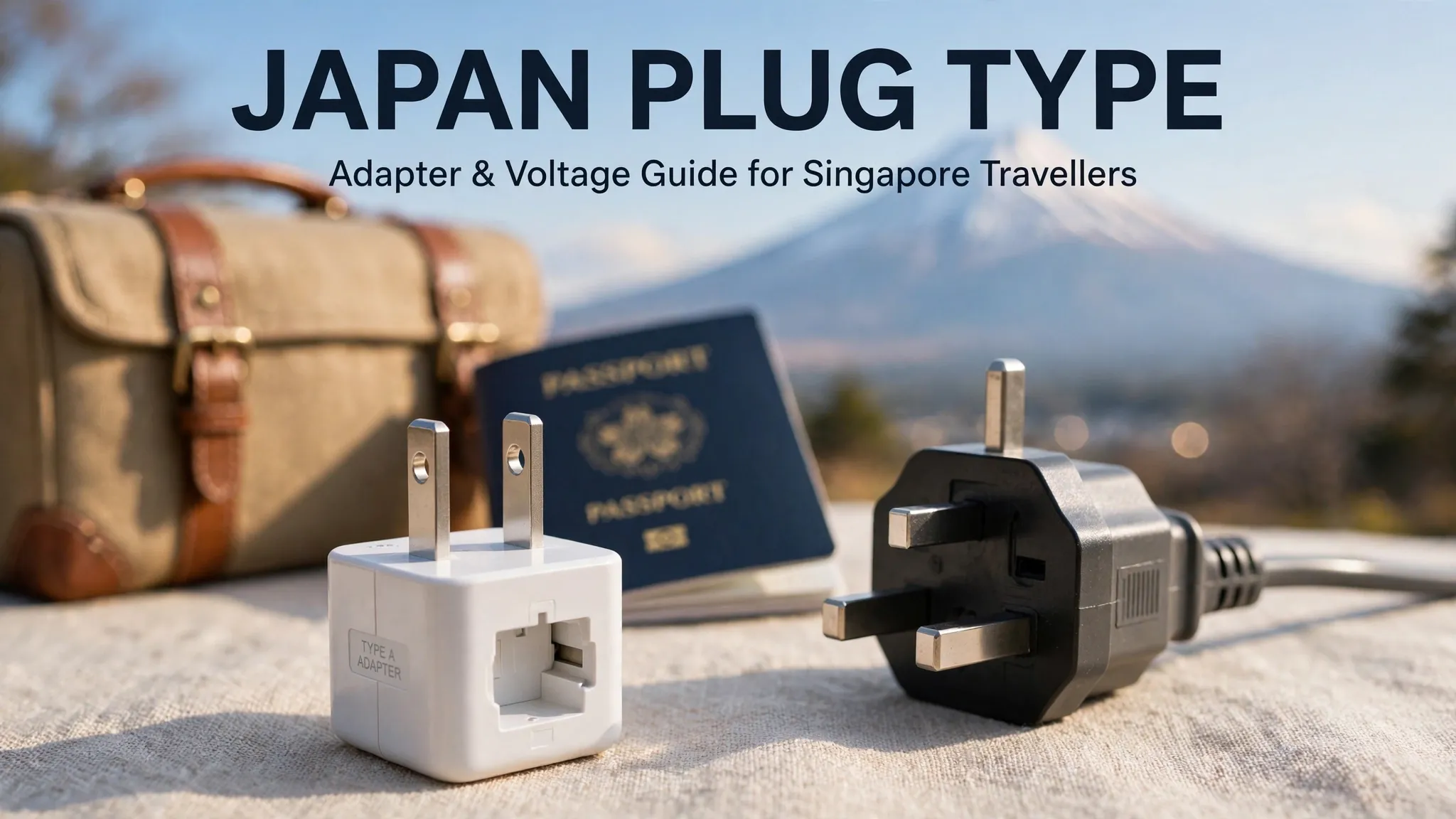
Japan Plug Type: What Singapore Travellers Need to Know
Planning a trip to Japan from Singapore? Check the Japan plug type before packing your chargers. Japan mainly uses Type A electrical outlets, with some Type B sockets, while Singapore uses Type G plugs with three rectangular pins. There’s also a voltage difference: Japan supplies 100V electricity compared with Singapore’s 230V. So, your usual Singapore charger may need a travel adapter, and some appliances need extra checking before use. A little preparation can save you from charging problems during your holiday.
TL;DR: Japan Plug Type for Singapore Travellers
- Japan mainly uses Type A plugs, with some Type B outlets.
- Japan operates on 100V electricity.
- Singapore uses Type G plugs and 230V electricity.
- Singapore travellers generally need a Type G to Type A compatible travel adapter.
- Most modern 100–240V phone chargers work with the correct adapter.
- Check hair dryers and other high-power appliances before using them in Japan.
Japan Plug Type – Quick Facts
| Electrical specification | Japan |
|---|---|
| Main plug type | Type A |
| Other plug type | Type B |
| Standard voltage | 100V |
| Frequency | 50Hz / 60Hz |
| Common socket | Two flat parallel slots |
| Singapore adapter needed? | Usually yes |
What Plug Type Does Japan Use?
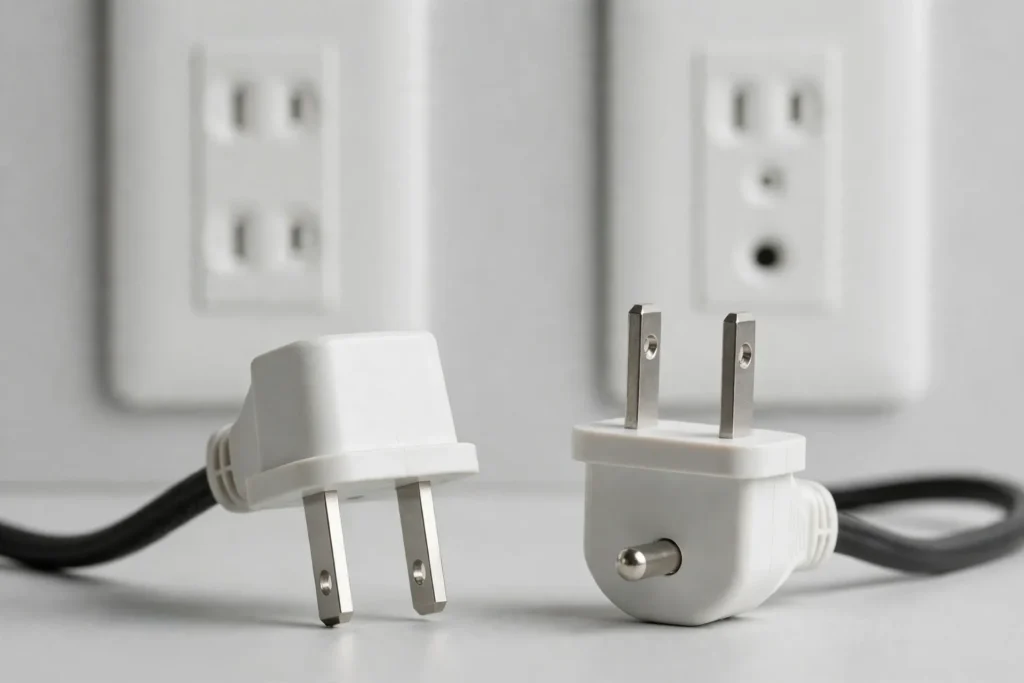
Japan mainly uses the Type A plug, which has two flat parallel pins. You’ll see these sockets in hotels, shops, airports and other everyday places. Many small electronic devices, such as phone chargers and camera chargers, use this two-pin design.
Type A – The Main Japanese Plug Type
Type A is the most common Japan power plug. Its two flat pins fit into the matching two-slot Japanese power socket. Some two-pin plugs are designed to work without a grounding connection, so check the shape and specifications of your charger before travelling.
Type B – Grounded Electrical Plugs
Type B has two flat pins and an additional grounding pin. Grounded outlets are available in Japan, but Type A is more common. If you’re carrying an appliance with a grounded plug, make sure your travel adapter supports the grounding connection. A basic two-pin adapter may not provide it.
Is Japan Plug the Same as Singapore?
No. Singapore and Japan use different plug designs. Singapore commonly uses Type G plugs, with three rectangular pins, while Japan mainly uses Type A sockets with two flat parallel pins. So, your regular Singapore charger will not fit directly into most Japanese outlets.
A Type G to Type A travel adapter provides the physical connection. If you have a grounded appliance, check whether you need an adapter that supports Type B as well.
| Feature | Singapore | Japan |
|---|---|---|
| Plug type | Type G | Mainly Type A; some Type B |
| Pins | Three rectangular pins | Two flat pins; Type B adds a grounding pin |
| Voltage | 230V | 100V |
| Frequency | 50Hz | 50Hz / 60Hz |
| Adapter | Not usually needed locally | Usually needed for Singapore plugs |
The difference is not just the socket shape. The voltage also changes, so check your device’s rating before plugging it in.
Japan Voltage vs Singapore Voltage
Japan’s standard electricity supply is 100V, while Singapore’s standard supply is 230V. Japan also has two electrical frequencies: eastern Japan, including Tokyo, uses 50Hz, while western Japan, including Osaka and Kyoto, uses 60Hz.
Voltage describes the electrical potential supplied to an appliance. Frequency refers to how many times the alternating current cycles each second. Some devices can operate across different voltage and frequency ranges, but others cannot.
| Location | Voltage | Frequency |
|---|---|---|
| Singapore | 230V | 50Hz |
| Tokyo / Eastern Japan | 100V | 50Hz |
| Osaka / Western Japan | 100V | 60Hz |
For most modern phone and laptop chargers, the regional frequency difference is not a problem if the charger supports the stated input range. Appliances with motors, heating elements or timing functions may need closer checking.
Do You Need a Travel Adapter for Japan from Singapore?
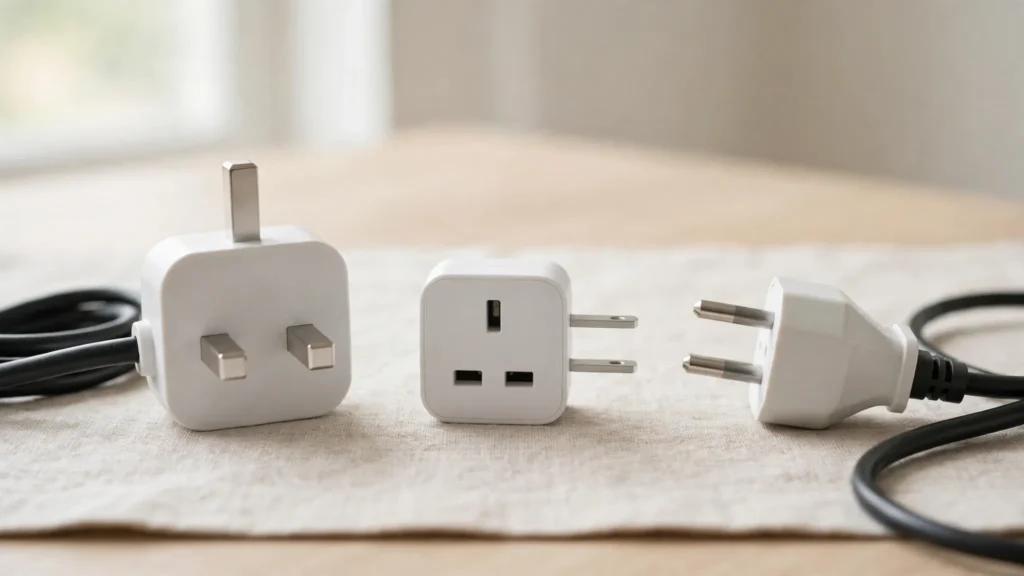
Yes, most Singapore travellers should pack a travel adapter. Singapore’s Type G plug will not fit directly into Japan’s common Type A sockets. A Type G-to-Type A adapter is usually suitable for ordinary two-pin devices. A universal travel adapter can be handy if you’re visiting other countries on the same trip.
Check the adapter’s supported plug types, current rating and grounding features before buying. If your appliance has a three-pin grounded plug, don’t assume a small two-pin adapter will provide a safe grounding connection.
Buying your adapter before departure also saves you from searching for one after landing in Japan.
How Much Does a Japan Travel Adapter Cost in Singapore?
Travel adapter prices depend on the design, number of charging ports and brand. These are indicative shopping budgets, not verified live retailer prices.
| Adapter type | Estimated price |
|---|---|
| Basic Type A adapter | S$5–S$12 |
| USB travel adapter | S$10–S$25 |
| Universal travel adapter | S$15–S$45 |
| Multi-port USB-C adapter | S$20–S$60 |
A basic adapter may be enough if you only need to connect one compatible charger. USB-A and USB-C models can charge several smaller devices, while a universal adapter may suit travellers visiting multiple countries.
Before ordering from Shopee Singapore or Lazada Singapore, check that the product supports Japanese Type A sockets, has the correct input and output ratings, and meets relevant safety requirements. Avoid choosing one based on price alone.
Adapter vs Voltage Converter – What’s the Difference?
A plug adapter and a voltage converter do different jobs. A plug adapter changes the physical plug shape, while a voltage converter or transformer changes the electrical voltage supplied to an appliance.
| Feature | Plug adapter | Voltage converter |
|---|---|---|
| Changes plug shape | Yes | Not necessarily |
| Changes voltage | No | Yes |
| Phone charger rated 100–240V | Usually enough | Usually unnecessary |
| 220–240V-only appliance in Japan | Not enough | May need a suitable step-up transformer |
A Singapore appliance rated only for 220–240V may not operate properly on Japan’s 100V supply. A suitable step-up transformer may be required to raise the voltage. Check the appliance’s wattage and the transformer’s rating before use. Some appliances may not be suitable for conversion at all.
Can You Use Singapore Chargers and Appliances in Japan?
Many Singapore chargers can work in Japan, but check the small print on the charger or appliance first. Look for an input rating such as 100–240V, 50/60Hz. If that range is printed on the label, the device is generally suitable for Japan’s 100V supply with the correct plug adapter.
| Device | What to check |
|---|---|
| iPhone charger | 100–240V input |
| Android charger | Input voltage rating |
| MacBook charger | 100–240V compatibility |
| Camera charger | Voltage and frequency |
| Hair dryer | 100V or dual-voltage support |
| Hair straightener | Dual-voltage support |
| Electric shaver | Voltage and plug specifications |
Hair dryers and straighteners deserve extra attention because many models are designed for Singapore’s higher voltage. A plug adapter alone will not make a 230V-only appliance suitable for Japan. Check the product label or manual, and use only a compatible transformer if the manufacturer permits it.
Where to Buy a Japan Travel Adapter in Singapore
You can look for a Japan travel adapter at electronics shops, travel accessory stores and online marketplaces such as Shopee Singapore and Lazada Singapore. Check the plug type, voltage rating, wattage limit and grounding support before purchasing. Buying one before your flight is more convenient than trying to find a suitable adapter after arriving at Changi Airport or in Japan.
Frequently Asked Questions
1. Does Japan use Type A or Type B plugs?
Japan mainly uses Type A plugs, which have two flat parallel pins. Type B outlets, with an additional grounding pin, are also available in some locations.
2. Can I use my Singapore plug in Japan?
No, a Singapore Type G plug will not fit directly into a standard Japanese Type A socket. Bring a compatible Type G-to-Type A travel adapter.
3. Does Japan use 100V or 230V electricity?
Japan uses 100V electricity. Singapore uses 230V, so check your appliance’s input rating before connecting it in Japan.
4. Can I use my Singapore hair dryer in Japan?
Only if it supports Japan’s 100V supply or is compatible with a suitable voltage transformer. A 230V-only hair dryer may not work properly with a simple plug adapter.
5. Can I charge my iPhone in Japan?
Generally, yes. Check that your iPhone charger says 100–240V on its input label, then use a suitable travel adapter for the Japanese socket.
Conclusion
Japan mainly uses Type A plugs, so Singapore travellers should pack a compatible travel adapter before departure. Check your chargers and appliances for 100–240V support, especially hair dryers and straighteners. The right adapter solves the plug-shape issue, but voltage compatibility still matters.

Global Arena is a Singapore-focused SEO and digital marketing brand with a network of 25+ publisher websites, helping businesses strengthen their online presence through guest posting, link building, content marketing, and digital PR.
For collaborations, publishing opportunities, or business inquiries:
Hamza@globalarena.org | WhatsApp: +971 52 399 4589