
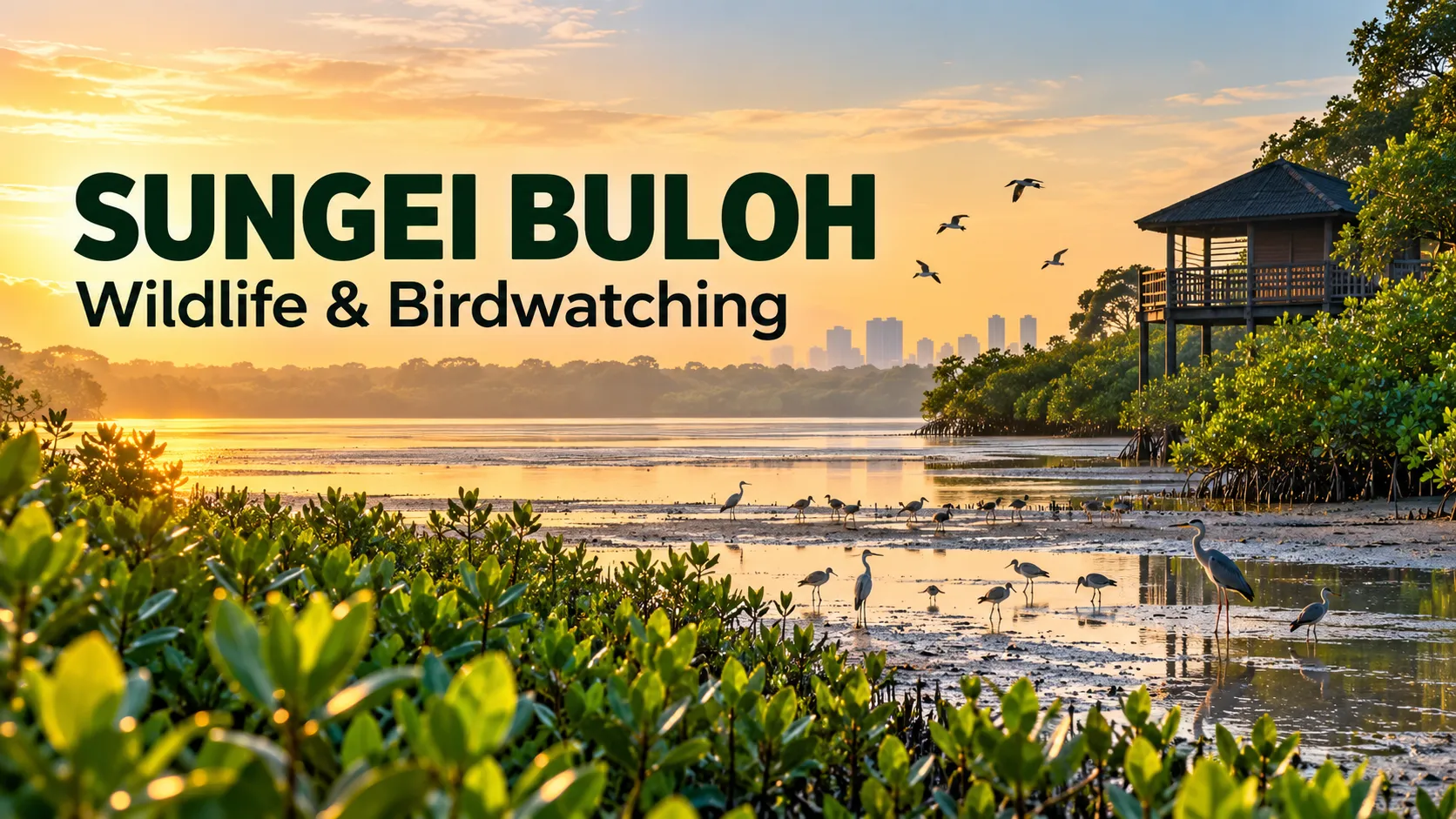
Sungei Buloh Wetland Reserve: A Nature & Wildlife Guide to Singapore’s Wetlands
Sungei Buloh Wetland Reserve is a 202-hectare nature reserve in northwest Singapore, known for its mangroves, mudflats, ponds, forests and rich wildlife. It is also Singapore’s first ASEAN Heritage Park and an important stop for migratory birds travelling along the East Asian-Australasian Flyway.
Unlike Singapore’s city attractions, a visit here is more about slowing down and watching what is happening around you. Birds feeding near the water, mudskippers moving through the mud, monitor lizards crossing a trail — there’s always a chance of seeing something unexpected. And your route can change the experience quite a bit, especially if you are visiting for birdwatching, photography, a family walk or simply some time around nature.
TL;DR: Sungei Buloh Wetland Reserve in 60 Seconds
Sungei Buloh Wetland Reserve sits in Kranji, northwest Singapore. Entry is free, and the reserve is open from 7am to 7pm, with last entry at 6:30pm. Kranji MRT is the nearest station, with bus 925 or 925M providing access. For migratory birds, August to April is the period to watch, while resident birds can be seen throughout the year.
| Detail | Quick Answer |
|---|---|
| Location | Northwest Singapore, Kranji |
| Address | 60 Kranji Way, Singapore 739453 |
| Admission | Free |
| Opening hours | 7am–7pm |
| Last entry | 6:30pm |
| Best known for | Wetlands, mangroves, birds and wildlife |
| Migratory bird season | August–April |
| Nearest MRT | Kranji MRT |
Why Sungei Buloh Matters to Singapore
Sungei Buloh is not simply a green space with walking paths. Its wetlands provide habitat for plants, birds and other animals, while its mudflats and tidal areas are especially useful to migratory shorebirds.
From Nature Park to Protected Wetland
The story of Sungei Buloh goes back several decades. The site opened as a nature park in 1993. In 2002, 130 hectares were officially gazetted as a nature reserve and the name Sungei Buloh Wetland Reserve was adopted. The same year, the reserve gained recognition as an internationally important site for migratory birds. In 2003, it became Singapore’s first ASEAN Heritage Park.
Today, the reserve covers 202 hectares of mangroves, mudflats, ponds and forests. The Visitor Centre and newer trails were added as the reserve expanded, giving visitors more places to explore while keeping the natural areas protected.
A Wetland on the Migratory Flyway
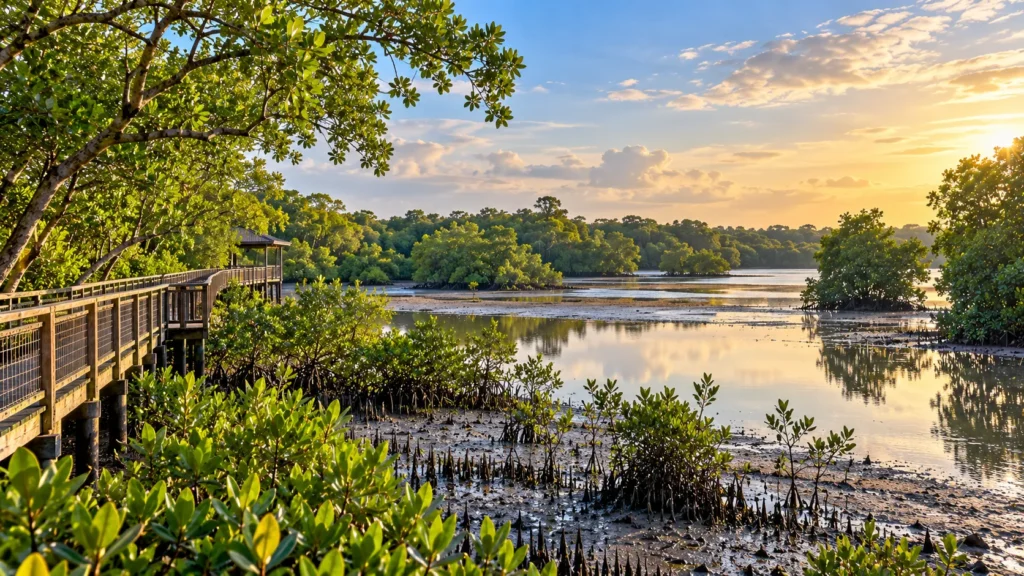
The reserve is part of the East Asian-Australasian Flyway, a major migration route used by birds travelling between breeding and non-breeding areas. Its mudflats work as feeding and resting grounds for migratory birds.
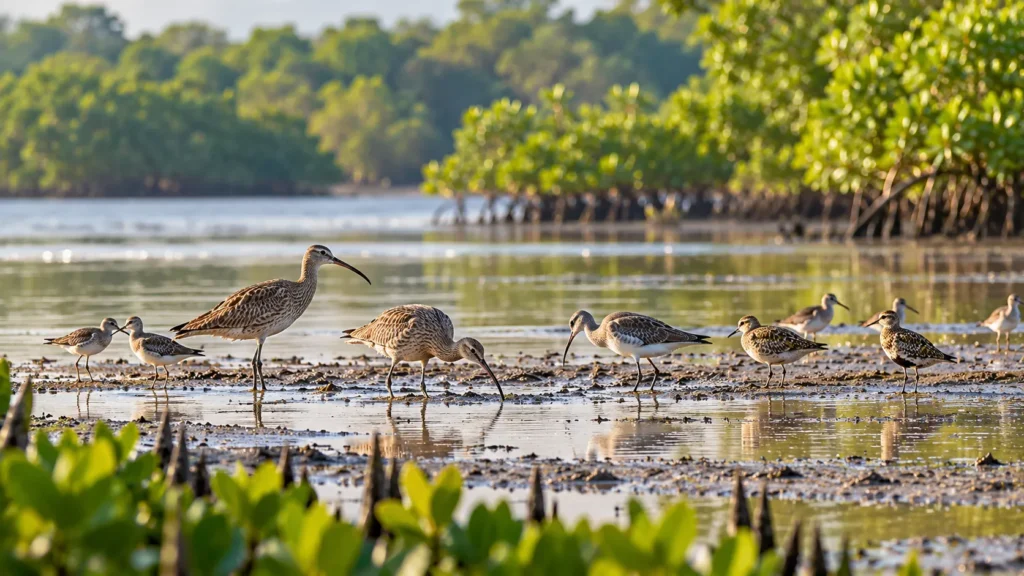
From August to April, visitors may spot Whimbrels, Common Greenshanks, Common Redshanks, Pacific Golden Plovers and Lesser Sand Plovers. Some birds travel from very distant northern regions before reaching Singapore.
What Kind of Habitat Will You Find Here?
The appeal of Sungei Buloh comes partly from how many habitats sit within the same reserve. You are not walking through one type of scenery for the entire visit. Mangroves give way to mudflats, ponds and forested areas, creating different places for wildlife to feed, shelter and move around.
| Habitat | What You May Notice |
|---|---|
| Mangrove forest | Mangrove trees, mudskippers, crabs and monitor lizards |
| Mudflats | Shorebirds feeding and resting |
| Tidal ponds | Migratory birds and waterbirds |
| Freshwater ponds | Fish, dragonflies and waterbirds |
| Secondary forest | Forest birds, insects and other small creatures |
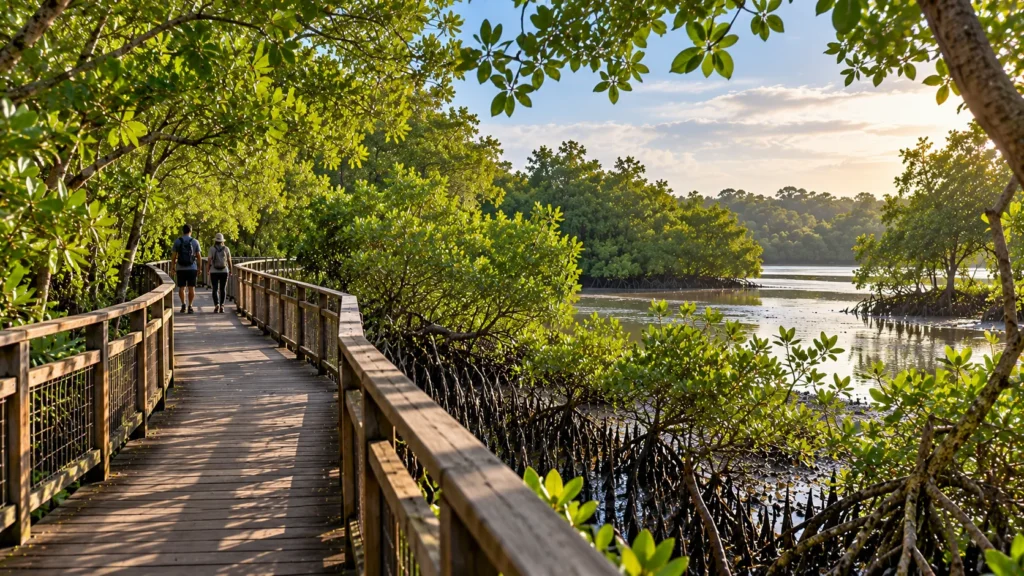
The mangrove areas are especially interesting up close. You can see roots rising from the soil, small creatures moving around the mud and birds searching for food near the water. NParks also highlights mangrove plants such as Api-api Putih, Mangrove Apple, Bakau Minyak, Bakau Putih and Sea Holly within the reserve.
So, Sungei Buloh is much more than a place to tick off a few bird species. The habitats themselves are part of the experience.
A Wildlife Spotter’s Guide to Sungei Buloh
Bring binoculars if you have them. A camera can be useful too, but patience matters just as much. Wildlife does not appear on schedule, and a quiet few minutes beside a pond can sometimes be more rewarding than rushing from one trail to another.
Birds to Look For
NParks records more than 200 bird species at Sungei Buloh, including resident birds and seasonal visitors.
Resident birds
- Herons
- Egrets
- Kingfishers
- Bitterns
- Sunbirds
- Tailorbirds
- Fruit pigeons
- White-bellied Sea Eagles
Migratory visitors - Whimbrel
- Common Greenshank
- Common Redshank
- Pacific Golden Plover
- Lesser Sand Plover
The Migratory Bird Trail is a good place to look for visiting shorebirds, while resident birds can be seen during other months too. Bird hides and shelters along the trail give visitors places to stop and watch without getting too close.
Wildlife Beyond Birds
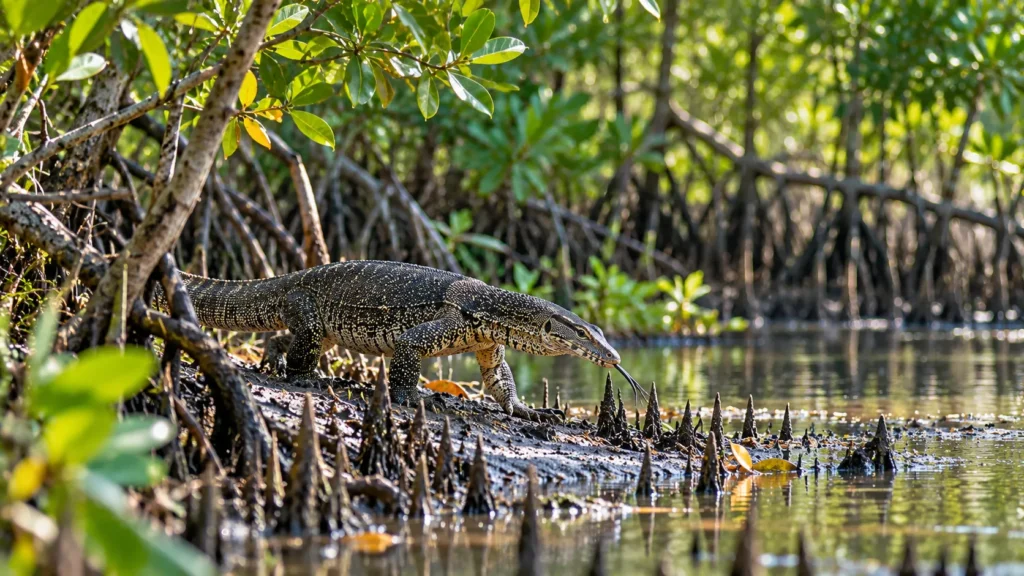
There is plenty happening below eye level as well. Malayan Water Monitors are among the animals visitors may see, while Estuarine Crocodiles can sometimes be spotted basking or floating in the water. Smooth-coated Otters may also appear, often in pairs or small family groups.
On the smaller side, look around mangrove roots and muddy areas for mudskippers, crabs and other creatures.
Why You May Not See Everything
A wildlife reserve is not a zoo, and that is part of its charm. Sightings can change with weather, tides, time of day and animal movement. You might see several birds in one visit and very few on another.
And if you do spot wildlife, give it space. Do not approach, provoke or feed animals. Stay calm and back away if an animal comes close.
Choosing Your Sungei Buloh Experience
You do not need to cover every trail in one visit. Pick a route around what you actually want to see.
| If You Want… | Focus On… |
|---|---|
| Migratory birds | Migratory Bird Trail |
| Mangrove wildlife | Mangrove Boardwalk |
| A family-friendly walk | Coastal Trail |
| A short walk | Forest Trail |
| Elevated forest views | Mid-canopy Walk |
| Children’s nature experience | Junior Wetland |
| Guided learning | NParks guided tours |
The Migratory Bird Trail is 1.95km and rated easy. It has bird hides and shelters, making it a natural choice for birdwatching. The Mangrove Boardwalk has 500m and 3km route options and brings visitors close to mangrove wildlife without walking through mud.
For families, the 1.3km Coastal Trail passes freshwater ponds, mudflats and mangroves, with viewpoints such as Eagle Point and Kingfisher Pod. The 300m Forest Trail is short and easy, while the 150m Mid-canopy Walk gives a higher view into the secondary forest.
How to Plan a Better Visit
A little planning can make a nature outing much easier, especially in Singapore’s heat and changing weather.
Before Leaving
Check the weather and, if you are interested in wetland wildlife or birdwatching, look at the tide conditions too. NParks advises visitors to check for temporary closures because some areas may be affected by high tides, flooding or bad weather.
Decide what you want to see before arriving. Birdwatchers may want to spend more time around the Migratory Bird Trail, while families may prefer the Coastal Trail or Junior Wetland. Bring drinking water, comfortable walking shoes and binoculars if you have them.
While You’re There
Stay on designated routes and keep noise low. Stop occasionally instead of walking quickly through every section — birds and small animals are easier to spot when you are not rushing.
Do not feed wildlife or move toward animals for a closer photo. If you encounter an animal on the path, stay calm, keep your distance and give it room to move away.
When Should You Visit Sungei Buloh Wetland Reserve?
There isn’t one perfect time for every visitor. Your preferred timing depends on what you hope to see.
| Your Goal | Useful Timing |
|---|---|
| Migratory birds | August–April |
| Resident birds | Throughout the year |
| Wildlife observation | Allow unhurried time along the trails |
| Family nature visit | Choose a comfortable weather window |
| Photography | Plan around light and weather |
For birdwatchers, August to April is the standout period because migratory shorebirds visit the reserve during these months. Resident species remain present throughout the year, so you can still enjoy Singapore birdwatching outside the migratory season.
For a general nature walk, the weather matters more than a specific month. Start earlier in the day if you prefer cooler conditions and give yourself enough time to stop at hides, boardwalks and observation points.
Getting There Without Making the Journey Complicated
The easiest public transport option is to travel to Kranji MRT station and continue by bus. From Kranji MRT, take bus 925 from Monday to Saturday, or 925M on Sundays and public holidays.
From Kranji MRT
The bus route makes Kranji MRT the main public transport reference point for Sungei Buloh Wetland Reserve Singapore. Check the latest bus information before travelling, especially around public holidays.
If You’re Driving
The Visitor Centre is at 60 Kranji Way, Singapore 739453. Free parking and bicycle racks are available at both the Visitor Centre and Wetland Centre.
If you are driving, allow some extra time for parking and walking to your preferred trail. The reserve has more than one access point, so knowing which area you want to visit first can save unnecessary walking.
Rules That Protect the Reserve and Its Wildlife
Sungei Buloh wildlife is best enjoyed from a respectful distance. The reserve has clear rules designed to protect both visitors and animals.
- Do not feed or provoke wildlife.
- Keep a safe distance from animals.
- Stay on designated trails.
- Pets are not allowed inside the reserve.
- Drones are not allowed.
- Fishing and poaching are not allowed.
- Do not play loud music or create unnecessary noise.
- Do not enter the reserve during bad weather.
- Do not enter areas that have been temporarily closed or flooded.
- If you encounter an animal, stay calm and slowly back away.
NParks also advises visitors to check weather conditions before visiting and to seek shelter during bad weather. The reserve can have temporary closures during periods of flooding or high tides.
These rules are easy enough to follow. And they make a difference when the place is shared by people and wildlife.
Sungei Buloh Wetland Reserve for Families, Photographers & First-Time Visitors
Families
Families can choose easier routes such as the Coastal Trail or Forest Trail. The Junior Wetland, located near the Visitor Centre, gives children a closer look at a freshwater pond and its plants and animals. Children below 13 must be supervised by adults there.
Birdwatchers
Birdwatchers will naturally want to spend time around the Migratory Bird Trail. Bird hides and shelters provide useful places to pause, while the reserve’s resident birds offer something to look for outside the migratory season too.
Photographers
There are plenty of subjects beyond birds — mangrove roots, reflections, insects, reptiles and changing light across the water. Aerie Tower rises 18 metres above the reserve and offers broad views, while Eagle Point provides a place to look for eagles and other raptors above the sea.
First-Time Visitors
Don’t feel pressured to cover the whole reserve. Pick one easy route, allow time for stops and see how the conditions feel. A slower visit often gives you more chances to notice small details that disappear when you are trying to finish a long route quickly.
Practical Facts Before You Go
| Detail | Current Information |
|---|---|
| Admission | Free |
| Opening hours | 7am–7pm |
| Last entry | 6:30pm |
| Location | Kranji, northwest Singapore |
| Nearest MRT | Kranji MRT |
| Pets | Not allowed |
| Accessibility | Wheelchair accessible |
| Parking | Visitor Centre and Wetland Centre |
The reserve is currently listed as wheelchair accessible, and free parking is available at both the Visitor Centre and Wetland Centre.
Opening hours, access arrangements and temporary closures can change, so checking the current NParks information before setting off is a sensible final step.
FAQs About Sungei Buloh Wetland Reserve
Is Sungei Buloh Wetland Reserve free to enter?
Yes. Entry to the reserve is free. NParks also lists self-guided walks and its guided tours as free of charge.
What is Sungei Buloh Wetland Reserve famous for?
It is best known for its wetlands, mangroves, birdwatching and wildlife. It is also Singapore’s first ASEAN Heritage Park and an internationally recognised site for migratory birds.
What birds can you see at Sungei Buloh?
More than 200 bird species have been recorded there. Depending on the season, you may see herons, egrets, kingfishers and sunbirds, along with migratory shorebirds such as Whimbrels and Pacific Golden Plovers.
When is the migratory bird season?
Migratory birds are commonly seen from August to April. This is a useful period for visitors specifically interested in shorebirds and other seasonal visitors.
Can you see crocodiles at Sungei Buloh?
Yes, Estuarine Crocodiles live in the reserve and may be seen basking on land or floating in the water. Sightings are not guaranteed, and visitors should always keep a safe distance.
How do I get to Sungei Buloh from Kranji MRT?
Take bus 925 from Kranji MRT from Monday to Saturday, or 925M on Sundays and public holidays. The Visitor Centre is at 60 Kranji Way.
Are the trails suitable for children?
Yes. NParks lists several easy routes, including the Coastal Trail and Forest Trail. Junior Wetland is also suitable for children, with adult supervision required for children below 13.
How long should you spend at Sungei Buloh?
It depends on your route and how much time you want for wildlife spotting. A short trail can work for a quick visit, while birdwatchers and photographers may want several hours to explore at a relaxed pace.
Conclusion — Why Sungei Buloh Is Different From Singapore’s Usual Attractions
Sungei Buloh Wetland Reserve offers a side of Singapore that feels far removed from the usual city sights. Here, mangroves, mudflats, ponds and forests create space for resident birds, migratory shorebirds, reptiles, otters and smaller wetland creatures.
You can visit for birdwatching, photography, a family walk or simply a slower morning outdoors. The experience changes with the route, weather and wildlife activity — and that unpredictability is part of the fun. Before heading out, check the latest NParks updates for weather, opening information and temporary closures.

Global Arena is a Singapore-focused SEO and digital marketing brand with a network of 25+ publisher websites, helping businesses strengthen their online presence through guest posting, link building, content marketing, and digital PR.
For collaborations, publishing opportunities, or business inquiries:
Hamza@globalarena.org | WhatsApp: +971 52 399 4589