Dumpling Festival: History, Meaning, Traditions & Celebrations in Singapore
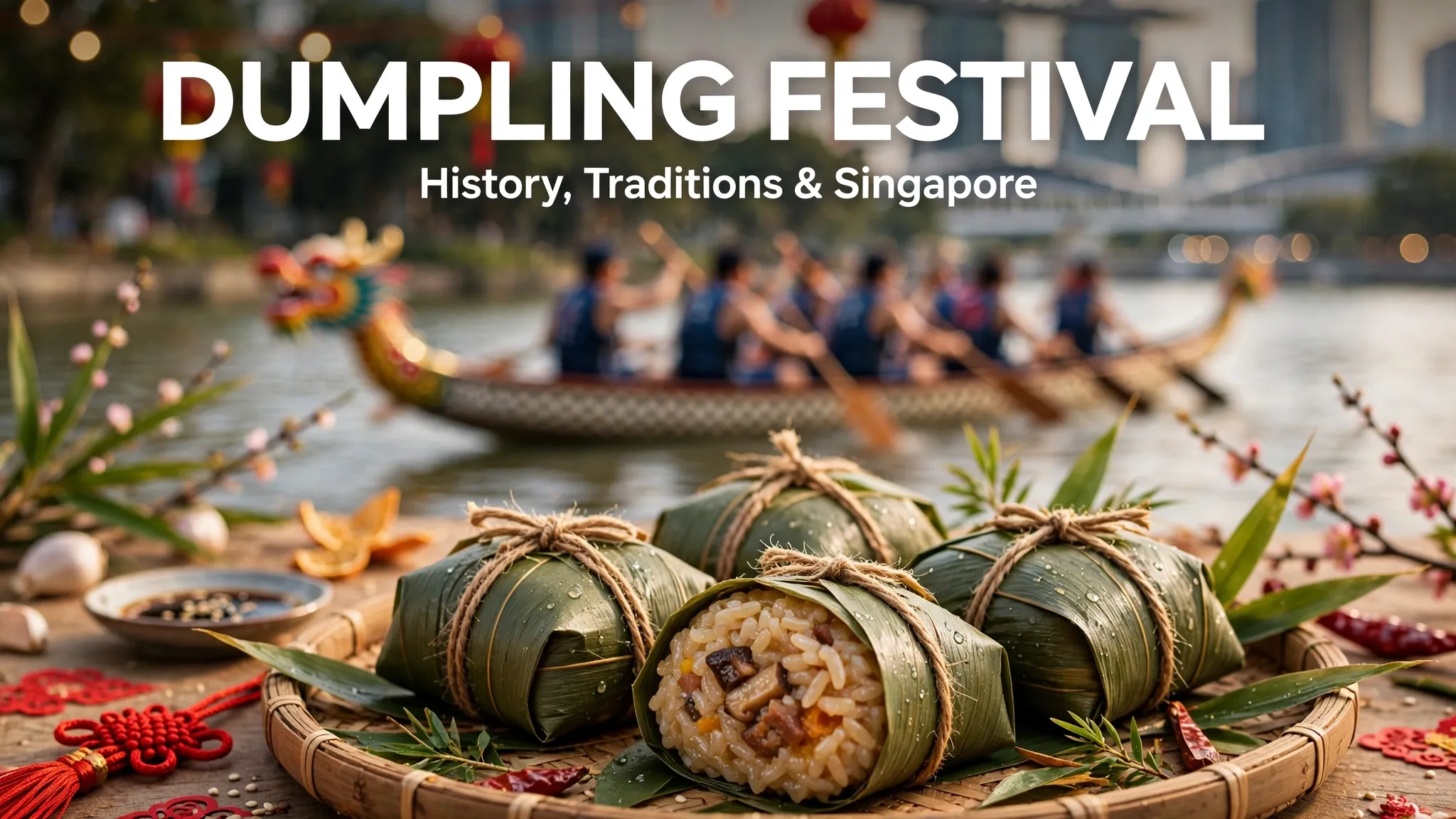
The Dumpling Festival, also known as the Dragon Boat Festival or Duanwu Festival, is a traditional Chinese celebration held on the fifth day of the fifth month of the lunar calendar. It honours Chinese history, customs and the poet Qu Yuan, while bringing families together through food and festive activities. In Singapore, the occasion is closely associated with Bak Chang and Zongzi — glutinous rice dumplings wrapped in bamboo leaves. These familiar foods reflect the Chinese cultural traditions and diverse dialect-group heritage found in Singapore.
TL;DR: Dumpling Festival at a Glance
The Dumpling Festival celebrates Chinese heritage and remembers the poet Qu Yuan. It falls on the fifth day of the fifth lunar month, usually in May or June. People eat Zongzi, known as Bak Chang in Singapore, in connection with a traditional legend about protecting Qu Yuan. Dragon boat racing is another custom linked to the story.
| Festival detail | Information |
|---|---|
| Main name | Dumpling Festival |
| Chinese name | Duanwu Jie |
| Alternative name | Dragon Boat Festival |
| Date | Fifth day of the fifth lunar month |
| Traditional food | Zongzi / Bak Chang |
| Historical figure | Qu Yuan |
| Famous activity | Dragon boat racing |
What Is the Dumpling Festival?
The Chinese Dumpling Festival is a traditional celebration observed by Chinese communities around the world. Its Chinese name, Duanwu Jie, is commonly translated as the Dragon Boat Festival. The word Duanwu refers to the festival’s traditional date, the fifth day of the fifth lunar month.
Rice dumplings are at the heart of the occasion. Families prepare or buy glutinous rice wrapped in bamboo leaves, with fillings that vary by region and tradition. In Singapore, the festival is often marked by sharing Bak Chang at home, enjoying familiar flavours and passing Chinese heritage to younger generations.
When Is the Dumpling Festival Celebrated?
The Dumpling Festival takes place on the fifth day of the fifth month of the Chinese lunar calendar. Its date changes on the Gregorian calendar because the lunar calendar follows a different cycle from the standard calendar used in Singapore.
The festival usually falls in May or June. Families may prepare Bak Chang in the days leading up to it, while food shops and restaurants offer seasonal dumplings. Here are the dates for the coming years:
| Year | Dumpling Festival date |
|---|---|
| 2026 | 19 June |
| 2027 | 9 June |
| 2028 | 28 May |
History and Origin of the Dumpling Festival
The history of the Dumpling Festival reaches back to ancient China. Its origins are linked to several old seasonal customs, but the best-known story centres on Qu Yuan, a poet and government official from the Warring States Period (475–221 BCE).
Qu Yuan served the ancient state of Chu and became remembered for his loyalty to his country. According to traditional accounts, he opposed political decisions that he believed would harm Chu. After losing favour at court and hearing that his state had fallen to an enemy, he is said to have ended his life by jumping into the Miluo River.
Over time, stories about Qu Yuan became closely connected with the fifth-day-of-the-fifth-month observance. Customs such as eating rice dumplings and holding dragon boat races developed around the legend, alongside other regional practices.
Who Was Qu Yuan?
Qu Yuan was a Chinese poet and statesman associated with the ancient state of Chu. He is remembered for his writing, loyalty and concern for his country’s future.
Traditional accounts say he drowned himself in the Miluo River after Chu was defeated. His story became a lasting part of Chinese cultural memory, and the Dumpling Festival is one occasion when his legacy is recalled.
Why Are Rice Dumplings Associated with Qu Yuan?
A popular legend says that after Qu Yuan entered the river, local people raced out in boats to search for him. They also threw packets of cooked rice into the water, hoping fish would eat the rice instead of disturbing his body.
The story is commonly used to explain the connection between Zongzi and the festival. Over generations, rice wrapped in bamboo leaves became a familiar festive food. The legend is an important part of the festival’s cultural tradition, but it should be understood as a traditional origin story rather than a fully established historical account.
Why Is the Dumpling Festival Celebrated?
The Dumpling Festival is a time to remember Qu Yuan and reflect on values such as loyalty, patriotism and devotion to one’s community. It also preserves Chinese heritage through food, family customs and traditional activities.
For Singapore’s Chinese community, the occasion offers a chance to keep cultural practices alive in a multicultural society. Sharing Bak Chang, talking about its history and introducing children to the festival help connect younger generations with traditions passed down by their families.
Traditional Dumpling Festival Customs and Celebrations
Dumpling Festival traditions vary across Chinese regions and communities. Some are closely linked to the Qu Yuan legend, while others come from older seasonal beliefs and family practices.
Eating Traditional Rice Dumplings
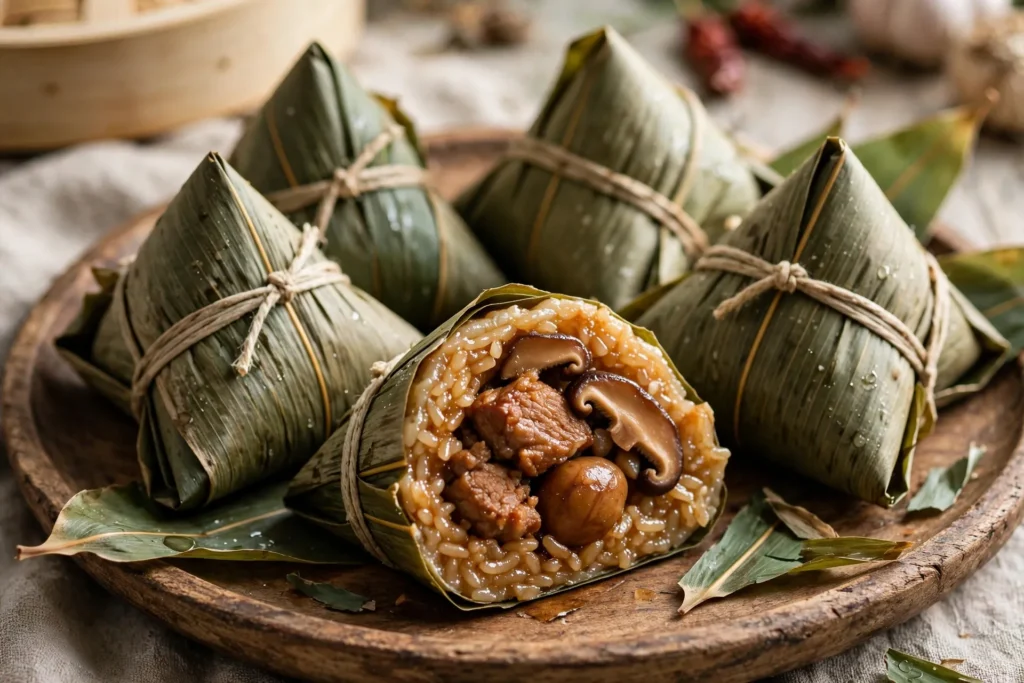
Eating Zongzi is one of the best-known Dragon Boat Festival traditions. The dumplings are made with glutinous rice wrapped in bamboo leaves and tied into small parcels. Fillings can be savoury or sweet, depending on regional preferences.
In Singapore, Bak Chang may contain pork, mushrooms, chestnuts, salted egg yolk or other ingredients. Families sometimes make dumplings together, while others buy them from traditional shops and restaurants. Sharing them is part of the occasion.
Dragon Boat Racing
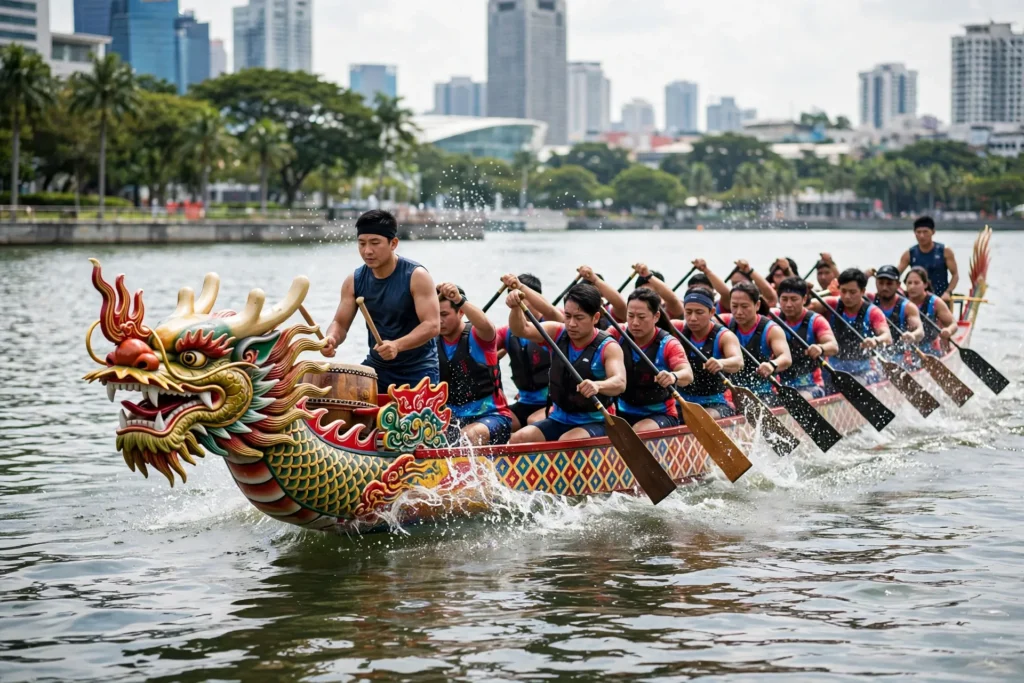
Dragon boat racing is closely associated with the story of people searching for Qu Yuan in the river. Teams paddle long, narrow boats together, often to the beat of a drum.
The races are now a recognised cultural and sporting activity in many places. In Singapore, dragon boating has a wider sporting presence, with clubs and teams taking part in training and competitions beyond the festival period.
Wearing Fragrant Sachets and Other Customs
In some Chinese communities, people traditionally wear small fragrant sachets filled with herbs or aromatic materials. These are associated with seasonal protection and older beliefs about keeping illness and harmful influences away.
Other customs differ by region. Some families observe local practices, prepare particular foods or spend time together. Not every tradition is followed by every household — customs can vary considerably.
| Tradition | Cultural meaning |
|---|---|
| Eating Zongzi | Remembrance of Qu Yuan’s traditional legend |
| Dragon boat racing | Associated with the search for Qu Yuan |
| Fragrant sachets | Traditional seasonal protection practice |
| Family gatherings | Passing cultural traditions between generations |
Popular Types of Rice Dumplings in Singapore
Singapore’s Chinese food heritage reflects different dialect groups and generations of home cooking. That variety can be seen in the Bak Chang sold during the Dumpling Festival. Most are made with glutinous rice and wrapped in bamboo leaves, but the seasoning, fillings and preparation methods differ.
Some dumplings are rich and savoury, while others combine sweet and salty flavours. Peranakan cooking also contributes its own distinctive style.
| Dumpling type | Main characteristics | Common ingredients |
|---|---|---|
| Hokkien Bak Chang | Rich and savoury | Pork, mushrooms, chestnuts |
| Cantonese rice dumpling | Hearty filling with regional variations | Glutinous rice, meat and other fillings |
| Teochew Bak Chang | Often combines sweet and savoury flavours | Pork, mushrooms and sweet elements |
| Nyonya Chang | Fragrant Peranakan-style dumpling | Spiced filling and aromatic rice |
| Kee Chang | Yellowish alkaline rice dumpling | Glutinous rice; sometimes served with kaya or sugar |
Hokkien and Cantonese Bak Chang
Hokkien Bak Chang is commonly associated with savoury, well-seasoned rice and fillings such as pork, mushrooms and chestnuts. The ingredients are often cooked with seasonings before being wrapped and steamed.
Cantonese rice dumplings can vary by recipe and region. Some are generously filled, while others use different combinations of meat, beans or other ingredients. The name alone does not describe one fixed recipe.
Teochew and Nyonya Rice Dumplings
Teochew Bak Chang is known for combinations of sweet and savoury flavours. Depending on the recipe, the filling may include pork, mushrooms and sweet elements such as winter melon.
Nyonya Chang reflects Peranakan food traditions. Its rice and filling are flavoured with spices, giving it a distinctive aroma and taste. The blue-coloured rice found in some versions comes from butterfly pea flowers.
Kee Chang
Kee Chang is different from the savoury Bak Chang varieties. It is made with glutinous rice treated with an alkaline solution, which gives the cooked dumpling its yellowish colour and softer, slightly springy texture.
It usually has no savoury filling. People often eat it with kaya, sugar or a sweet dip, depending on family preference.
How Is the Dumpling Festival Celebrated in Singapore?
In Singapore, the Dumpling Festival is often celebrated through food and family traditions. Chinese households may buy or prepare Bak Chang, share dumplings with relatives and introduce children to the stories behind the occasion.
Chinatown is closely associated with Singapore’s Chinese food heritage, and seasonal dumplings can be found at traditional food shops and other sellers around the island. Chinese clan associations and cultural groups also help preserve dialect-group customs and food traditions through cultural activities.
Dragon boating adds another connection. Singapore has an active dragon boat sporting scene, with teams and clubs taking part in the sport throughout the year. However, not every dragon boat activity is a Dumpling Festival event, so visitors should check current event announcements before making plans.
For younger generations, tasting different dumplings and learning why they are eaten can be a simple way to connect with Chinese cultural traditions.
How Much Do Rice Dumplings Cost in Singapore?
Rice dumpling prices in Singapore depend on the size, filling, preparation method and seller. A simple traditional dumpling may cost less than a restaurant or premium hotel creation. Gift sets are usually priced separately and may contain several dumplings.
The S$2–S$6 figure below is an indicative budget for traditional hawker-style dumplings, not a confirmed current price list. Prices at individual sellers should be checked before purchasing.
| Buying option | Price information |
|---|---|
| Traditional hawker dumplings | Around S$2–S$6 per dumpling; indicative only |
| Traditional specialty shops | Varies by seller and recipe |
| Restaurant dumplings | Varies by restaurant and ingredients |
| Premium hotel gift sets | Check the current set price and number of dumplings |
Frequently Asked Questions About the Dumpling Festival
What Is the Dumpling Festival?
The Dumpling Festival is a traditional Chinese celebration held on the fifth day of the fifth lunar month. It is associated with Qu Yuan, rice dumplings called Zongzi and dragon boat racing.
When Is the Dumpling Festival Celebrated in 2027?
The Dumpling Festival falls on 9 June 2027. It is observed on the fifth day of the fifth month of the Chinese lunar calendar.
Why Do Chinese People Eat Rice Dumplings During the Festival?
A traditional legend says villagers threw rice into the river after Qu Yuan drowned, hoping to protect his body from fish. This story became associated with Zongzi, the bamboo-leaf-wrapped rice dumplings eaten during the festival.
Is the Dumpling Festival the Same as the Dragon Boat Festival?
Yes. Dumpling Festival, Dragon Boat Festival and Duanwu Festival are alternative names for the same traditional Chinese celebration. The names highlight different parts of the occasion, including its food, boat races and Chinese name.
What Is the Difference Between Zongzi and Bak Chang?
Zongzi is the Mandarin term for Chinese glutinous rice dumplings wrapped in leaves. Bak Chang is a commonly used term in Singapore, especially in Hokkien-speaking and other local Chinese food traditions. Recipes and fillings vary.
Conclusion
The Dumpling Festival brings together Chinese history, food and community traditions. Its connection with Qu Yuan, dragon boat racing and bamboo-leaf-wrapped rice dumplings has helped keep the occasion meaningful across generations. In Singapore, Bak Chang adds a local flavour to the celebration, reflecting the island’s rich Chinese and Peranakan food heritage.

Global Arena is a Singapore-focused SEO and digital marketing brand with a network of 25+ publisher websites, helping businesses strengthen their online presence through guest posting, link building, content marketing, and digital PR.
For collaborations, publishing opportunities, or business inquiries:
Hamza@globalarena.org | WhatsApp: +971 52 399 4589