Retirement Age Singapore: Rules, Re-employment and CPF
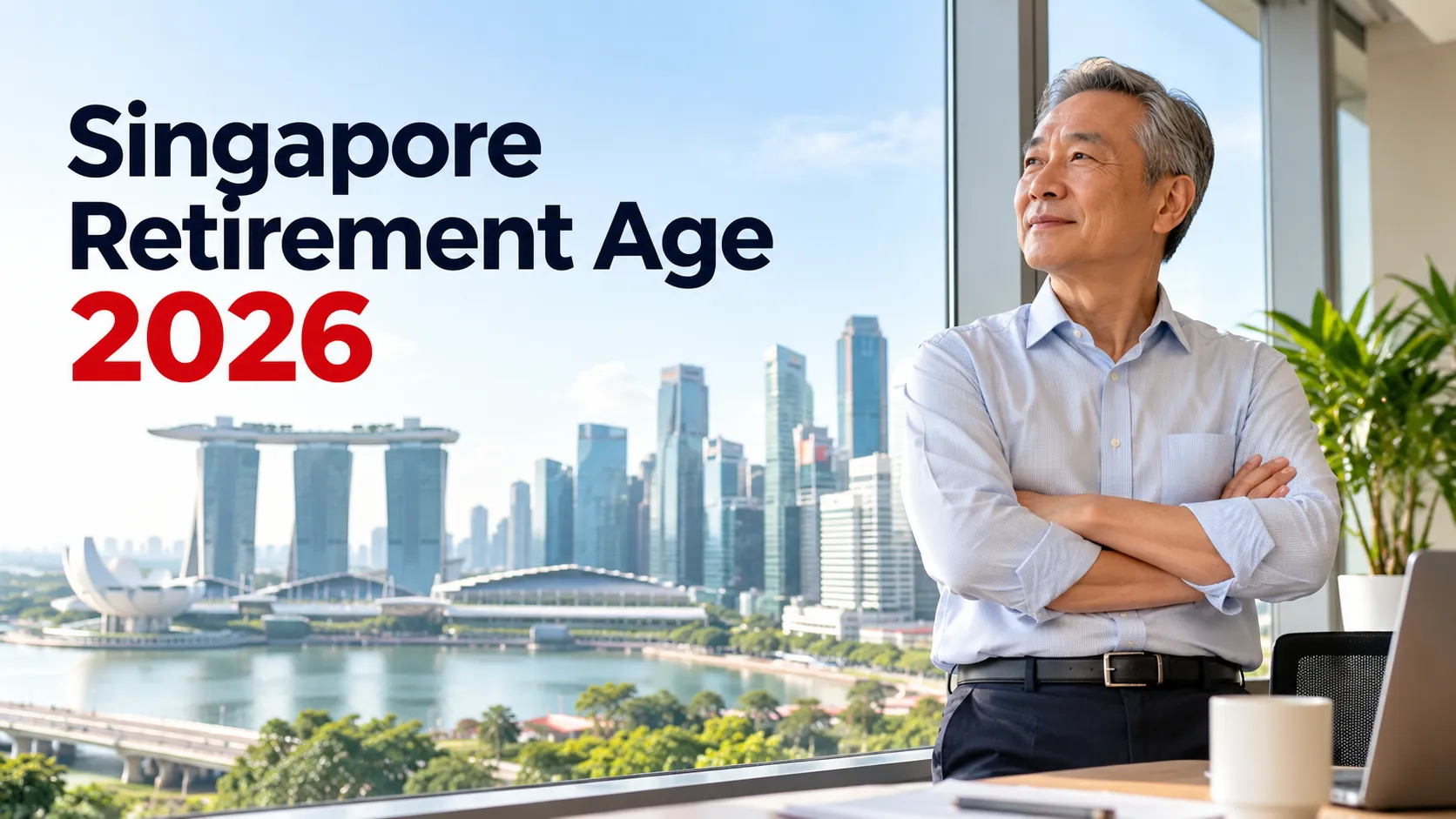
Singapore’s retirement rules changed on 1 July 2026, raising the statutory retirement age to 64 and the re-employment age to 69. But reaching retirement age doesn’t always mean you have to stop working. Eligible employees may continue working under re-employment arrangements, while CPF retirement payouts follow a separate age requirement. Another change is on the way: Singapore has brought forward its planned increase to a retirement age of 65 and re-employment age of 70, effective from 1 January 2029. Here’s what employees and retirement planners need to know.
TL;DR: Retirement age Singapore at a Glance
- Current retirement age: 64 for employees covered by the rules, subject to birth-date transition arrangements.
- Current re-employment age: 69 for eligible employees.
- From 1 January 2029: The announced retirement age will rise to 65 and the re-employment age to 70.
- CPF LIFE payouts: Generally available from age 65, subject to CPF eligibility and savings rules.
- Important: Retirement age, re-employment age and CPF payout eligibility are separate milestones.
What Is the Retirement Age in Singapore in 2026?
The retirement age Singapore employees need to know is 64, under the rules that took effect on 1 July 2026. The change raised the previous statutory retirement age of 63 by one year. The re-employment age also increased, moving from 68 to 69.
These rules apply to Singapore Citizens and Permanent Residents covered by the Retirement and Re-employment Act. The minimum retirement age protects eligible employees from being dismissed simply because of age before they reach the applicable statutory age. It doesn’t mean every employee must stop working on their 64th birthday.
There’s one detail worth checking: the applicable retirement age can depend on when an employee was born. The 2026 changes include transition arrangements for different birth-date groups. Employees who were already older when the new rules took effect may fall under an earlier age threshold rather than automatically receiving the new age of 64.
For that reason, check the Ministry of Manpower’s current retirement-age guidance if you’re approaching retirement or discussing a contract change with your employer. The Retirement and Re-employment Act sets the legal protections, while individual circumstances determine how the rules apply.

Retirement Age vs Re-employment Age in Singapore
The retirement age and re-employment age serve different purposes. The first sets the minimum age before an employer can retire an eligible employee on age grounds. The second concerns how long an eligible employee may be offered continued employment.
| Employment milestone | Current age | What it means |
|---|---|---|
| Minimum retirement age | 64 | Statutory protection against age-based retirement, subject to applicable rules |
| Re-employment age | 69 | Eligible employees may receive re-employment up to this age |
Re-employment isn’t automatic for everyone. Employees generally need to be Singapore Citizens or Permanent Residents, have satisfactory work performance and be medically fit to continue working. Service requirements also apply. For employees hired at age 55 or older, the current rules include a requirement to have served the same employer for at least two years before turning 64.
An employer may offer a re-employment contract with adjusted duties, working hours or other terms. The employee doesn’t automatically have a right to keep the exact same role, salary or benefits indefinitely.
If an employee qualifies but the employer can’t offer a suitable position, the employer may need to transfer the re-employment obligation to another employer with the employee’s agreement or offer a one-off Employment Assistance Payment, subject to the applicable rules.
In practical terms, the Singapore retirement age and re-employment age difference comes down to protection versus continued work. Turning 64 doesn’t automatically end every employment opportunity — but eligibility and contract terms matter.
What Changes on 1 January 2029?
Singapore originally planned to raise the retirement and re-employment ages to 65 and 70 by 2030. On 26 October 2026, the Government announced that the change would be brought forward by a year, with the new ages taking effect from 1 January 2029.
| Policy | Current rule in October 2026 | Announced from 2029 |
|---|---|---|
| Retirement age | 64 | 65 |
| Re-employment age | 69 | 70 |
The change is intended to give older workers more opportunity to remain employed if they wish and are able to work. It will also extend the age range covered by the statutory retirement and re-employment framework.
These are announced future changes, not the current October 2026 ages. Employees and employers should check the latest Ministry of Manpower updates closer to implementation for any additional details, including how the rules apply to different age groups and employment arrangements.
Is CPF Payout Age the Same as Retirement Age?
No. CPF payout eligibility is separate from the retirement age Singapore uses for employment protections. You can reach retirement age and continue working, or stop working before retirement age, without automatically starting CPF LIFE payouts.
CPF savings can generally be withdrawn from age 55, subject to the applicable rules, account balances and withdrawal limits. Reaching 55 doesn’t mean you can withdraw all your CPF savings without conditions.
CPF LIFE monthly payouts can generally start from age 65. Eligible members can choose to defer their payouts until as late as age 70. Deferring can increase monthly payouts by up to 7% for each year of delay, depending on the applicable scheme and circumstances.
If you haven’t given CPF Board instructions about your payouts by age 70, payouts will generally start automatically under the relevant arrangements. Your actual monthly amount depends on factors such as your Retirement Account savings, payout start age and CPF LIFE plan.
Here’s the distinction in simple terms:
| CPF or employment milestone | Age | What it relates to |
|---|---|---|
| CPF withdrawal eligibility | 55 | Access to CPF savings under applicable withdrawal rules |
| CPF LIFE payout eligibility | 65 | Earliest usual age to start monthly retirement payouts |
| Latest automatic payout start | 70 | Payouts generally start automatically if you haven’t instructed CPF Board |
So, retiring from your job doesn’t trigger CPF LIFE automatically. Check your CPF records and payout options separately when planning your income.

Can Your Employer Force You to Retire in Singapore?
An employer generally cannot dismiss a covered employee simply because of age before the employee reaches the applicable statutory retirement age. This protection is part of Singapore’s retirement framework.
But the rules don’t guarantee that every employee can remain in the same position forever. Once an employee reaches retirement age, continued employment may depend on eligibility for re-employment, work performance, medical fitness and service requirements.
An employer may offer a different role or contract for re-employment. Changes to duties, working hours or employment terms should be handled according to the applicable requirements. If a suitable role can’t be offered to an eligible employee, the employer must follow the relevant re-employment arrangements rather than simply ignoring its obligations.
If you believe you’ve been dismissed because of age or your employer hasn’t followed the re-employment rules, keep copies of your employment contract, written communications and any notice you received. You can contact the Ministry of Manpower or the Tripartite Alliance for Dispute Management (TADM) to ask about the appropriate process. For a wrongful-dismissal appeal, pay attention to the applicable deadline.
How Much Money Do You Need for Retirement in Singapore?
There isn’t one fixed amount that works for every retiree. Your retirement savings target depends on whether you own your home, pay rent, support family members, need regular medical care or plan to travel. Start by estimating your own monthly spending instead of relying on a universal figure.
| Expense | Your estimated monthly cost |
|---|---|
| Housing | S$_____ |
| Food and groceries | S$_____ |
| Utilities and phone | S$_____ |
| Transport | S$_____ |
| Healthcare | S$_____ |
| Personal expenses | S$_____ |
| Total monthly expenses | S$_____ |
Add annual costs such as insurance premiums, home repairs and family commitments separately, then divide them by 12 to see how they affect your monthly budget.
Compare your estimated expenses with expected CPF LIFE payouts, savings, investments, rental income or part-time earnings. If there’s a gap, you’ll have a clearer idea of how much additional income or savings you may need. Review the numbers regularly, especially if your housing or healthcare needs change.
How to Prepare for Retirement in Singapore
A few practical checks can make retirement planning easier to manage:
- Review your CPF balances: Check your Retirement Account and estimate your monthly payout options.
- Calculate your expenses: Include regular bills, healthcare, family support and occasional costs.
- Check re-employment eligibility: Ask your employer about the relevant age rules and service requirements before you reach retirement age.
- Discuss contract changes early: Request clear information about duties, salary, hours and other employment terms.
- Build emergency savings: Keep money aside for unexpected medical bills, home repairs or periods without work.
You don’t have to make every decision at once. Start with your likely monthly expenses and expected income, then review your plan as your circumstances change.
Frequently Asked Questions
1. What is the minimum retirement age in Singapore in 2026?
The statutory retirement age is 64 from 1 July 2026 for employees covered by the new rules. Birth-date transition arrangements may affect which age applies to some employees.
2. Can I continue working after age 64?
Yes. Eligible Singapore Citizens and Permanent Residents may be offered re-employment up to age 69 under the current rules. Eligibility, work performance, medical fitness and service requirements apply.
3. What is the re-employment age in Singapore?
The current re-employment age is 69. It is scheduled to rise to 70 from 1 January 2029 under the announced policy timeline.
4. Does CPF LIFE start automatically when I retire?
No. CPF LIFE payouts are separate from employment retirement. Eligible members can generally start monthly payouts from age 65 and defer them until age 70. Payouts generally start automatically at 70 if no instructions have been given.
5. Is Singapore increasing the retirement age to 65 in 2029?
Yes. The Government announced on 26 October 2026 that the retirement age will rise to 65 and the re-employment age to 70 from 1 January 2029, bringing the changes forward from the earlier 2030 target.
Conclusion
The retirement age Singapore uses for employment protection is currently 64, while the re-employment age is 69. Both are scheduled to rise in 2029. CPF payout eligibility follows a separate timeline, so check your employment status, CPF savings and expected expenses before making retirement decisions. The Ministry of Manpower and CPF Board provide the latest rules for individual circumstances.

Global Arena is a Singapore-focused SEO and digital marketing brand with a network of 25+ publisher websites, helping businesses strengthen their online presence through guest posting, link building, content marketing, and digital PR.
For collaborations, publishing opportunities, or business inquiries:
Hamza@globalarena.org | WhatsApp: +971 52 399 4589